Does this plate withstand intensive training?
The steel structure absorbs the compression and flexion generated by your max loads remarkably well. You'll be able to string together entire squat, bench press and deadlift cycles without compromising your plates' integrity. They withstand repeated contact with the floor during deadlifts, where you rest the bar after each rep. Please note: their rigidity makes them unsuitable for violent drops from a significant height, like in weightlifting.
What can you train with these 1.25 kg weights?
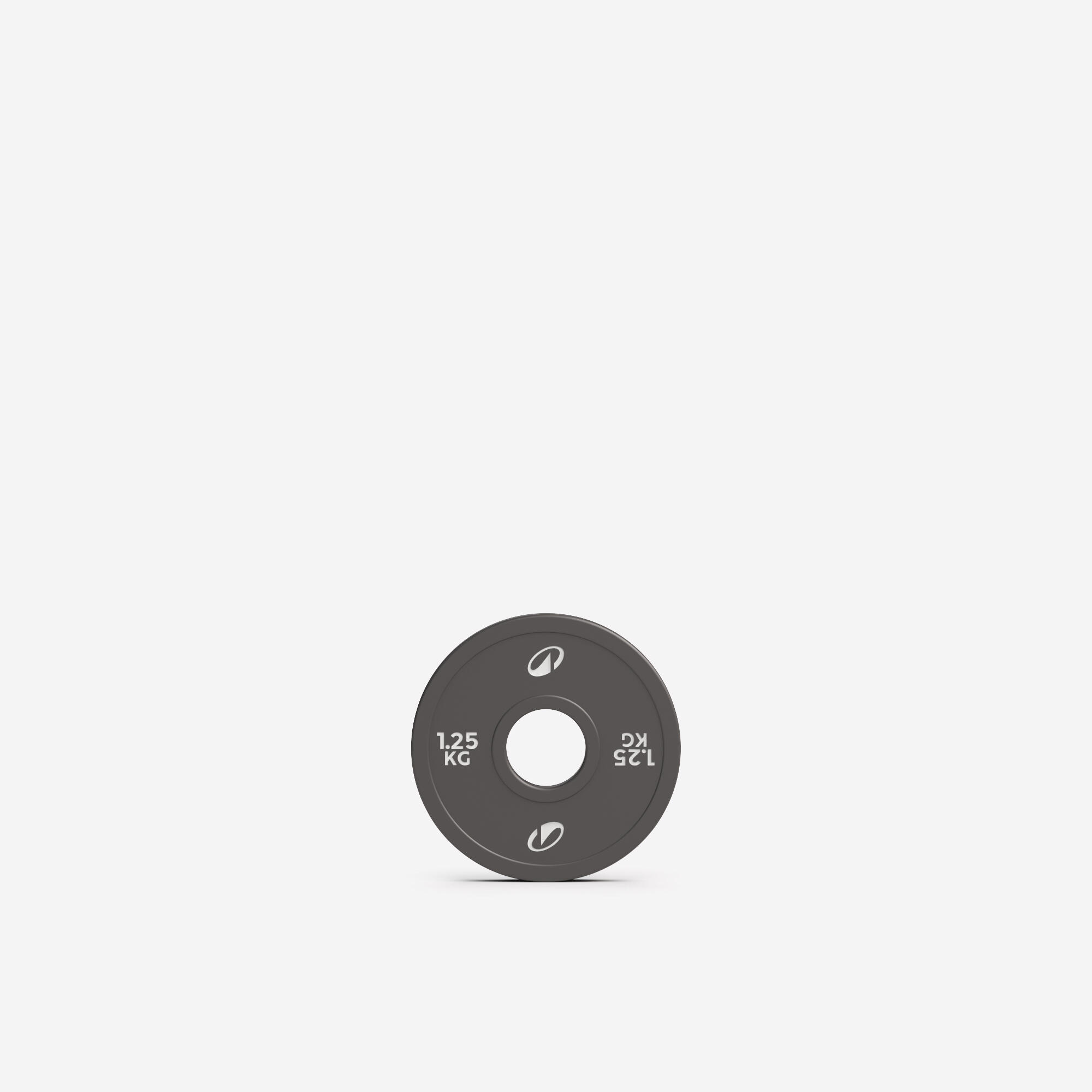
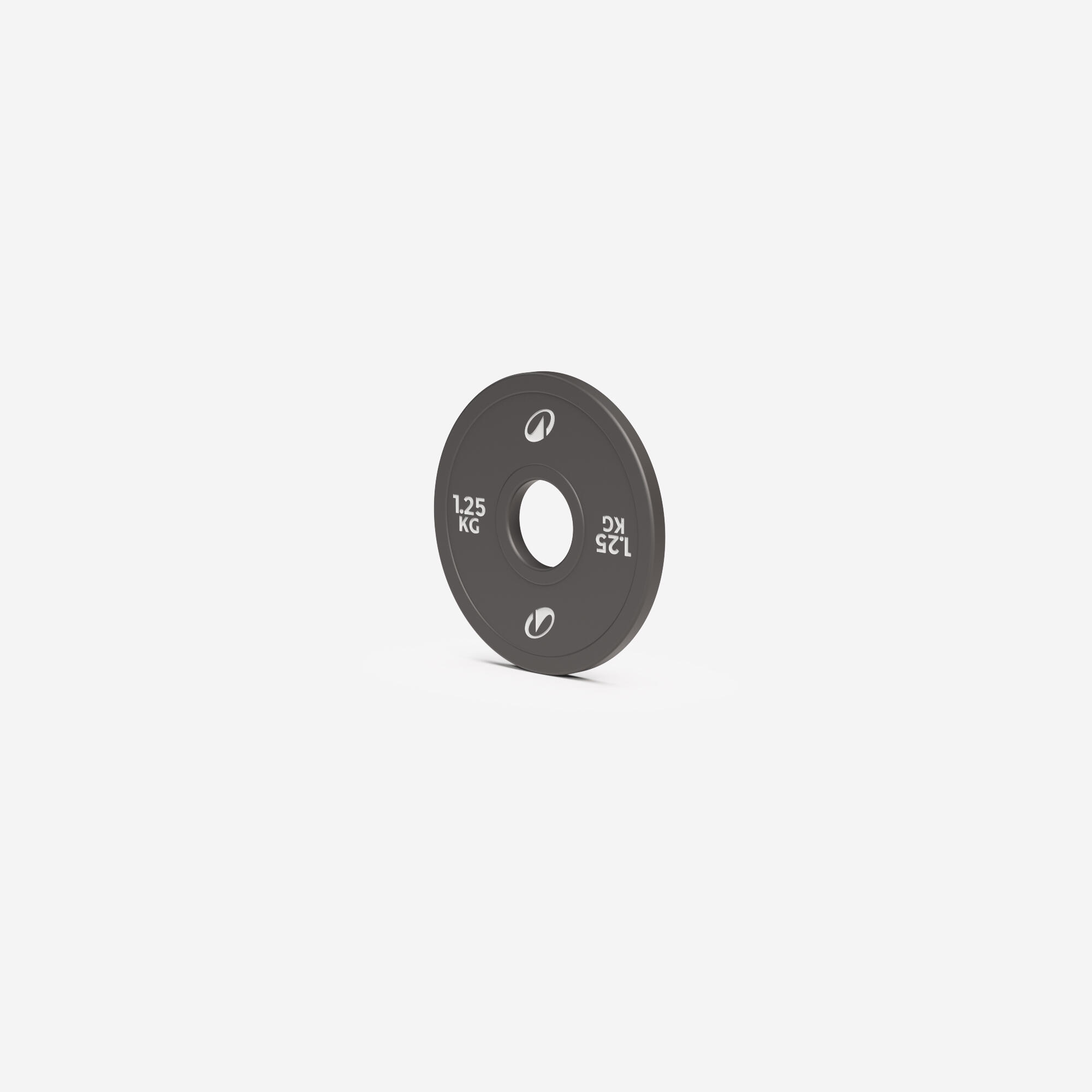
This size adds 2.5 kg to your bar (two plates), which is the most common jump up in weight used in powerlifting. Perfect for all your basic movements: squats, bench presses, deadlifts. You'll get stronger week by week with jumps in load that are neither too timid nor overly optimistic.
What accessories go with these plates?
To get the most out of these plates, get yourself a 50 mm Olympic barbell. Go for the 15 kg size (ref. 8484131) or 20 kg model (ref. 8491834) to suit your needs. And finish off with our weights collars (ref. 8485052) to lock your loads in place.
Why choose this 1.25 kg powerlifting plate?
This plate is perfect for pushing through tricky barriers without overdoing things. It's great for both competitions and everyday training, meeting the strictest standards. It's easy to grasp in two hands so it can be quickly slotted onto your bar between sets. You'll also appreciate the colour coding, which prevents any confusion when loading up your bar. Its 5-year warranty bears witness to its exceptional quality at a low price.
Do these plates comply with competition standards?
We apply the tolerance of 0.25% required for official competitions. In the smaller sizes, that means precision to within 10 g. It lets you train under exactly the same conditions as you'll encounter on competition day. Everything will feel the same, your loads will be reliable and your performances can be measured precisely. You won't see any difference between your gym and the competition platform.