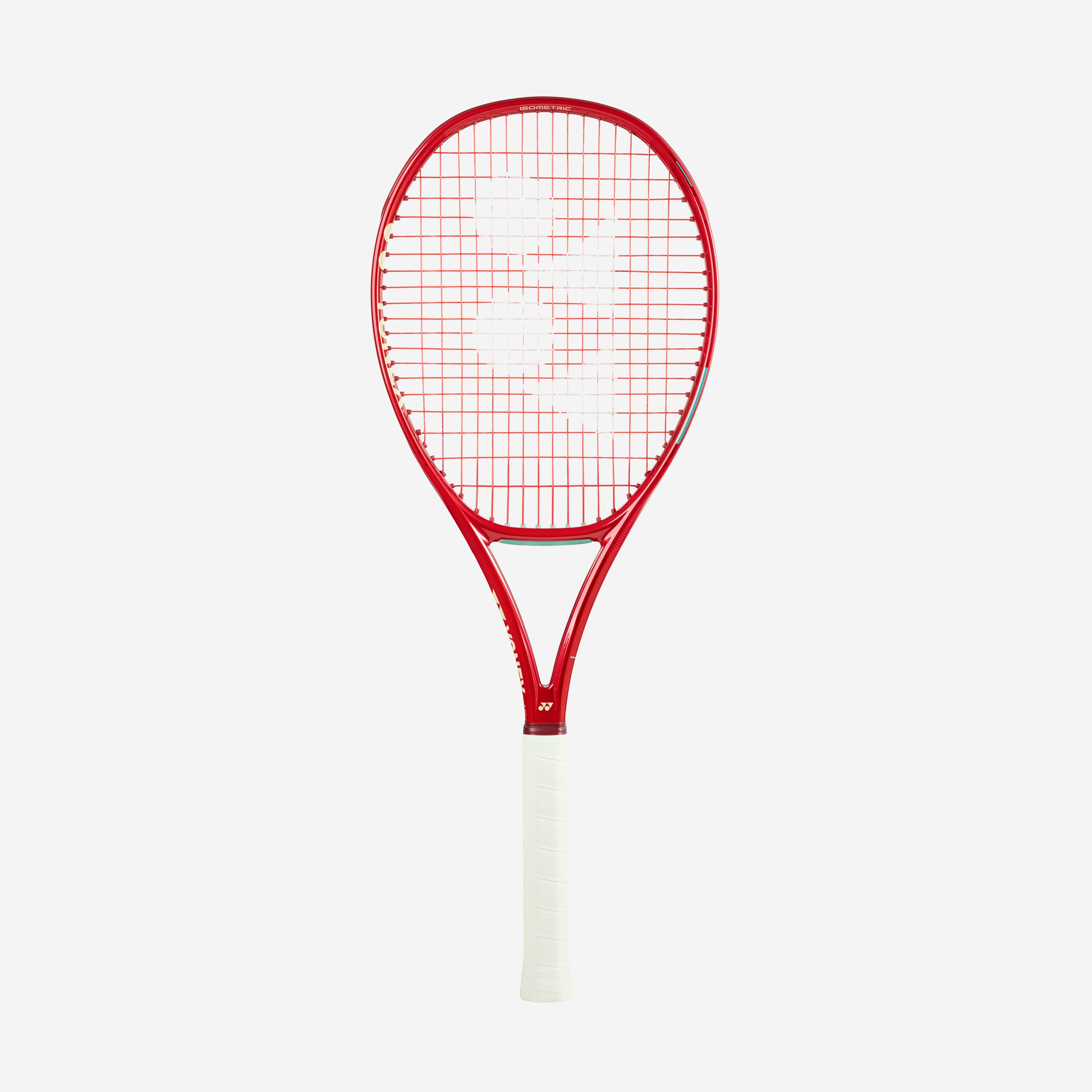
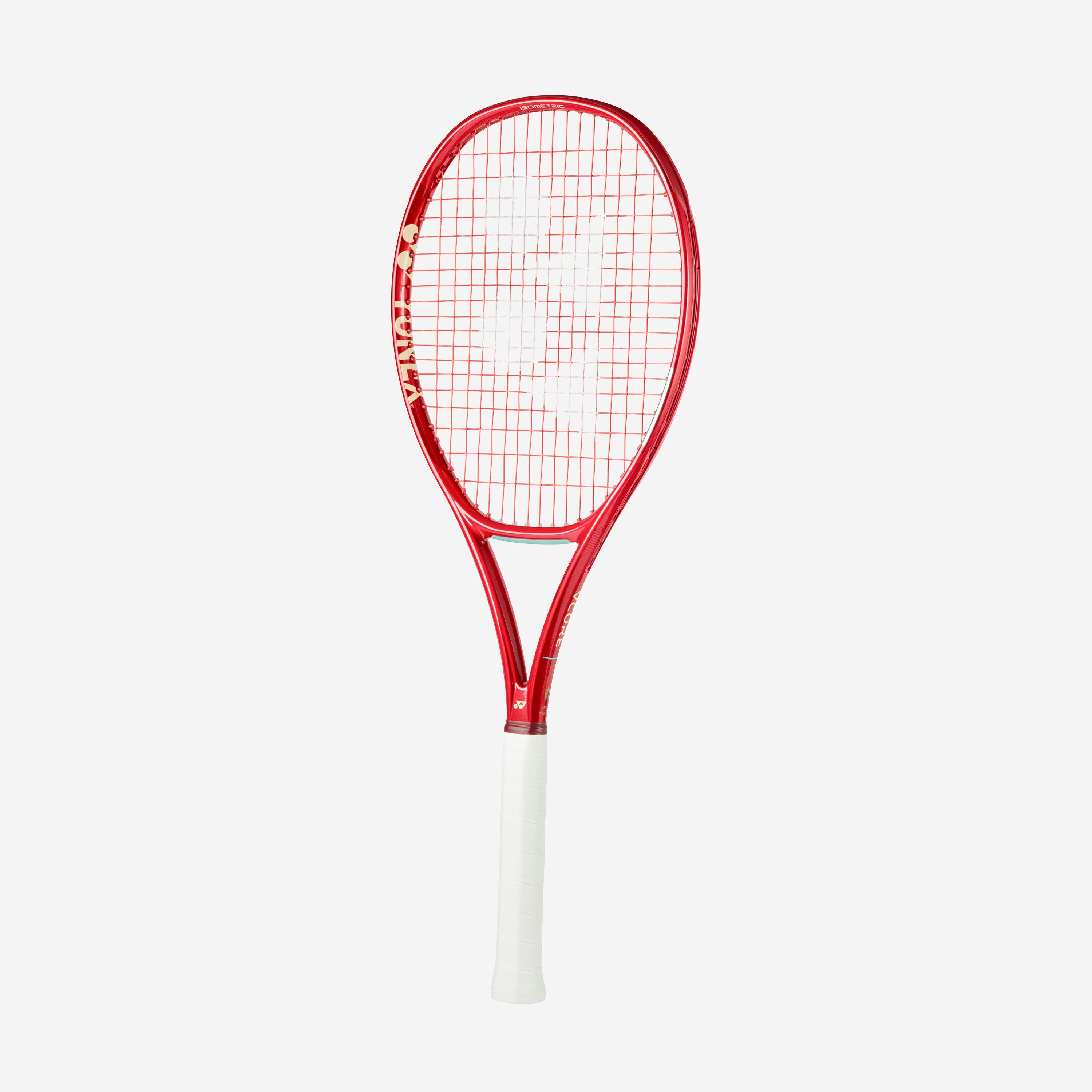
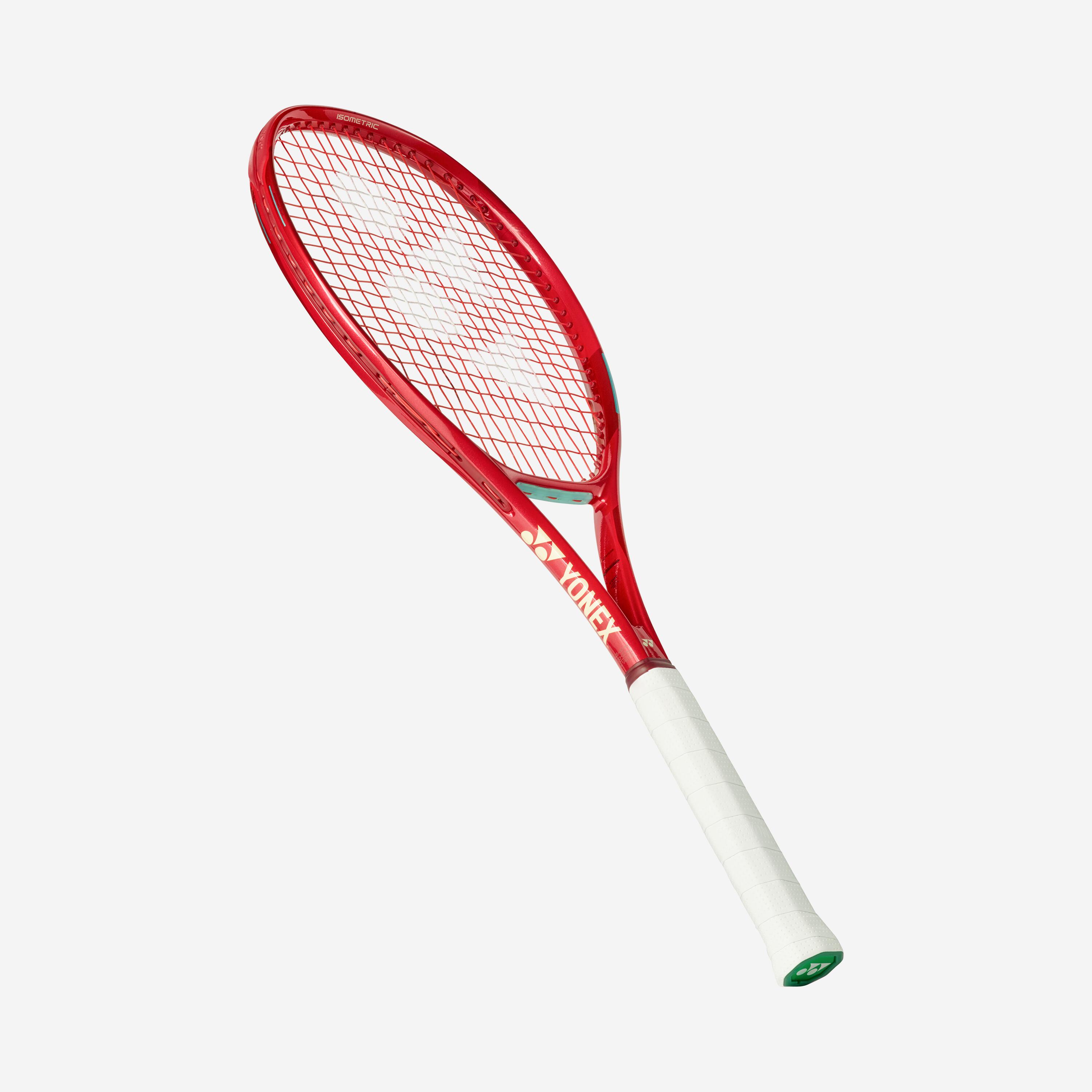
Length
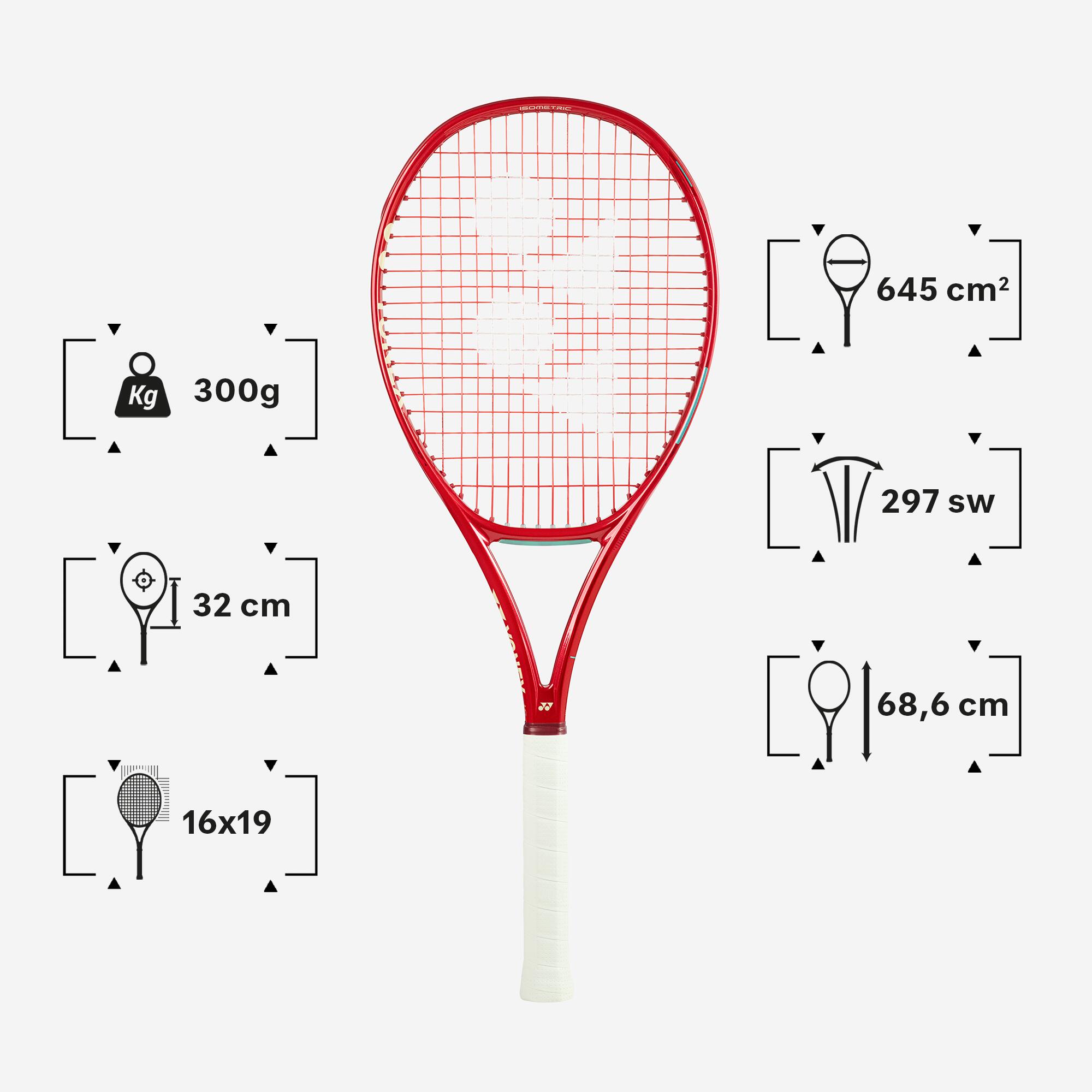
68.58 cm
Length: This is the length of the racket from the bottom of the grip to the top of the head. It is measured in centimetres. The longer the racket, the more power you'll get, but the flip side is that it will be harder to handle. The shorter the racket, the easier it will be to manoeuvre, but you'll have to give up power.
Aero Trench Technology
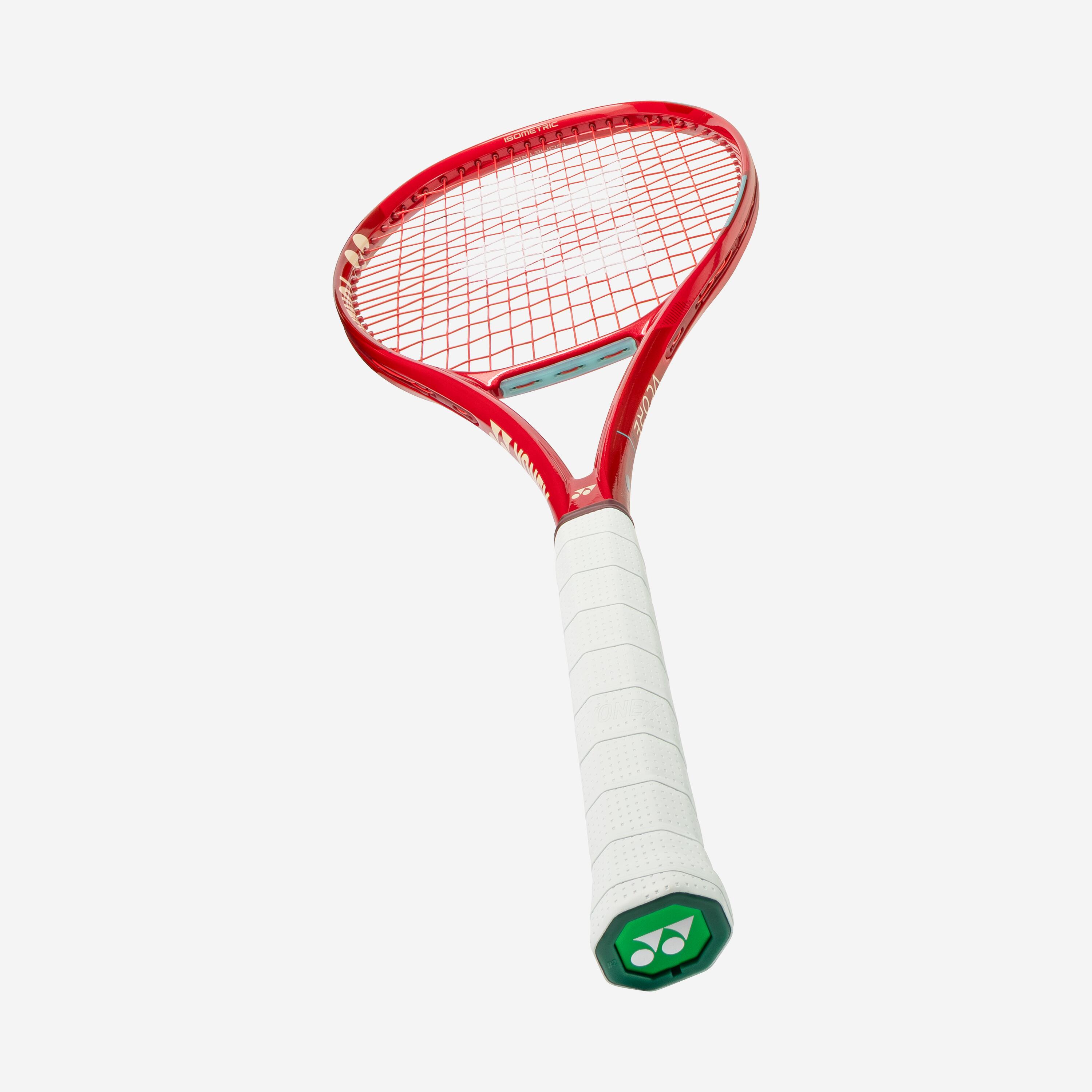
To achieve faster racket head speeds and thus possibly greater spin, the new Aero Trench reduces drag through a unique way of hiding the eyelets at the top of the racket frame.
Balance (unstrung racket)
32 cm
Balance: This is the racket balance point, measured in centimetres from the bottom of the shaft. The higher the number (head heavy), the more powerful and stable upon impact the racket will be. However, it will also be harder to manoeuvre. The smaller the number (head light or handle heavy), the easier the racket will be to handle but you'll have less power and stability.
Head size
645 cm²
Head size: This is the surface area of the racket head size measured in squared centimetres. It has an impact on the racket's forgiveness and power. The larger the head size, the more powerful and forgiving it is, but the downside is less control. The smaller the head size, the greater the feeling of control, but you sacrifice some power and forgiveness.
Swingweight (unstrung racket)
SW = 297
Swingweight: This indicates how easy a racket is to handle and its ability to transfer energy to the ball (power). The higher the swingweight, the more powerful the racket, but also the harder it will be to handle. Conversely, the lower the swingweight, the easier the racket will be to handle, but the trade-off is less power. The swingweight is derived from a combination of the racket weight, balance and length.
Frame geometry
A new, more aerodynamic profile for even more speed on impact.
2-NAMD Flex Force Graphite
Incorporated into the upper part of the frame, the new Graphite 2-NAMD Flex Force graphite allows the racket to flex and rebound quickly for maximum power and rotational potential.
Servo Filter
Carbon fibre alignment that optimises the frame flexibility at the racket head. This creates more speed on impact.
VDM Vibration Dampening Mesh
For greater feel and precision, a stretch mesh material is rolled around graphite in the handle to filter out undesirable vibrations.
Cross section
Cross section (in mm): 24/26/23
Eyelets infused with silicone oil
The new silicone oil infused into the eyelet allows the racket to flex quickly and return to its original position.
Stiffness
65 Ra
Ra: This refers to the racket's stiffness, i.e. how much it bends under the impact of the ball. The stiffer the racket (the higher the Ra), the less it bends. The energy lost on impact is minimised and returned to the ball via the strings. Generally, a stiffer racket offers greater power.
String pattern
16 x 19
String pattern: This is the number of mains (vertical strings) x the number of crosses (horizontal strings). The more strings the pattern has, the more "closed" it is; the fewer it has, the more "open" it is. A more closed string pattern offers a greater feeling of control, but less power and spin. A more open string pattern provides more power and spin, but less control.
Isometric
Developed over 30 years ago, the ISOMETRIC design increases the sweet spot by 7%*. Compared to a classic round frame, an ISOMETRIC racket with a square shape generates a larger sweet spot by optimising the intersection between mains and crosses. ISOMETRIC offers better control without sacrificing power. ISOMETRIC is a commercial brand of Yonex CO., LTD.
* Tested by Yonex
Weight (unstrung racket)
300 g.
Weight: The weight is measured in grams. Just like balance point and length, the weight impacts a racket's swing weight and therefore its manoeuvrability, stability and ability to transfer energy to the ball (power). The heavier the racket, the more power it transfers to the ball, but the harder it is to handle. The lighter the racket, the easier it is to handle, but the trade-off is less power.