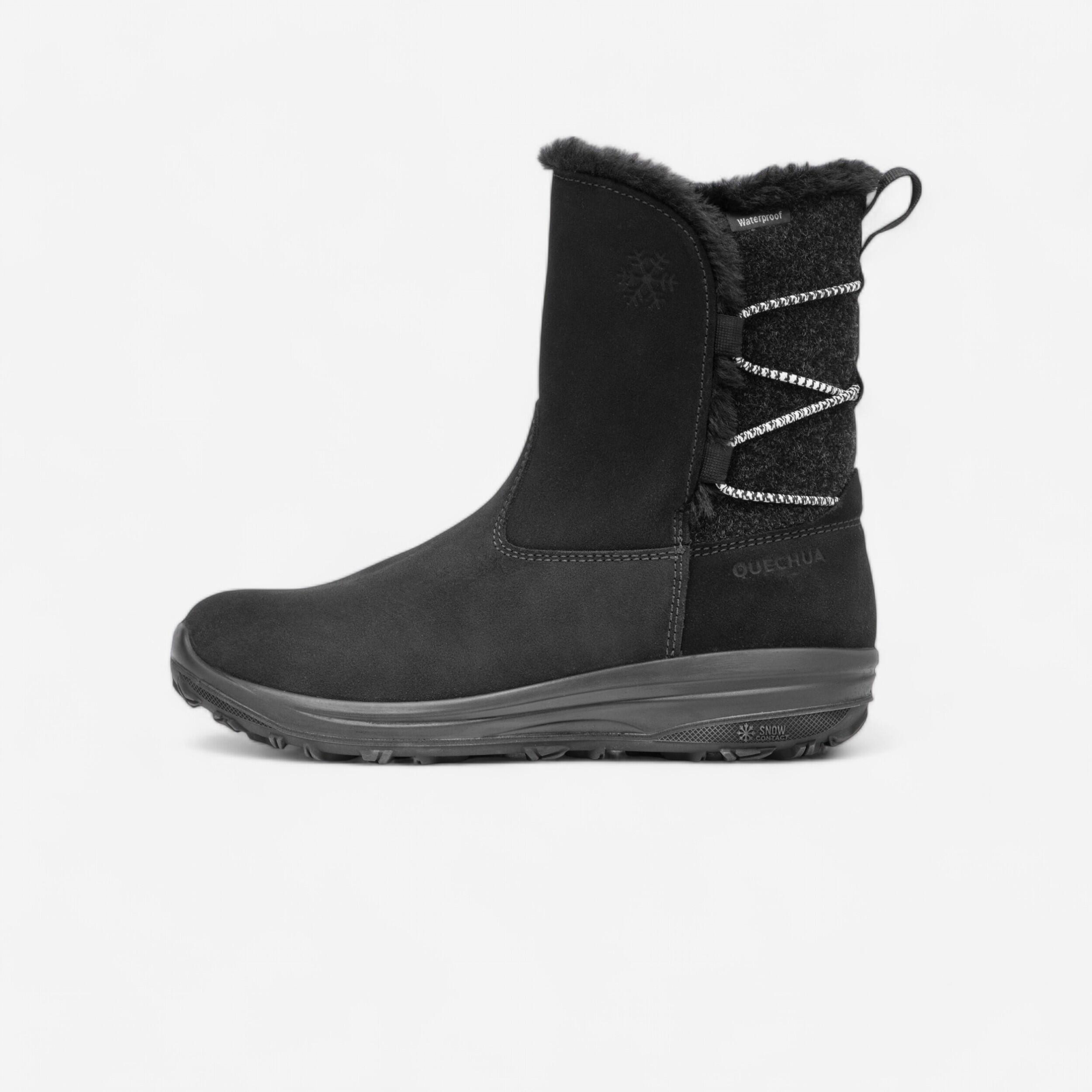
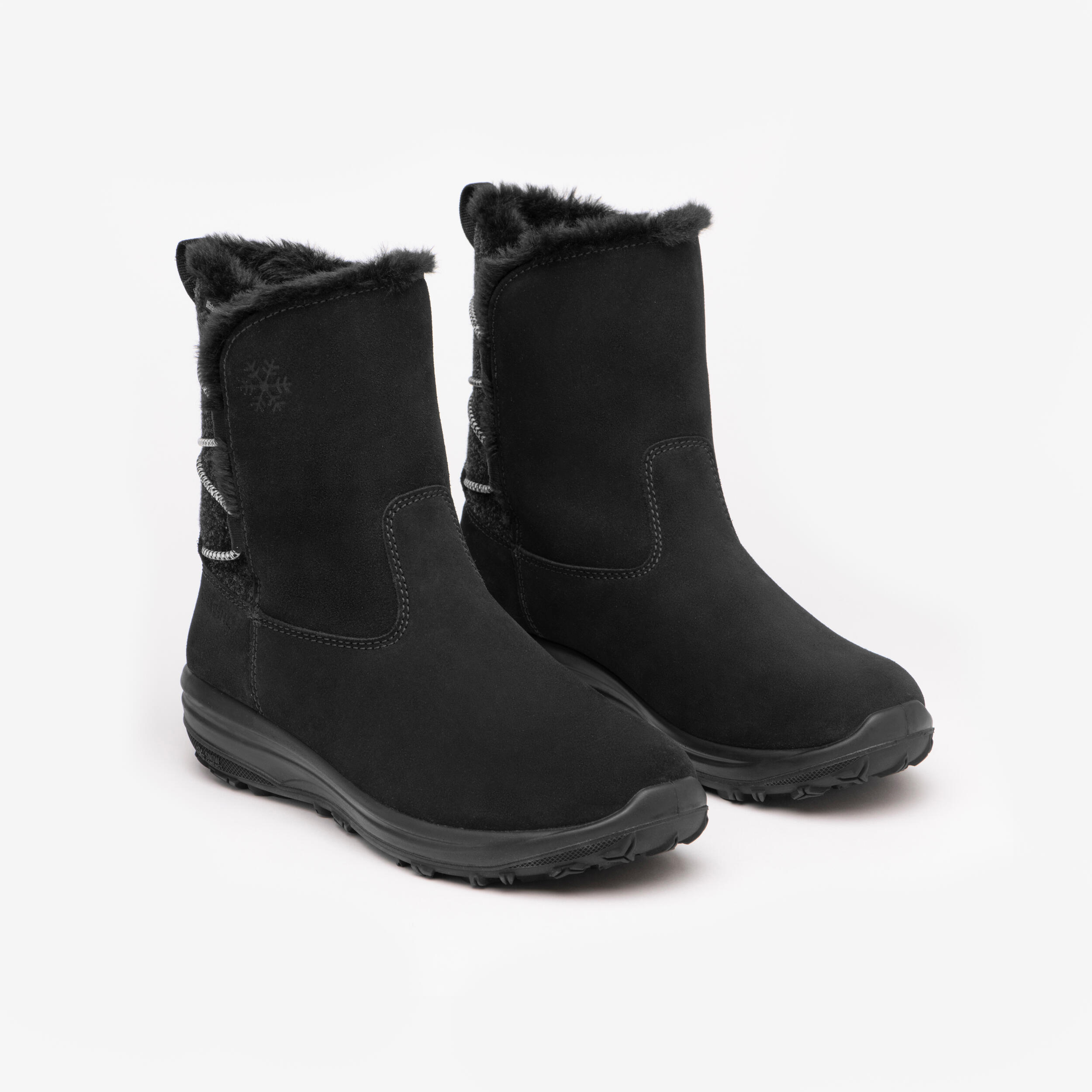
Can I be sure that my boots are warm enough for my winter hikes?
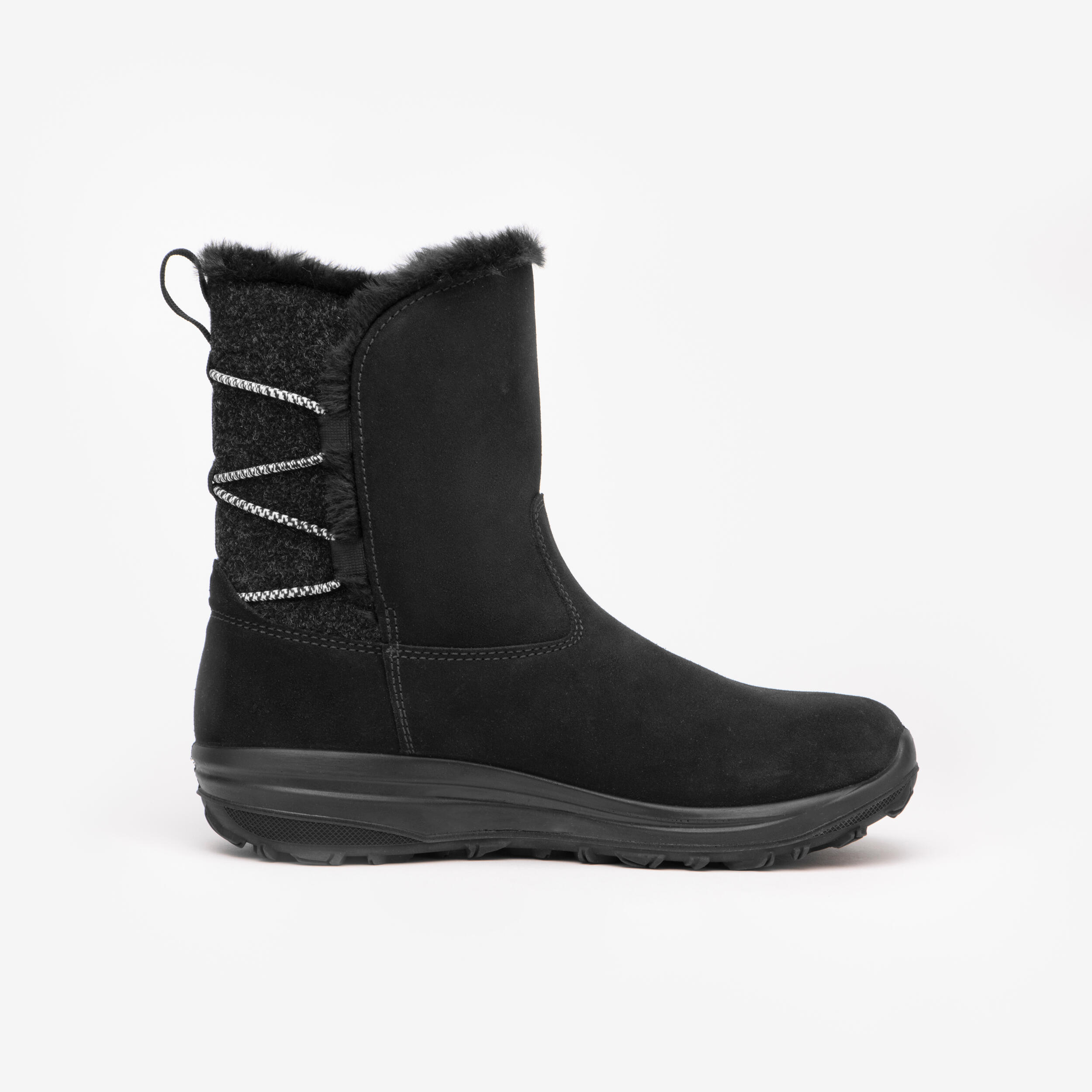
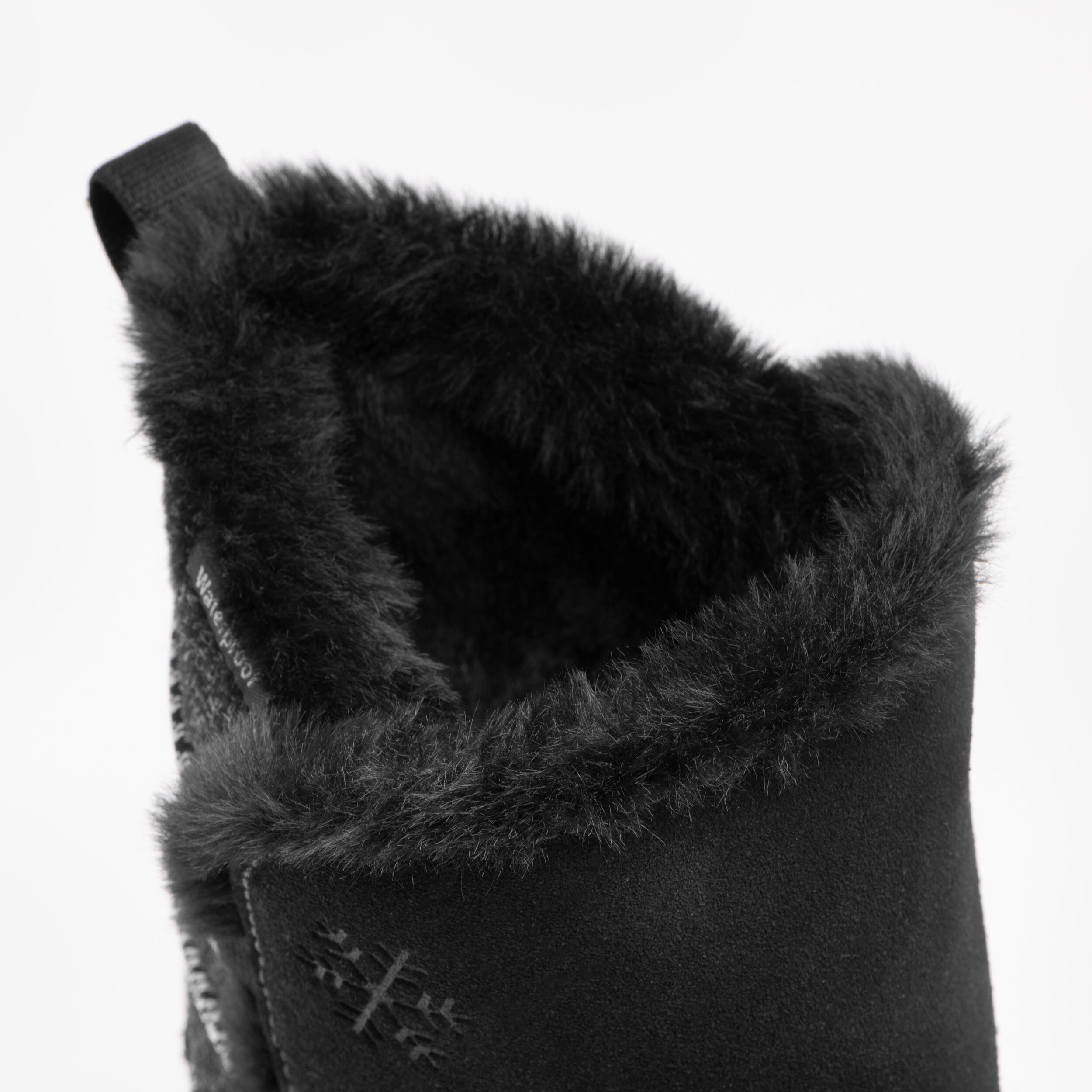
We chose a warm lining that has insulation to give you effective protection from the cold.
We tested it in the laboratory and in the field with our user representatives. We checked the temperature down to which it stays comfortable when you're stationary and when you're walking, as this varies a lot: -3°C when static and -12°C when moving. We also took into account how temperature is felt differently by men and women.
How do my boots protect me from outdoor conditions?
Your boots are designed with a membrane to guarantee waterproofing and breathability. A membrane is a very fine component (5 to 25 micrometres) affixed to the inside of a fabric that prevents water from entering while allowing moisture to escape.
How can I be sure my boots are 100% waterproof?
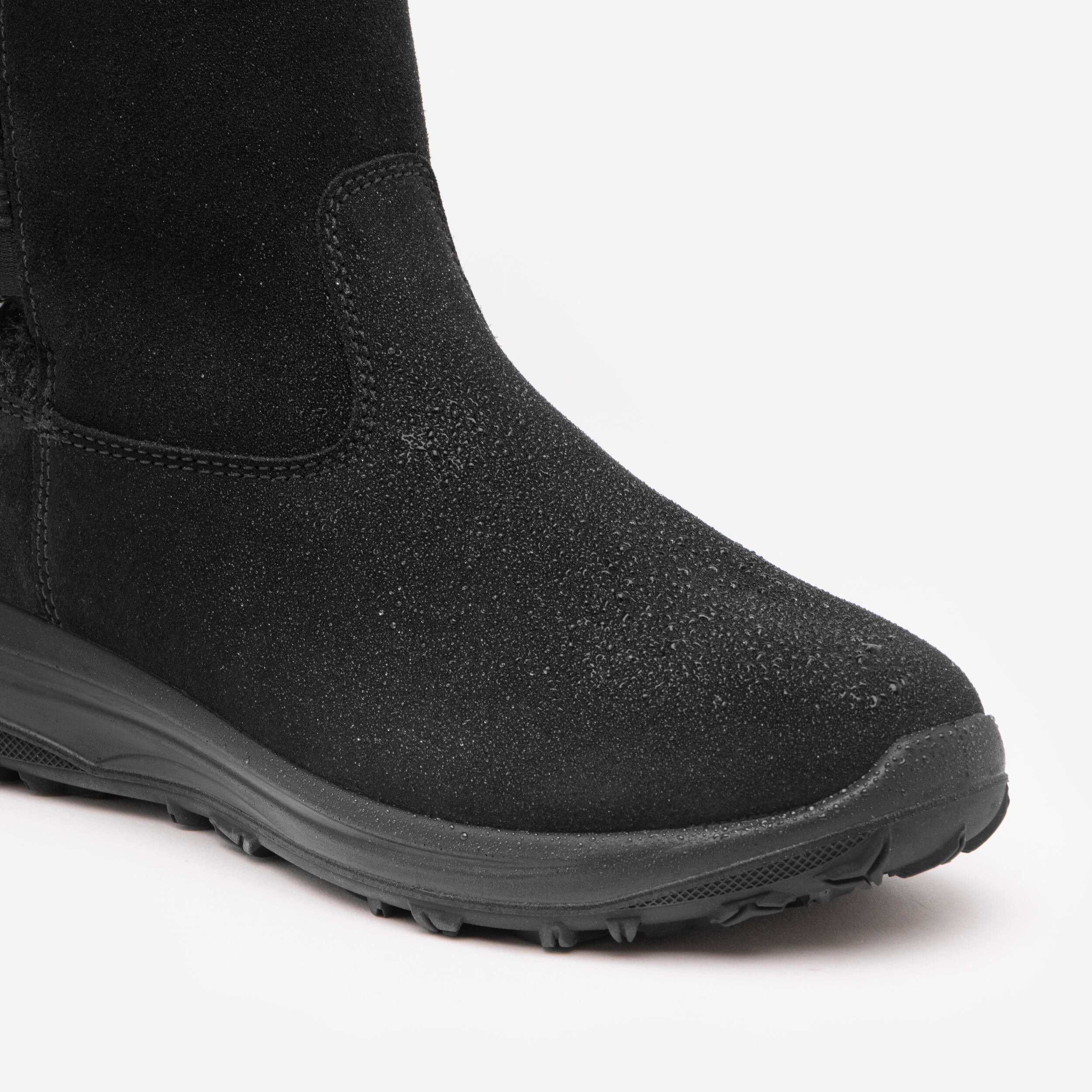
We made sure that your boots are waterproof by conducting laboratory tests to simulate walking with the boots half-submerged in water. We also conducted field tests to measure wear and ageing.
Advantages of this leather model
Leather is ultra-comfortable, durable (natural material) and flexible for greater comfort.
This material is waterproof and naturally breathable.
Warm in winter and cool in mid-season, the leather naturally regulates the boot temperature.
We advise you to brush your shoes well (soft brush) to maintain them and maximise their longevity.
Make this boot’s waterproofing last longer
For the leather skin, a waterproof spray is recommended to waterproof and protect it from stains (type "waterproof spray" in the search bar of the Decathlon website).
Do not grease. You can use a maintenance brush: type "trekking boot maintenance brush" in the search bar of the Decathlon website.
What is the difference between traction and grip?
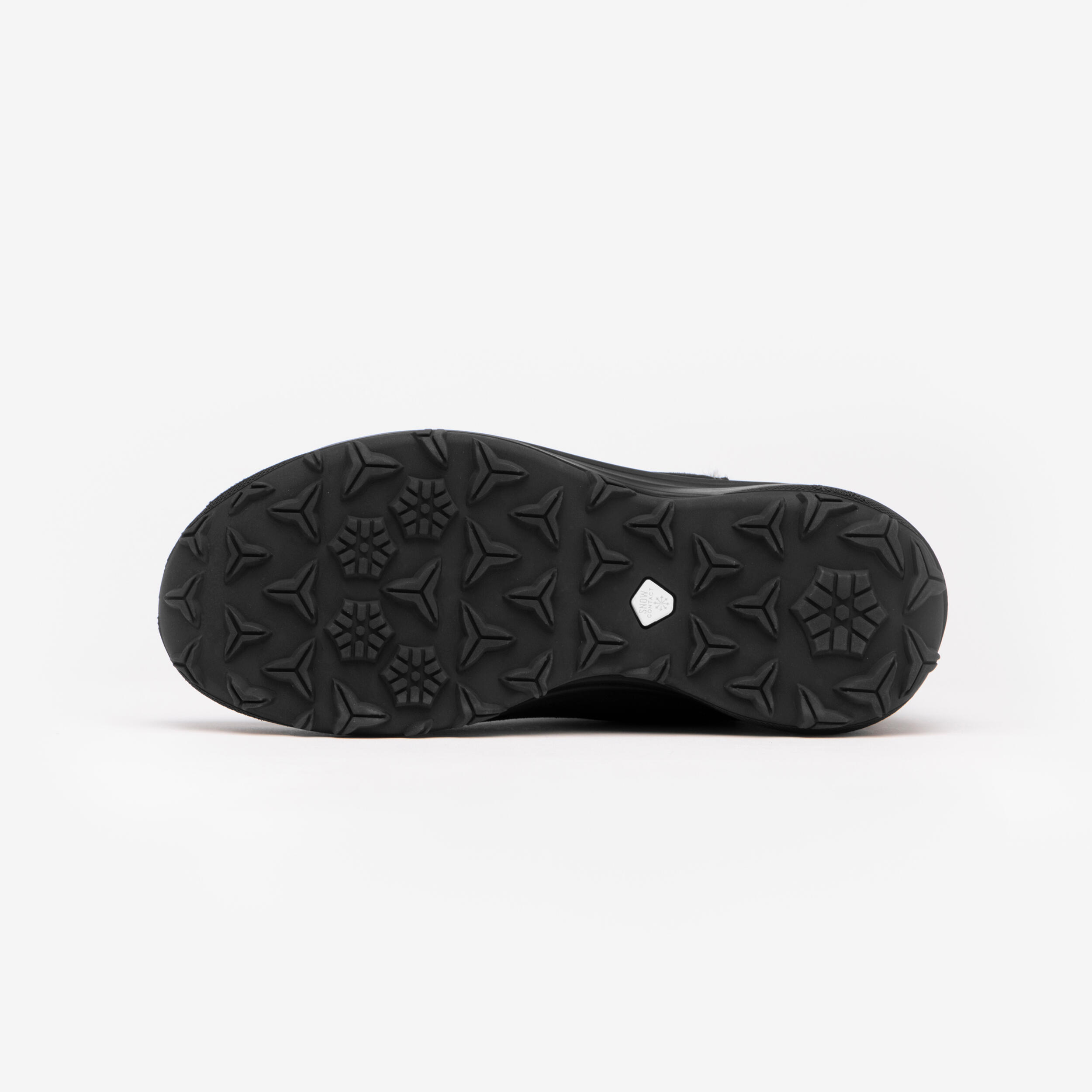
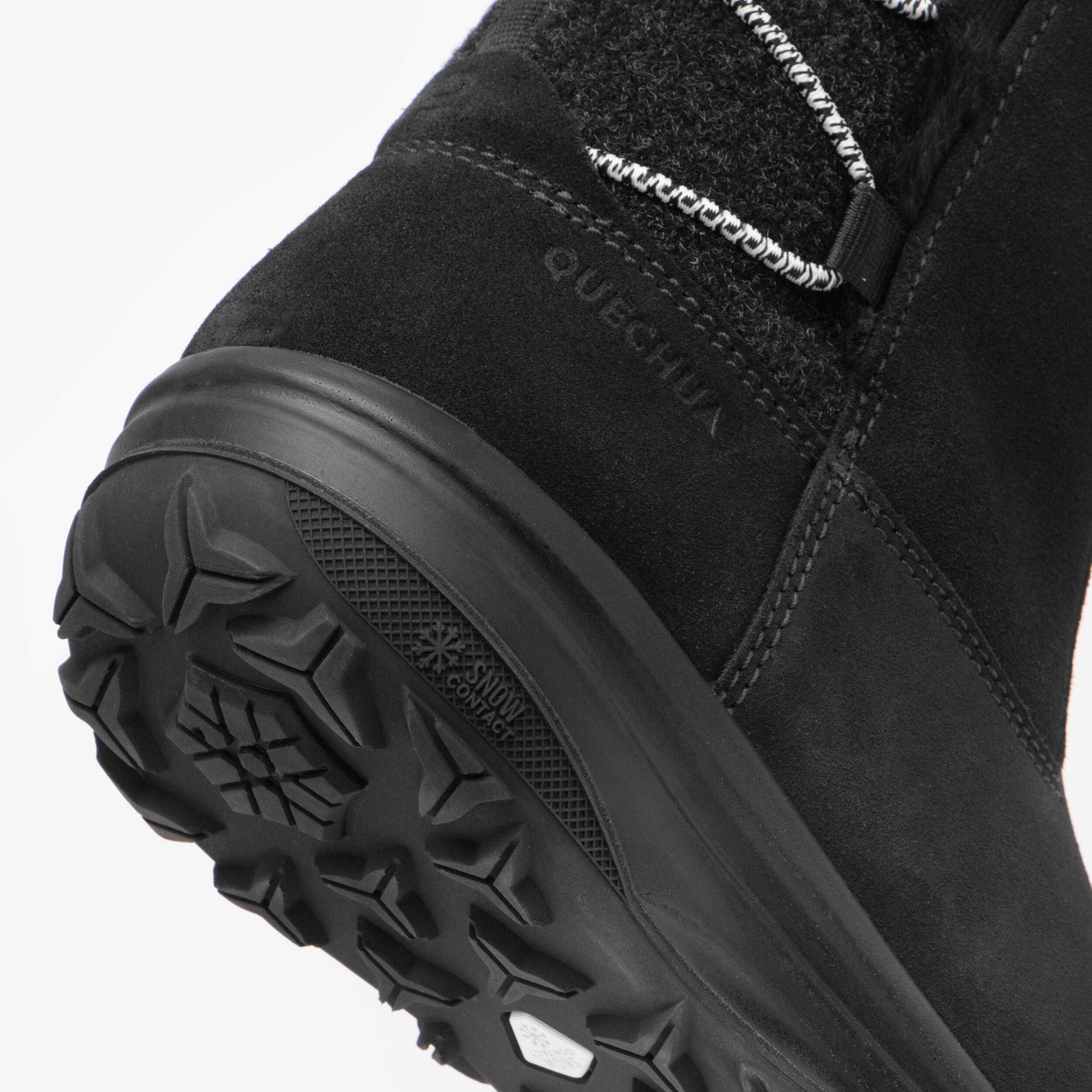
The boots’ traction depends on the number and shape of the studs. The grip is dependent on the materials of the sole and the tread pattern, like the tyres of your car. Traction optimises propulsion, prevents the boot from slipping backwards when going uphill and stabilises the boot.
Grip prevents the boot from slipping and skidding on smooth ground or in demanding conditions (rain, snow, ice) by giving the sole grip.
Our tips on use and care
Shoes can become heavy while they’re being worn in the wet (condensation and perspiration)
If your boots are very wet, we advise you to remove the insole, fill the upper with balls of newspaper and change them regularly. The paper will pump out moisture and speed up drying.
Never place your shoes too close to a heat source but leave them in a warm, dry and ventilated place.