Why a wide forefoot?
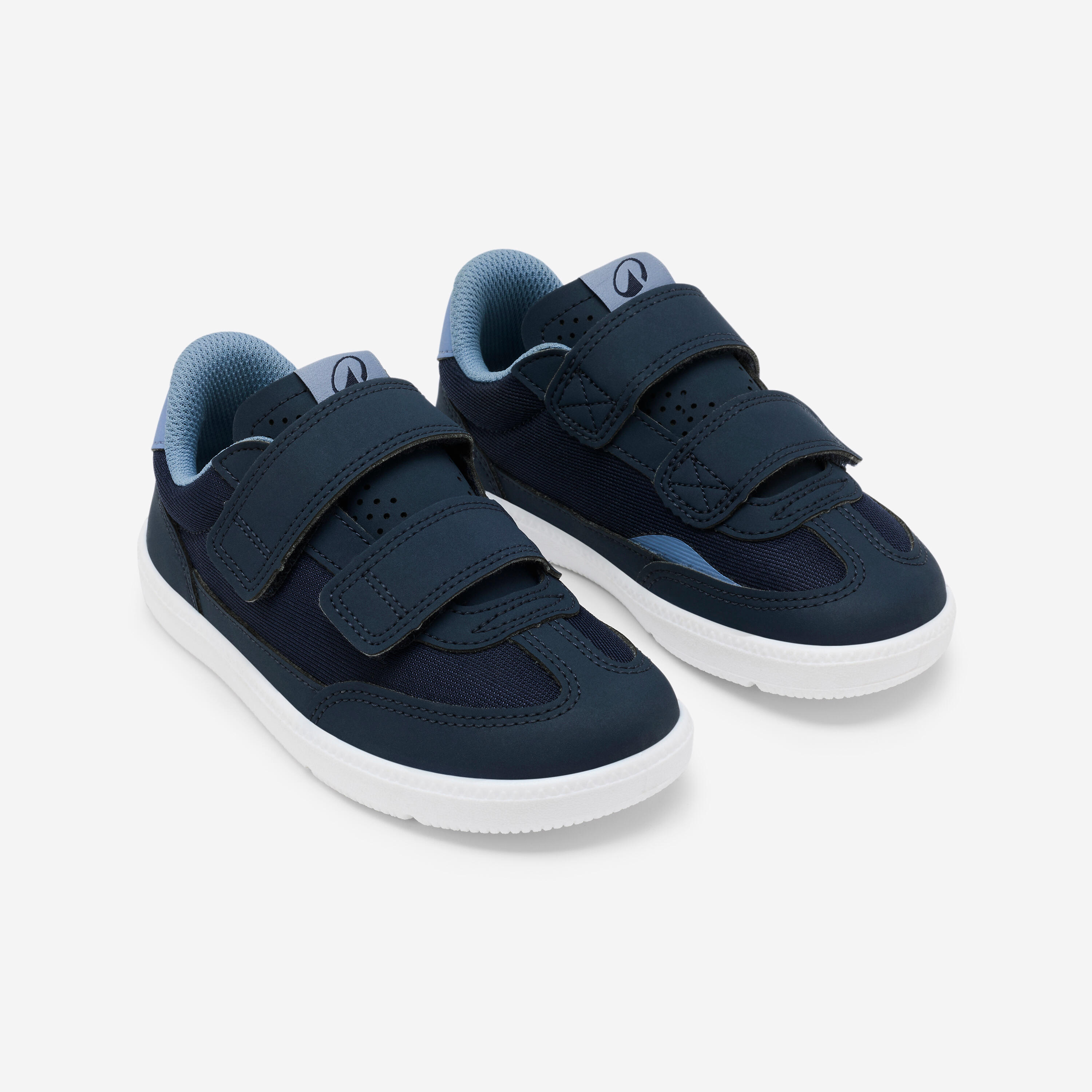
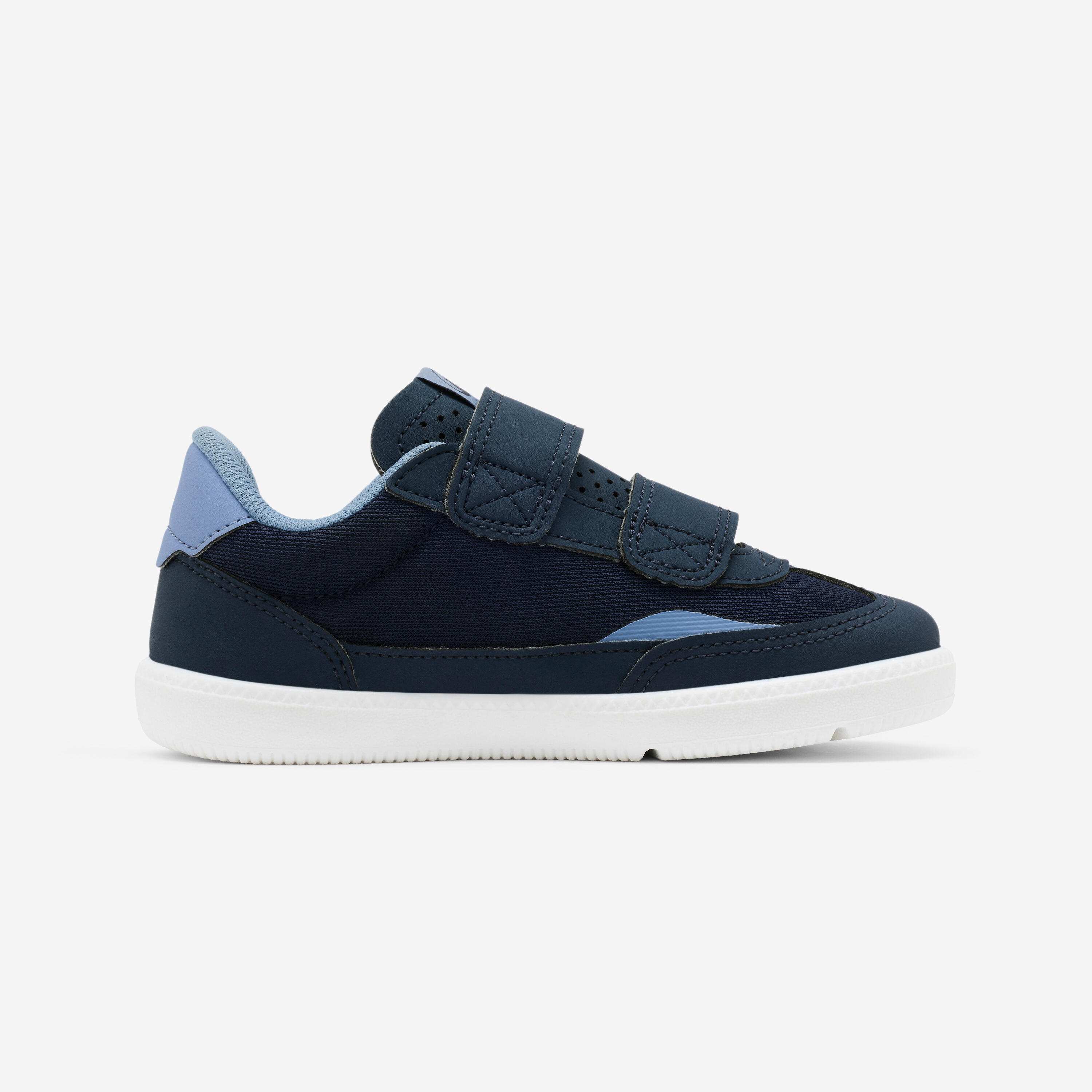
The front part of the shoe where the toes are located. On this shoe, it is deliberately wide to allow the toes to spread naturally as they would when barefoot. A baby's feet should not be squashed up at the front. This width promotes the healthy development of the foot during the child's growth.
Independence made easier with simple slip-on design
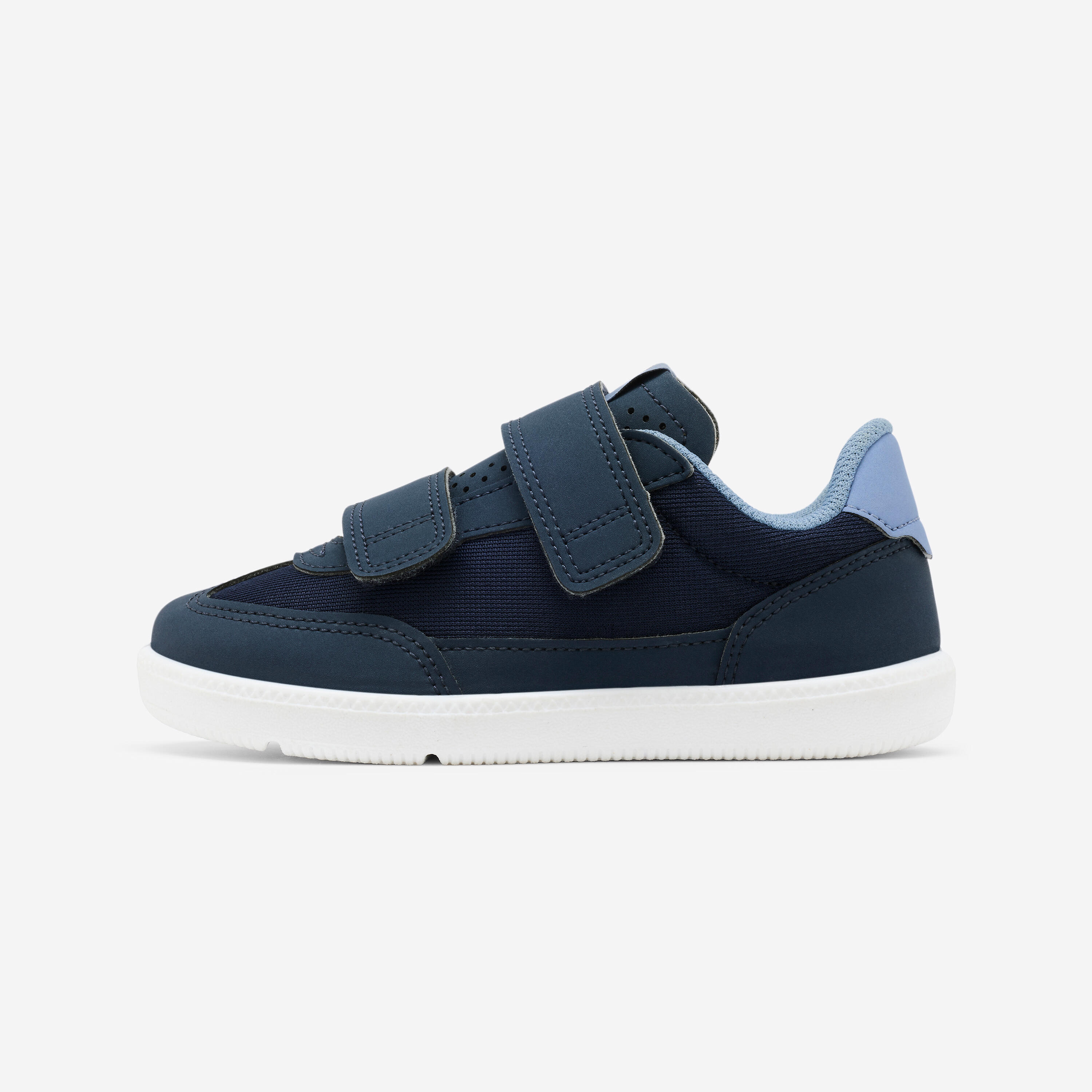
The shoe's design makes it easier for children to put on and take off by themselves. This independence is important at an age when they are learning to dress themselves, whether in the morning before school or after nap time at nursery.
A barefoot shoe for children aged 1 to 6 years.
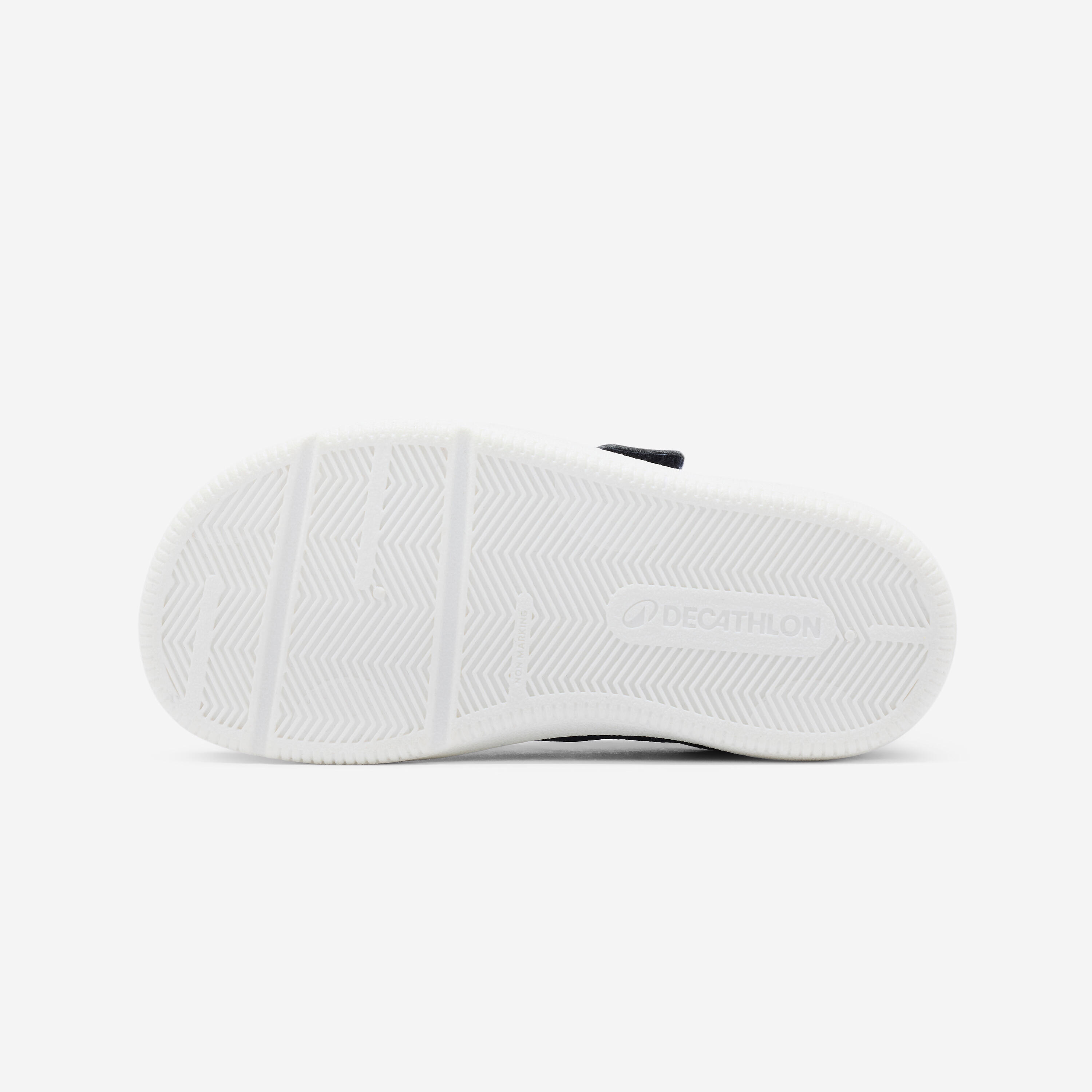
A barefoot shoe reproduces the sensation of walking with no shoes on. This approach respects the natural development of the foot by not restricting its shape or movement. During the early years, children's feet are growing. A barefoot shoe lets them develop without a rigid structure that would influence their development. A barefoot shoe means high flexibility, a thin sole with a 0 drop and a wider front.
A breathable and comfortable shoe
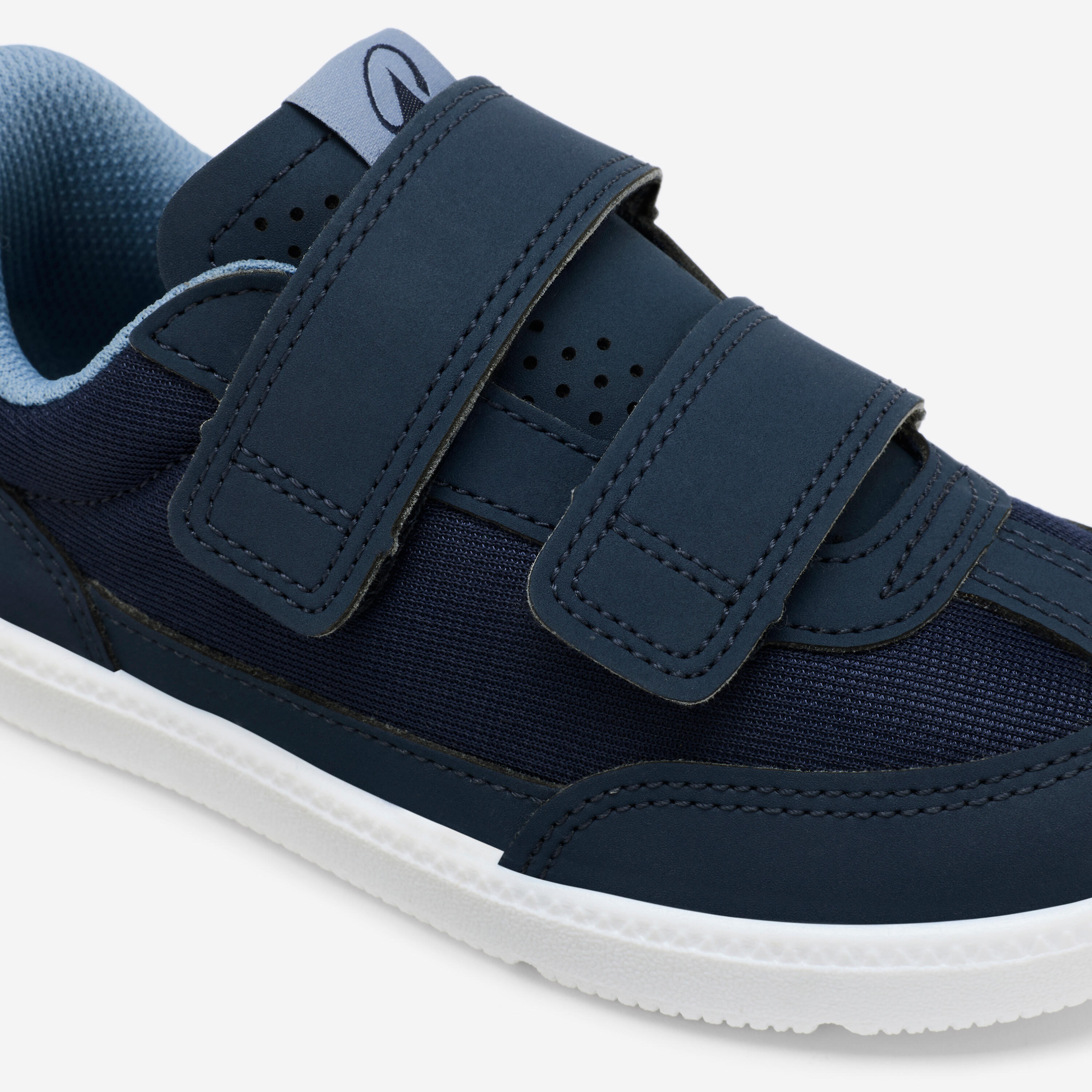
Breathable materials allow air to circulate around the foot, wicking away moisture produced during activities. Feet stay dry for maximum comfort. The shoe's light weight makes it easy for children to run, jump and explore all day long.
A shoe that can withstand school and play
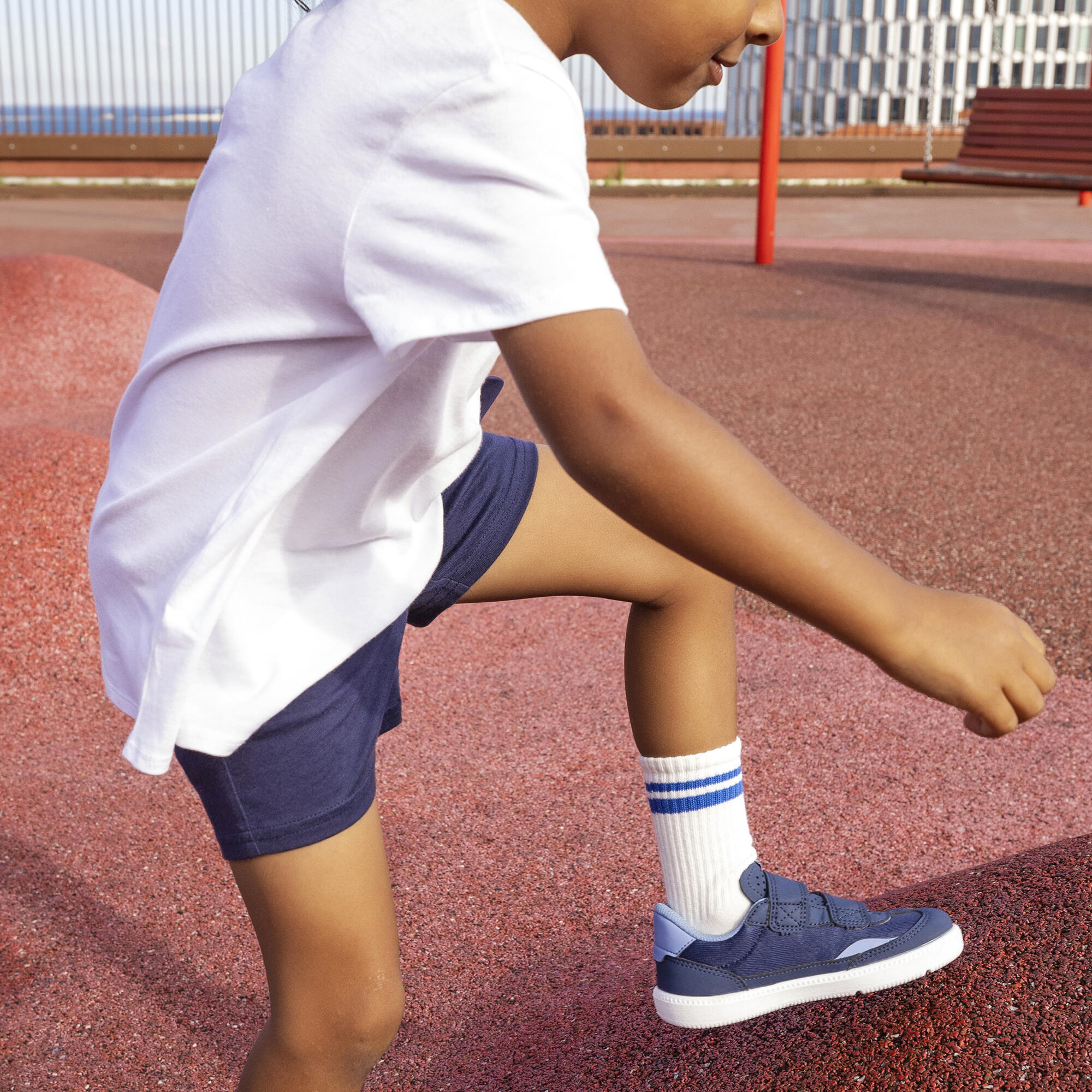
Children of this age are particularly active: at the playground, the park, and during sports activities at school. The shoe is designed to withstand these varied and sometimes intense daily activities. Its sturdy construction withstands friction, shocks and repeated stress from everyday school life and playtime.