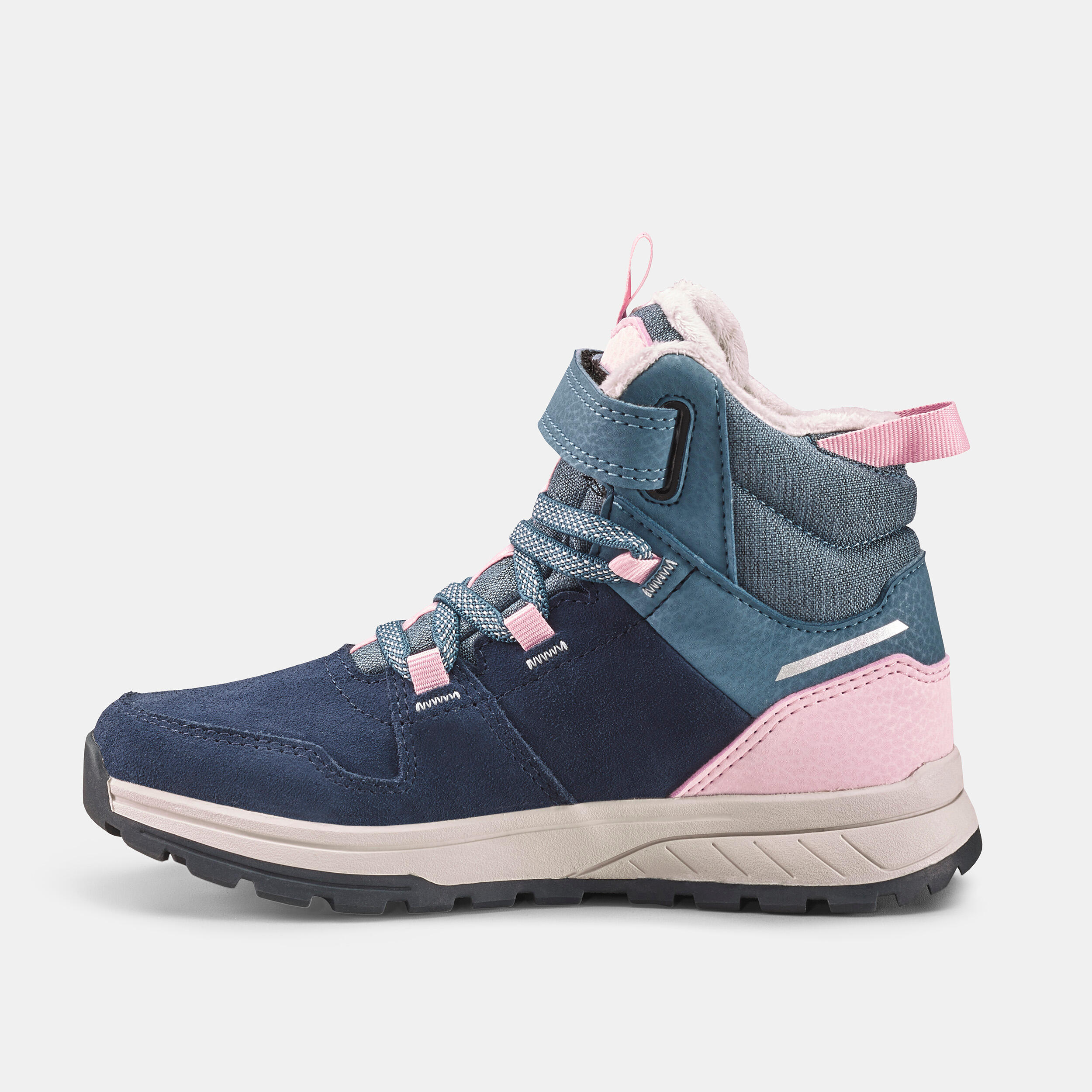
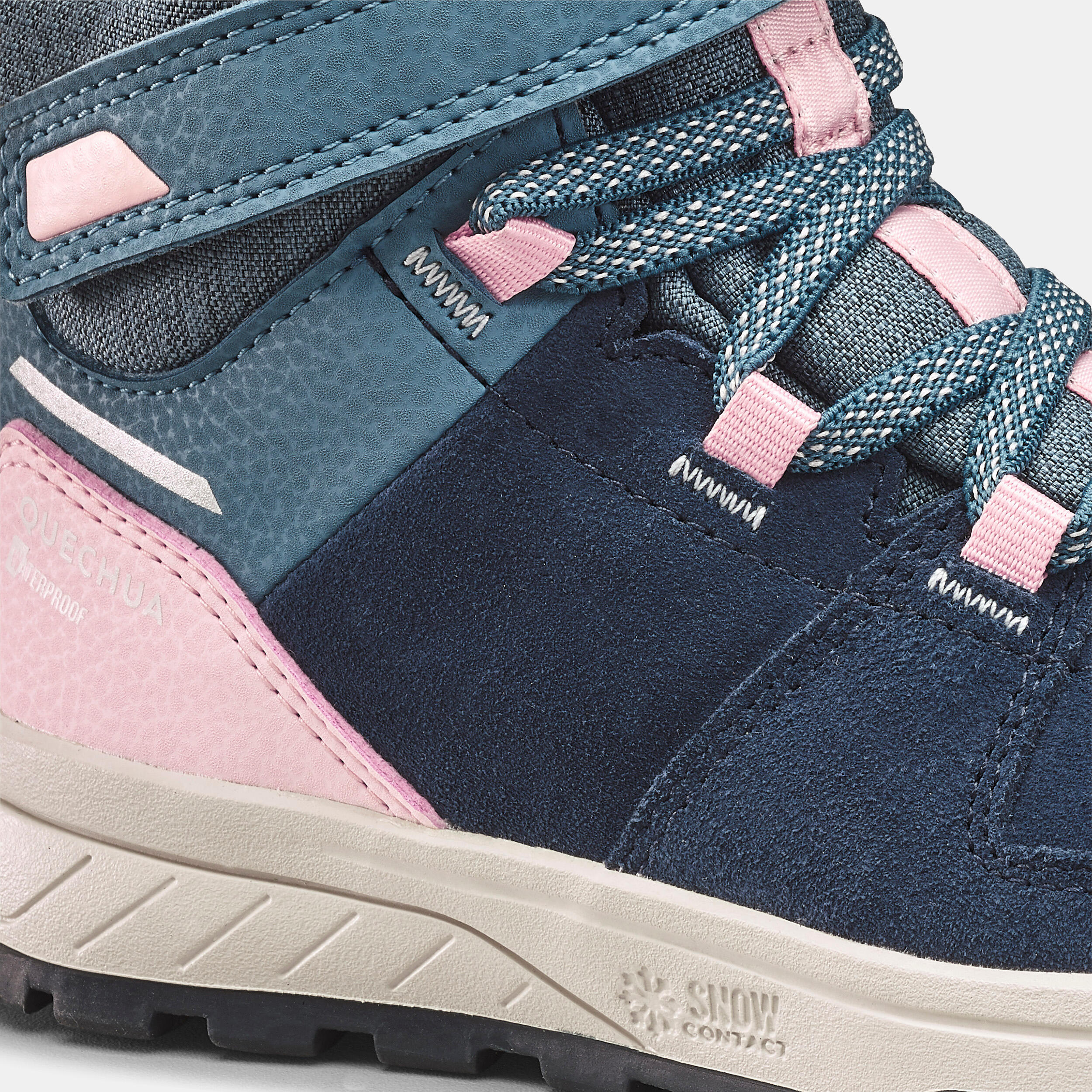
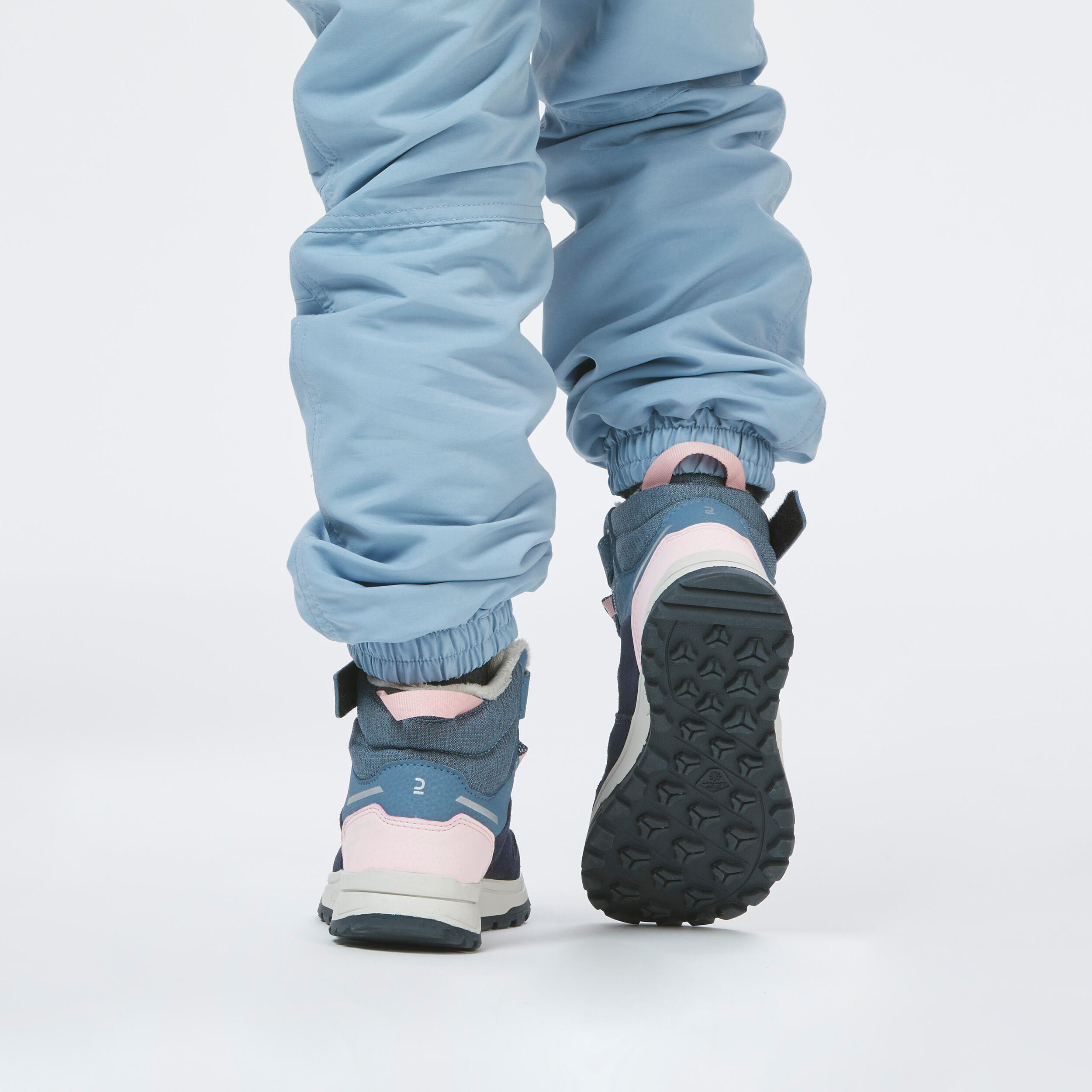
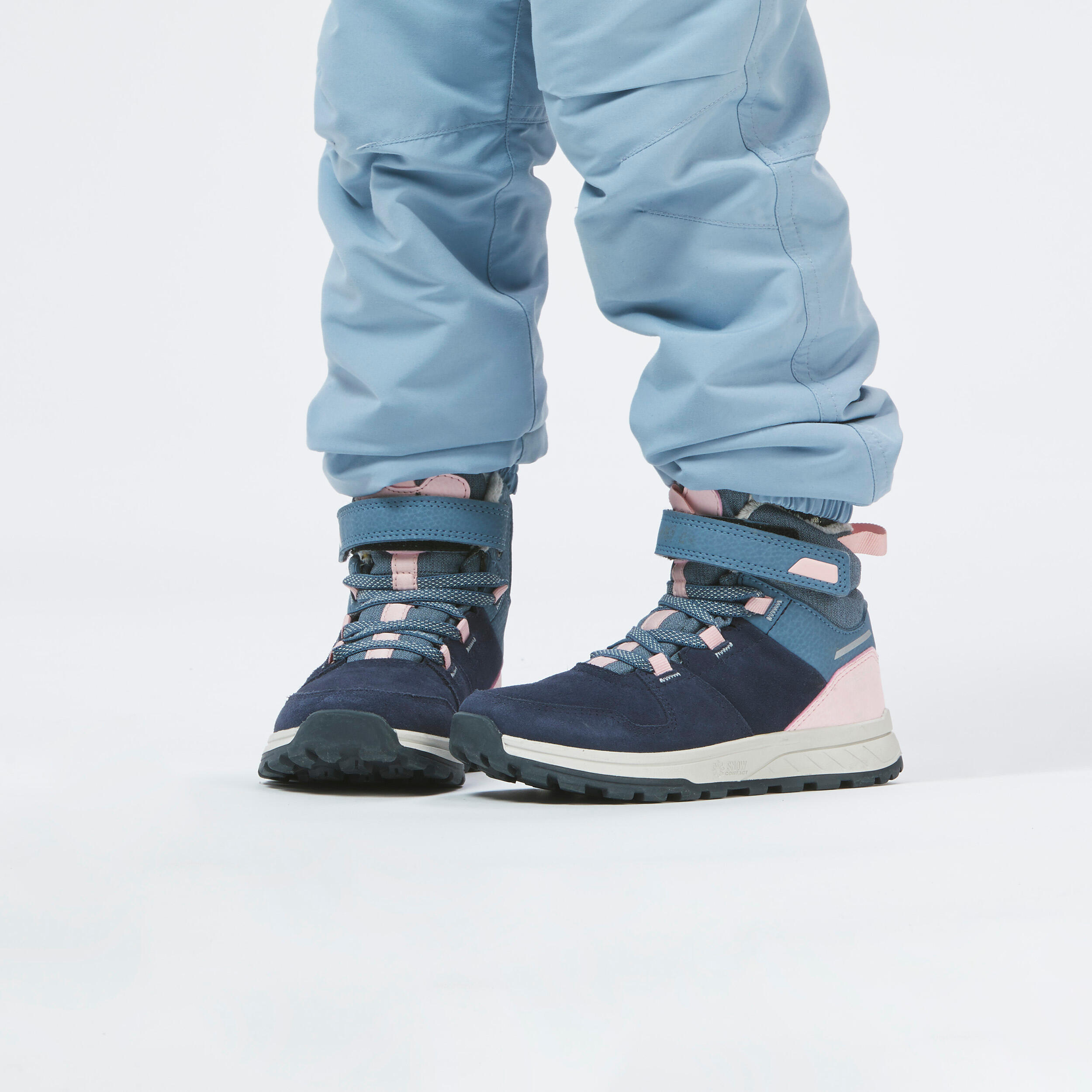
Are these boots warm enough for my children’s hikes?
We perform comparative studies carried out in a thermal laboratory, in walking conditions in light winds (5km/h). This is how we measure the thermal resistance of our boots. However every individual feels the cold differently.
Comfort temperature: felt slightly cold & 70% of users find the thermal sensation acceptable on their feet.
Limit temperature: felt very cold & 10% of users consider the thermal sensation acceptable on their feet.
How do these boots protect my children’s feet from the elements?
Your boots are designed with a membrane to guarantee waterproofing and breathability. A membrane is a very fine component (5 to 25 micrometres) affixed to the inside of a fabric that prevents water from entering while allowing moisture to escape.
How do you care for nubuck-style leather boots?
- Allow to dry away from a heat source
- On dry leather, brush with a stiff brush (horsehair and brass fibres) to remove sludge and dirt.
- Use a crepe brush or nubuck eraser to remove stains.
For stubborn stains, clean with a brush and a little warm water and leave to dry.
- Brush again with a stiff brush.
- Spray a waterproofing product. This will give shine to the leather and liveliness to the colour.
Breathable boots for optimal thermal comfort
Thermal comfort is a balance between the warmth of the boots and its ability to let the foot breathe. Too much heat or not enough breathability means that damp accumulates and cold can set in. We have designed your boots with your activity in mind, be it occasional or regular, with a membrane which prevents water ingress and lets damp out.
How can I be sure that my boots are 100% waterproof?
We made sure that your boots are waterproof by conducting laboratory tests to simulate walking with the boots half submerged in water. We also conducted field tests to measure wear and ageing.
What is the difference between traction and grip?
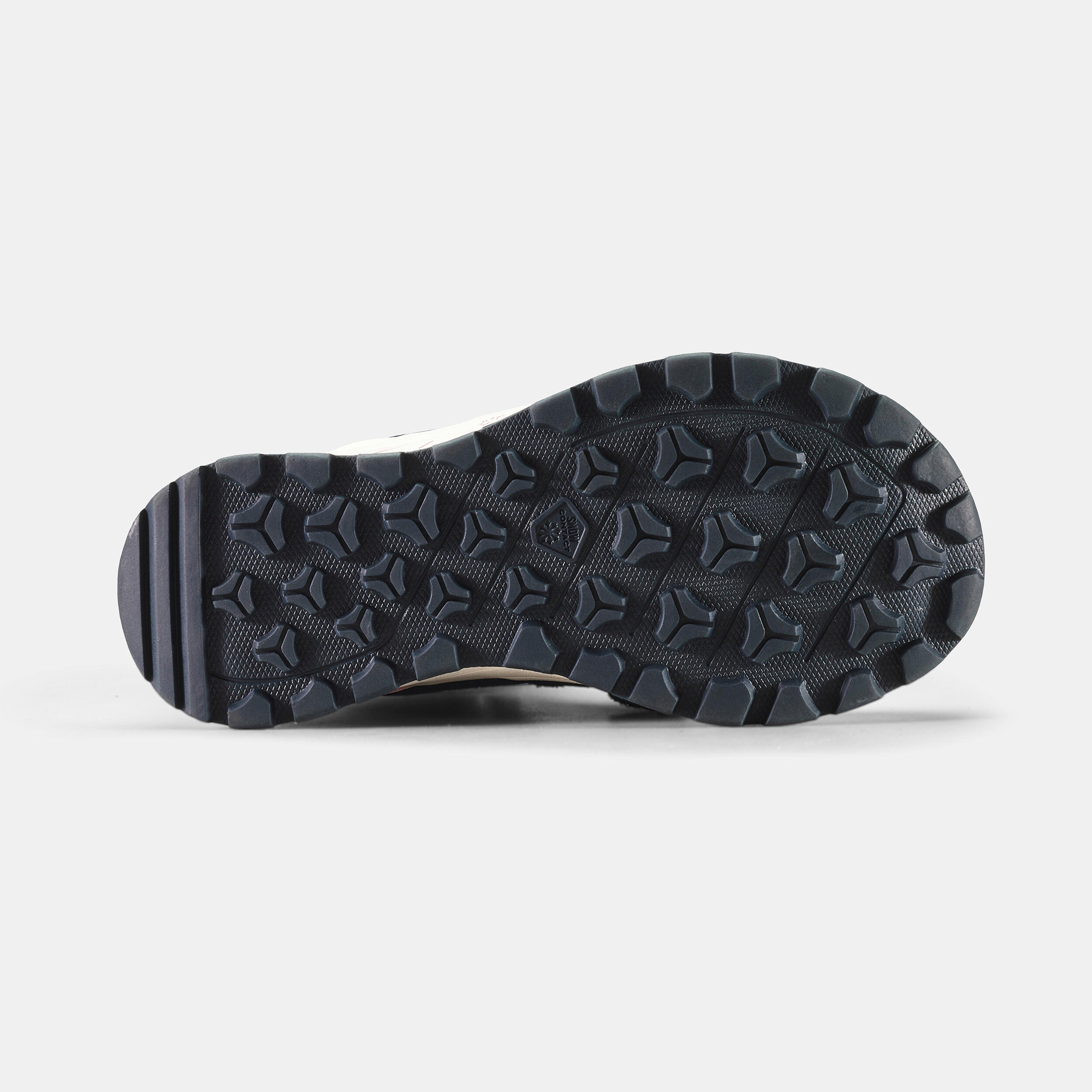
The traction of the boots depends on the number and shape of the studs. The grip is dependent on the materials of the sole and the tread pattern, like the tyres of your car. Traction optimises propulsion, prevents the boot from slipping backwards when going uphill and stabilises the boot.
Grip prevents the boot from slipping and skidding on smooth ground or in demanding conditions (rain, snow, ice) by giving the sole grip.
SNOWCONTACT technology
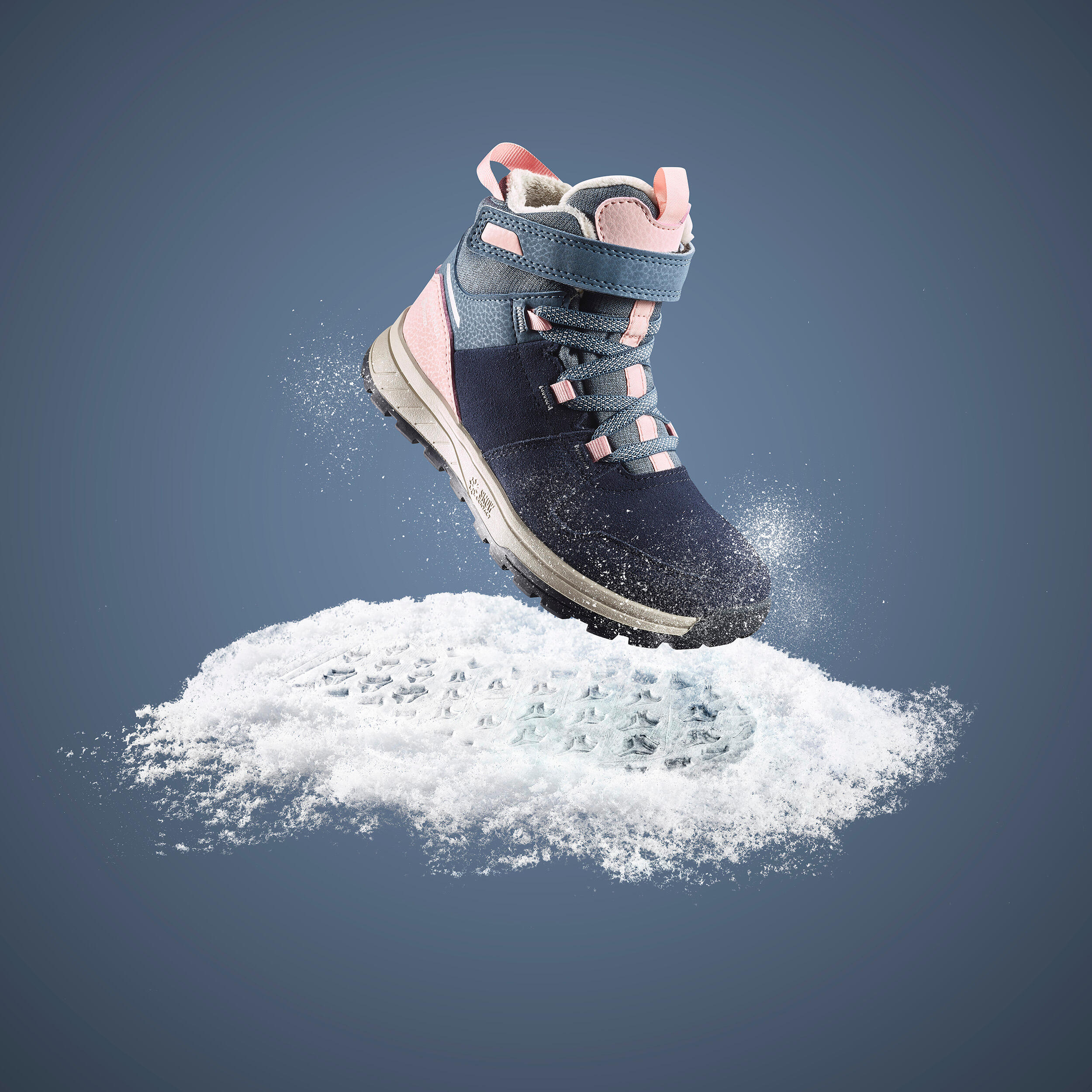
SNOWCONTACT soles are made with a specific component and stud pattern that is designed to ensure the best possible grip and traction. SNOWCONTACT soles are more effective than traditional soles on snow. When walking on ice, the only way to ensure optimum safety is to add anti-slip grips to your boots.
How do I choose the right footwear for snow hiking?
To be well equipped in winter, we recommend that you follow these guidelines :
Warmth: warmth provided by a warm pair of socks (ideally containing a suitable percentage of wool)
Breathability: Choose the sock according to the intensity of the hike and make sure you wear a breathable model to minimise moisture.
Boot height: adapt the height of the sock to the height of the upper and preferably choose high models if you want more protection.
Our tips on use and care
The boot can accumulate moisture (sweat, condensation). If there is a lot of moisture, remove the insole, stuff it with newspaper and change the paper regularly to speed up the drying process. Avoid any direct sources of heat; Leave to dry in a warm, dry, well-ventilated place.