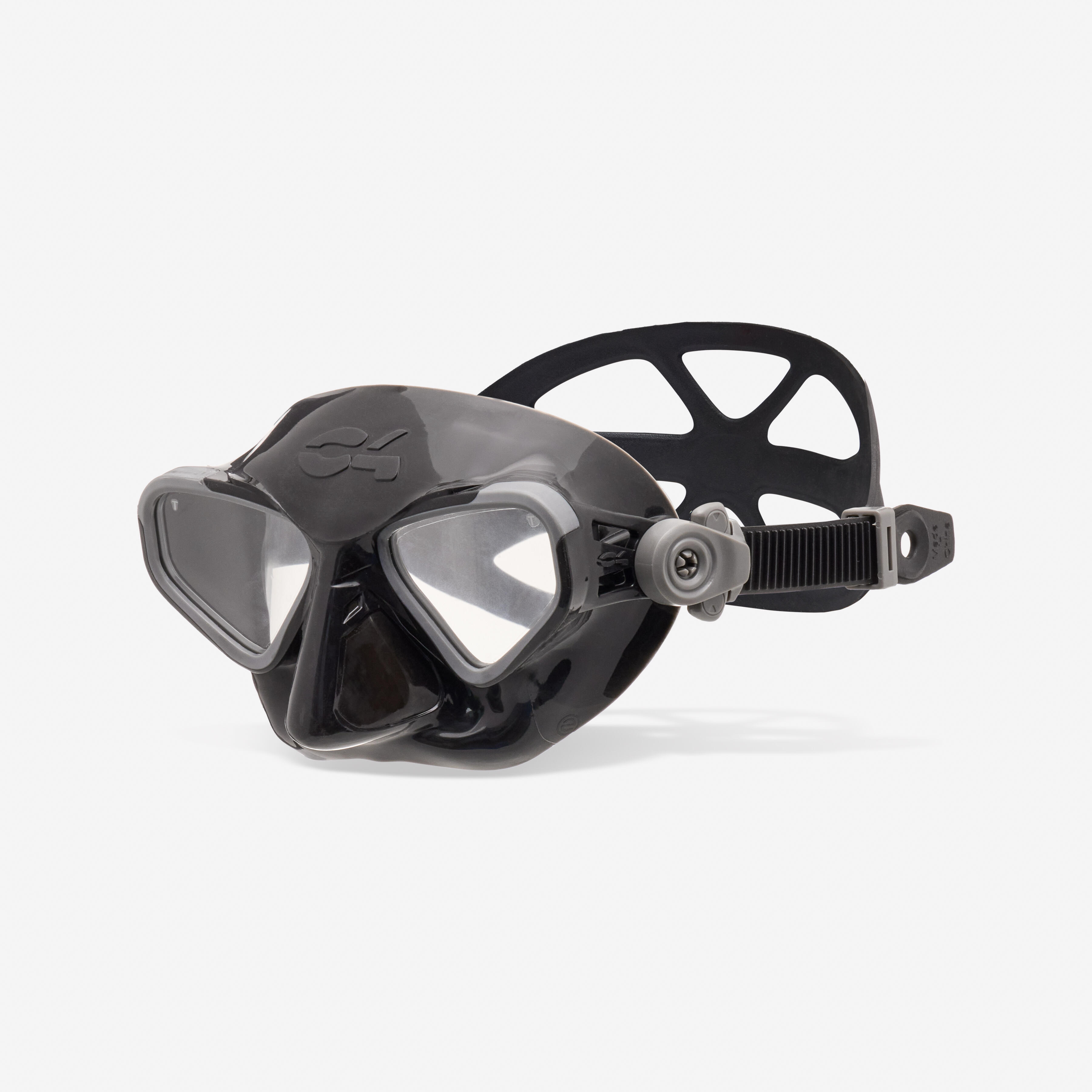
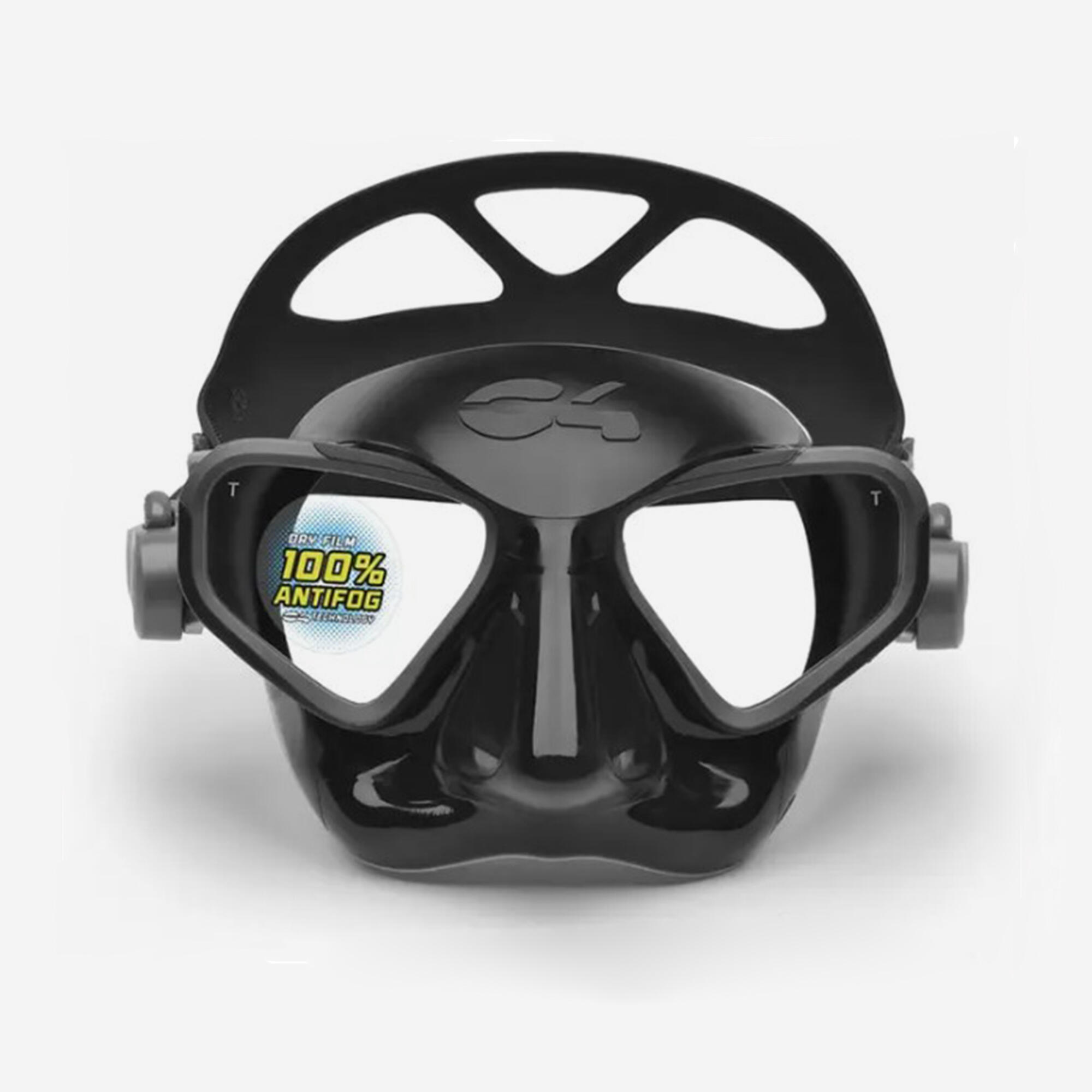
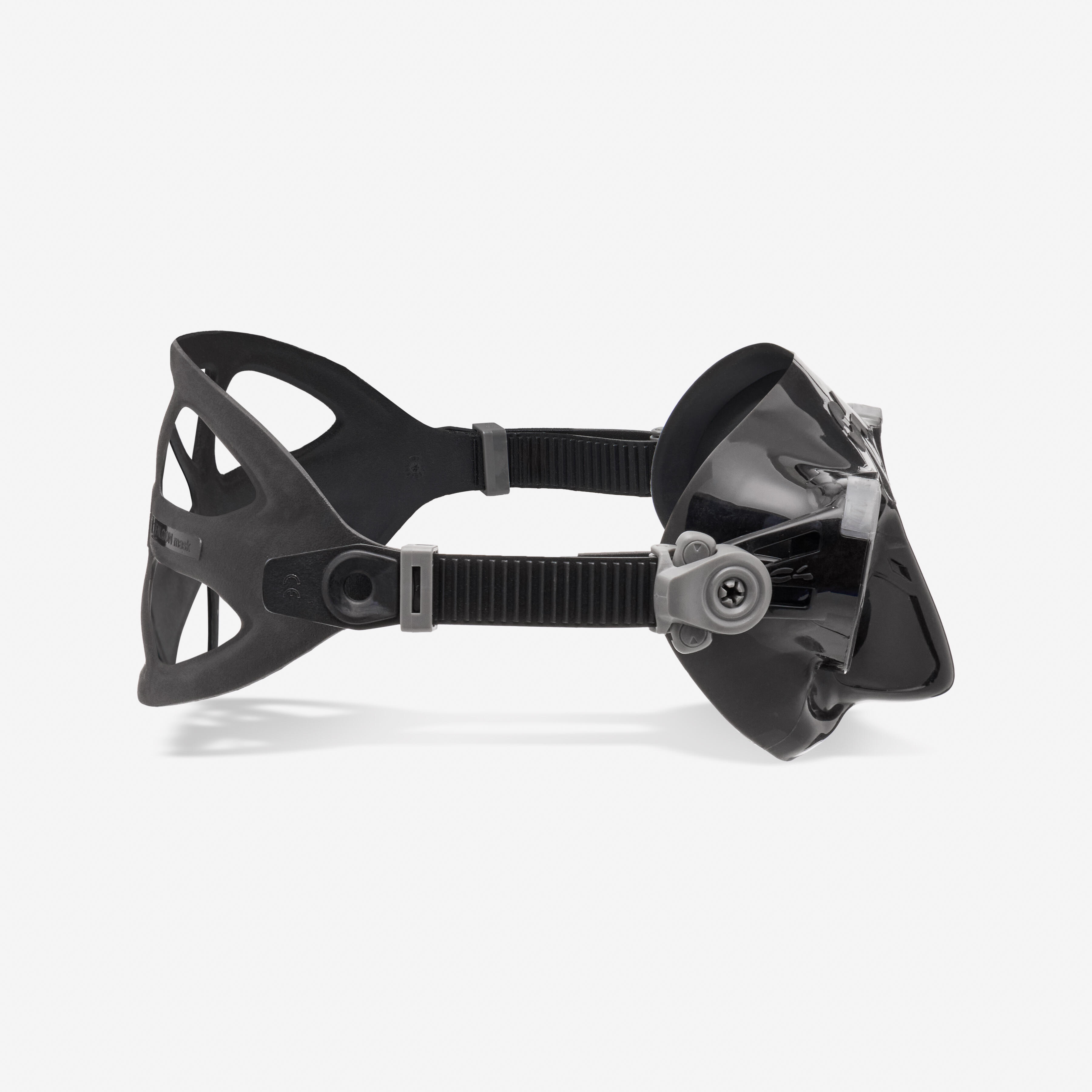
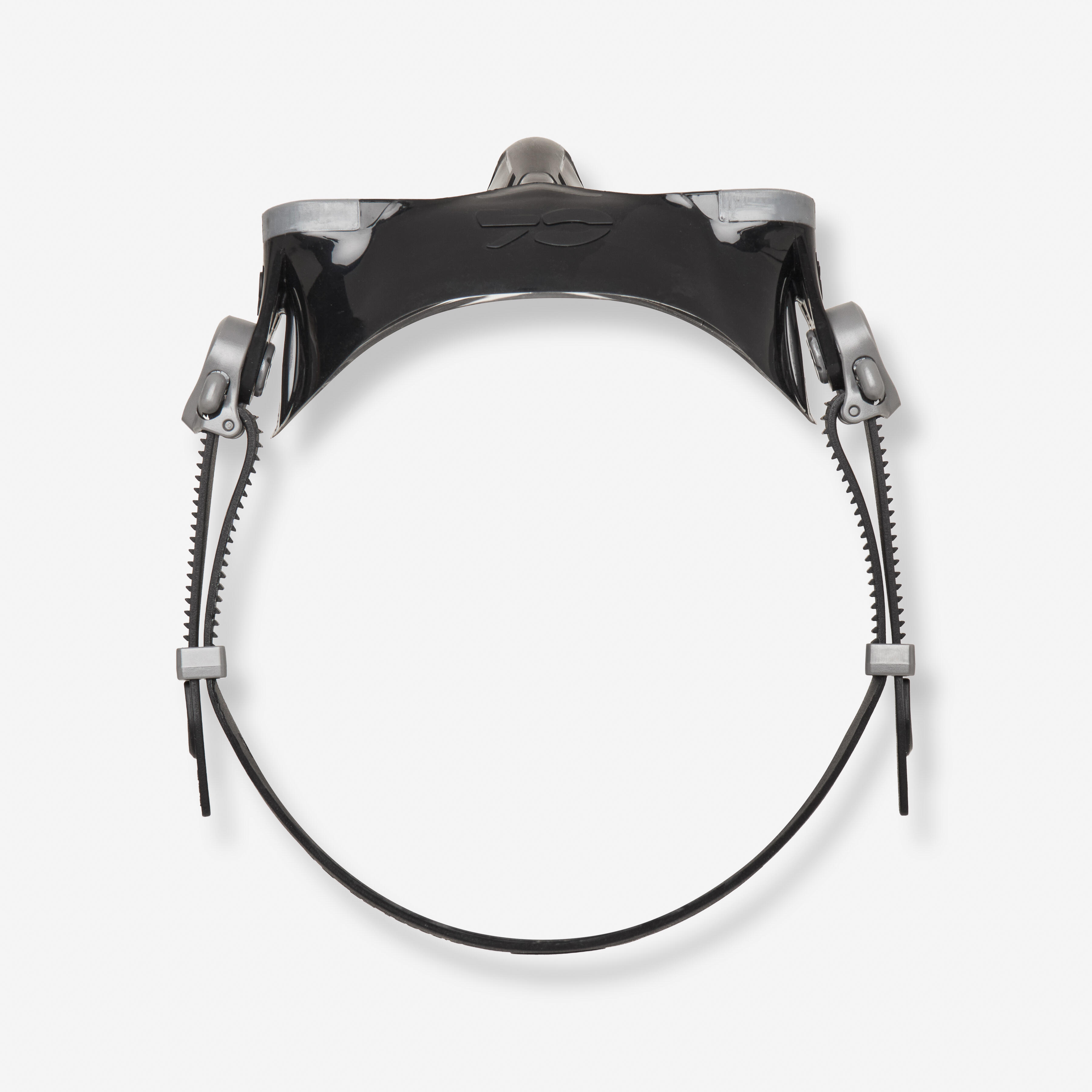
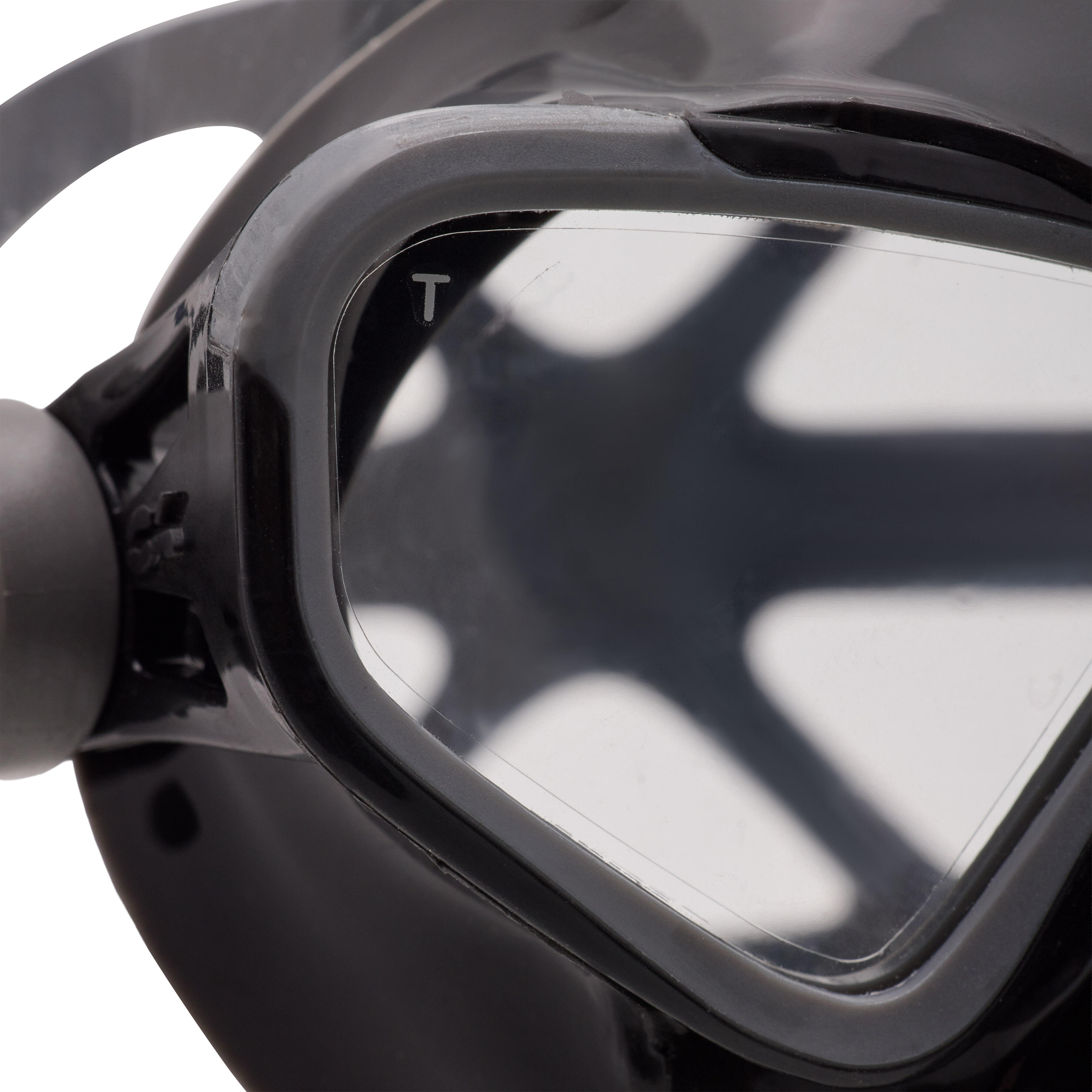
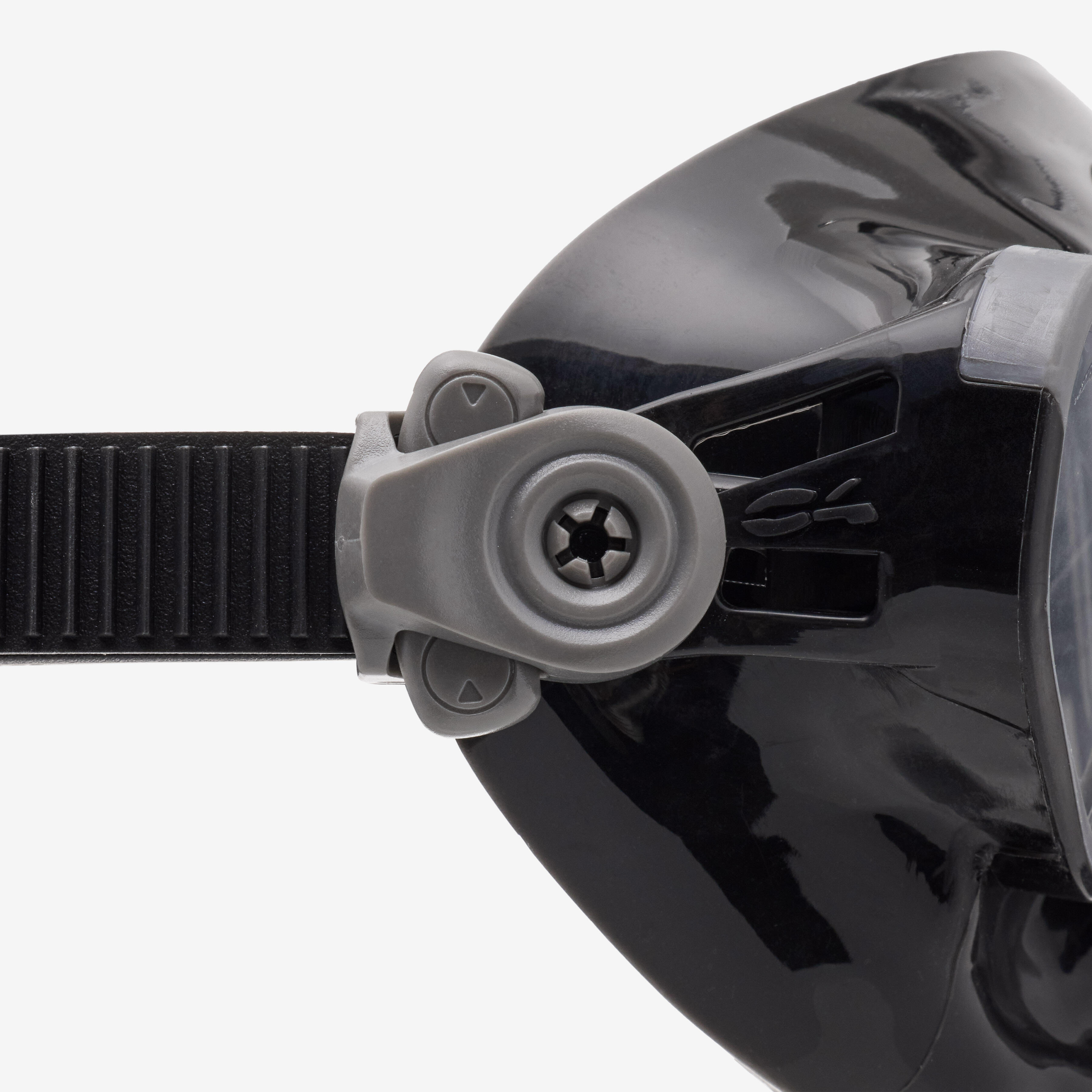
A design focused on glide and watertightness
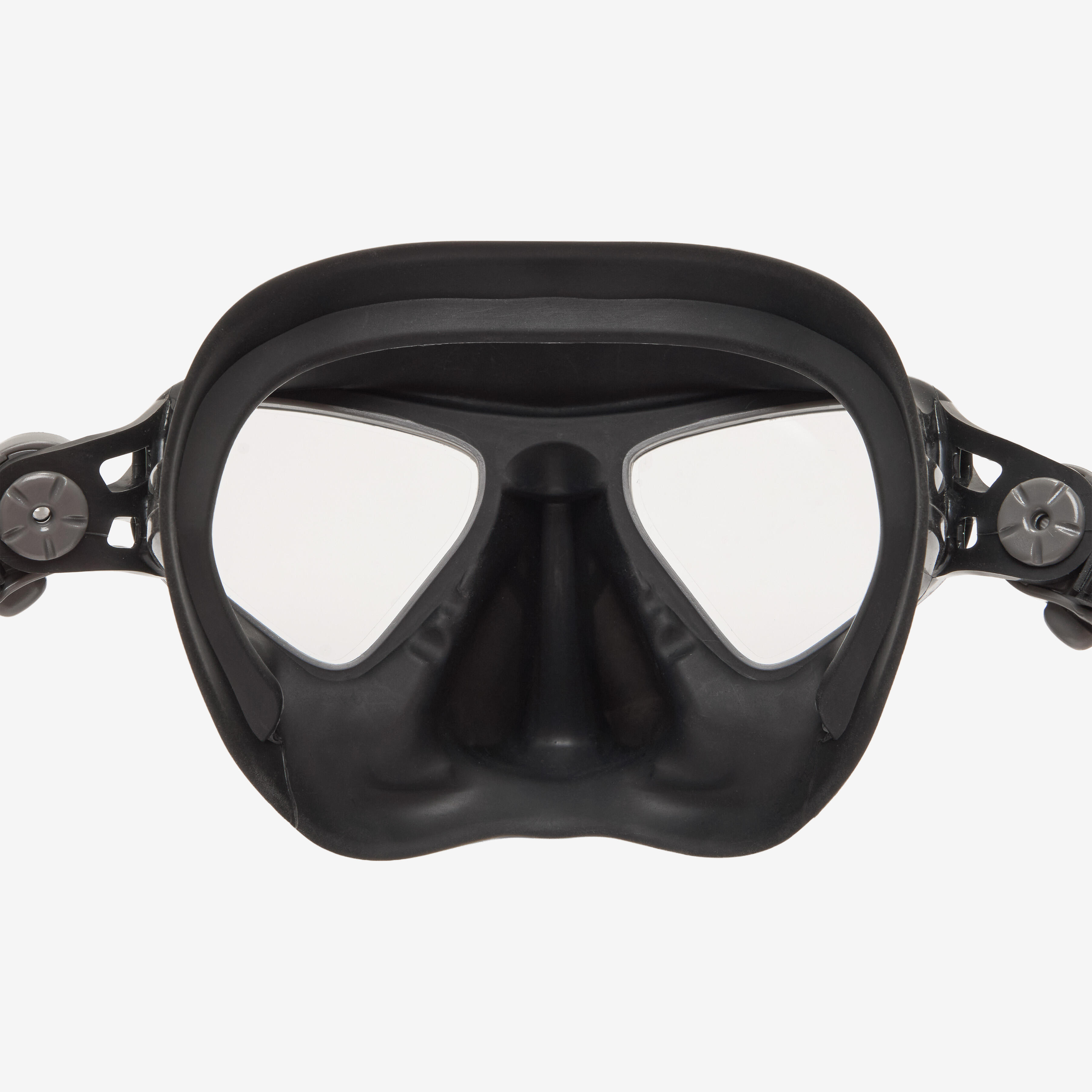
The body of the Falcon mask has been designed to optimise hydrodynamics. It moves smoothly through the water, reducing the stress caused by the deep dives and rapid ascents typical of freediving. For a reliable seal, the skirt features a pronounced edge (including under the nose) and a sloping perimeter seal, with a velvety interior finish.
How does the anti-fog system of the Falcon AF mask work?
To ensure consistently clear vision, an anti-fog film is applied directly to the inner surface of the lenses. This film prevents fogging in all conditions, provided a few simple instructions are followed.
No pre-treatment required: simply rinse with water before wearing, without touching the inside of the lenses.
How do I maintain the anti-fog treatment?
To preserve the effectiveness of the anti-fog film:
Do not damage the film: do not remove it or scratch it.
After each dive, rinse the lenses in fresh water and dry with a clean cloth.
Before each use, wet the lenses.
Rinsing under running water is enough if the mask is well maintained.
For stubborn dirt/marks: use a non-greasy detergent diluted in fresh water.
Remember: the presence of dirt or impurities can still cause fogging, even with the treatment.
How to choose the right mask size
To check the correct size and seal:
- remove the strap and place the mask on your face
- press lightly with your hands and hold your breath.
If the mask “sucks” onto your face and stays in place, it’s perfect!
It’s the right size and will seal properly in the water.
If, on the other hand, it slips or falls off, it’s because air is getting in and so will water: you’ll need to try a different size or a different model/shape.
What are the features of the Falcon AF mask lenses?
For maximum safety and clarity, the Falcon mask is fitted with ultra-clear 3 mm tempered glass lenses. This material offers far greater strength (2 to 5 times stronger than a standard lens) and is designed to break into small, non-sharp pieces on impact, reducing the risk of serious injury. It is also much more scratch-resistant than a polycarbonate lens.
What is mask squeeze and how can it be avoided?
Mask squeeze is a phenomenon that occurs during descent, even within the first few metres underwater. As pressure increases, the air inside the mask compresses, creating a suction effect that can cause discomfort or even injury (to the face, eyes, etc.). To prevent this, you must equalise the pressure by gently and regularly blowing air through your nose during descent.
Dimensions and weight
Width: 137 mm
Height: 100 mm
Weight: 140 g