What is the breakdown of the weight of the MT900 4P tunnel tent?
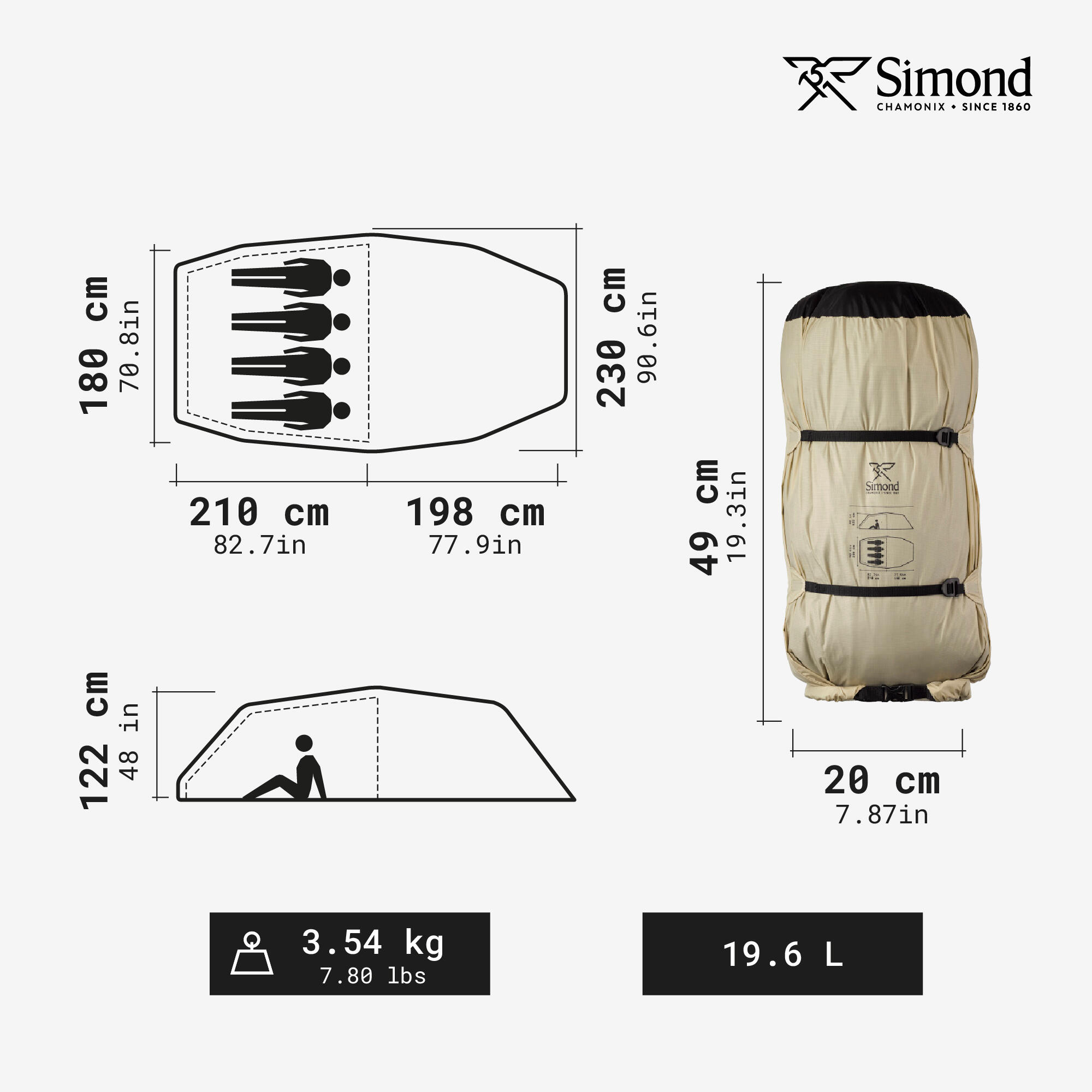
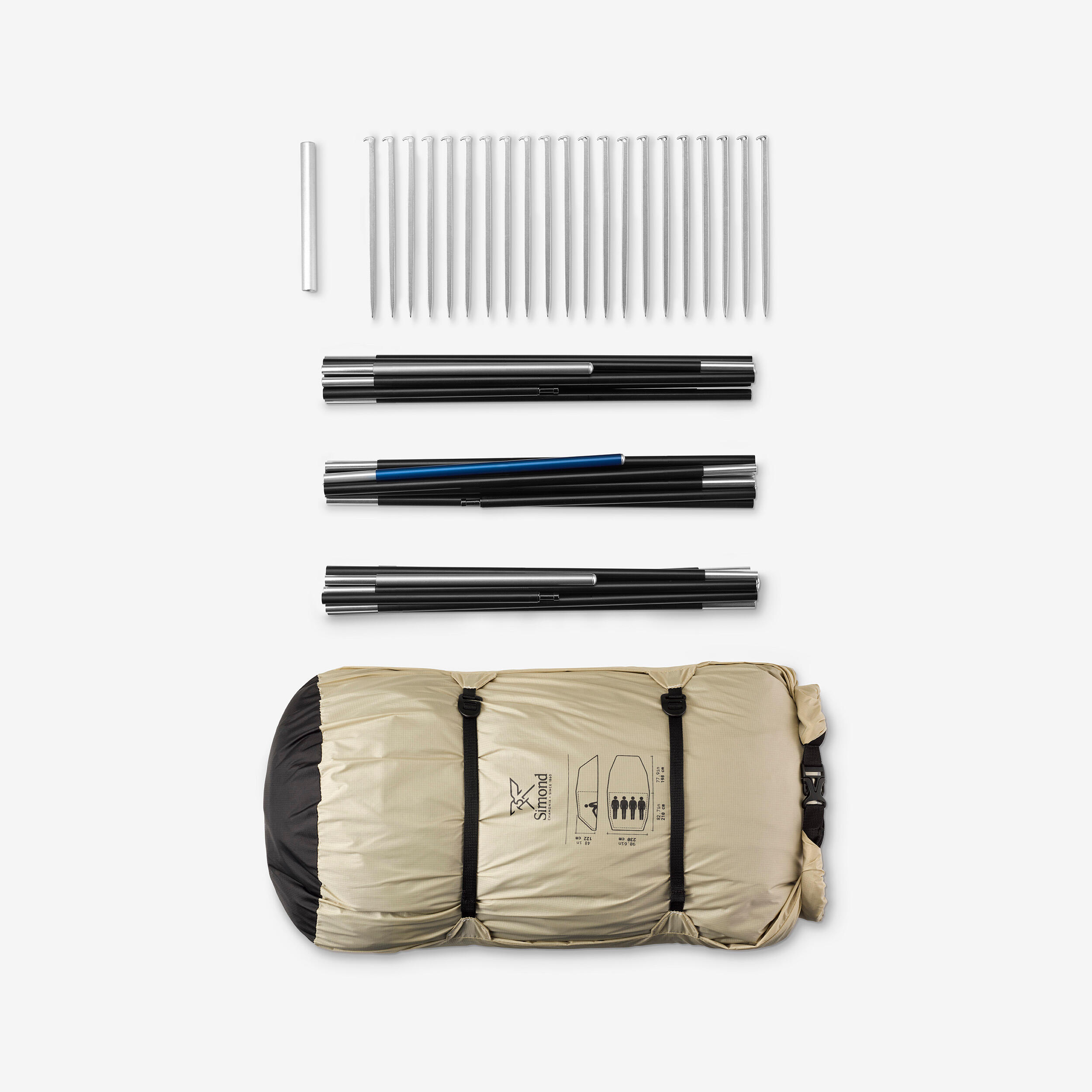
- Total weight: 3,540g
- Inner bedroom: 815g
- Flysheet: 1,425g
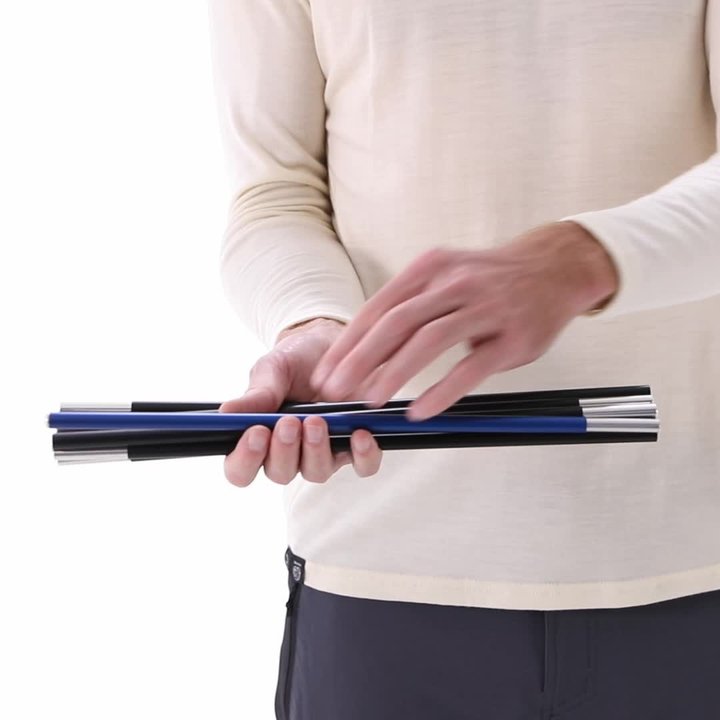
- Pole kit: 945g
- Pegs (20 units): 205g
- Guy ropes (11 units): 45g
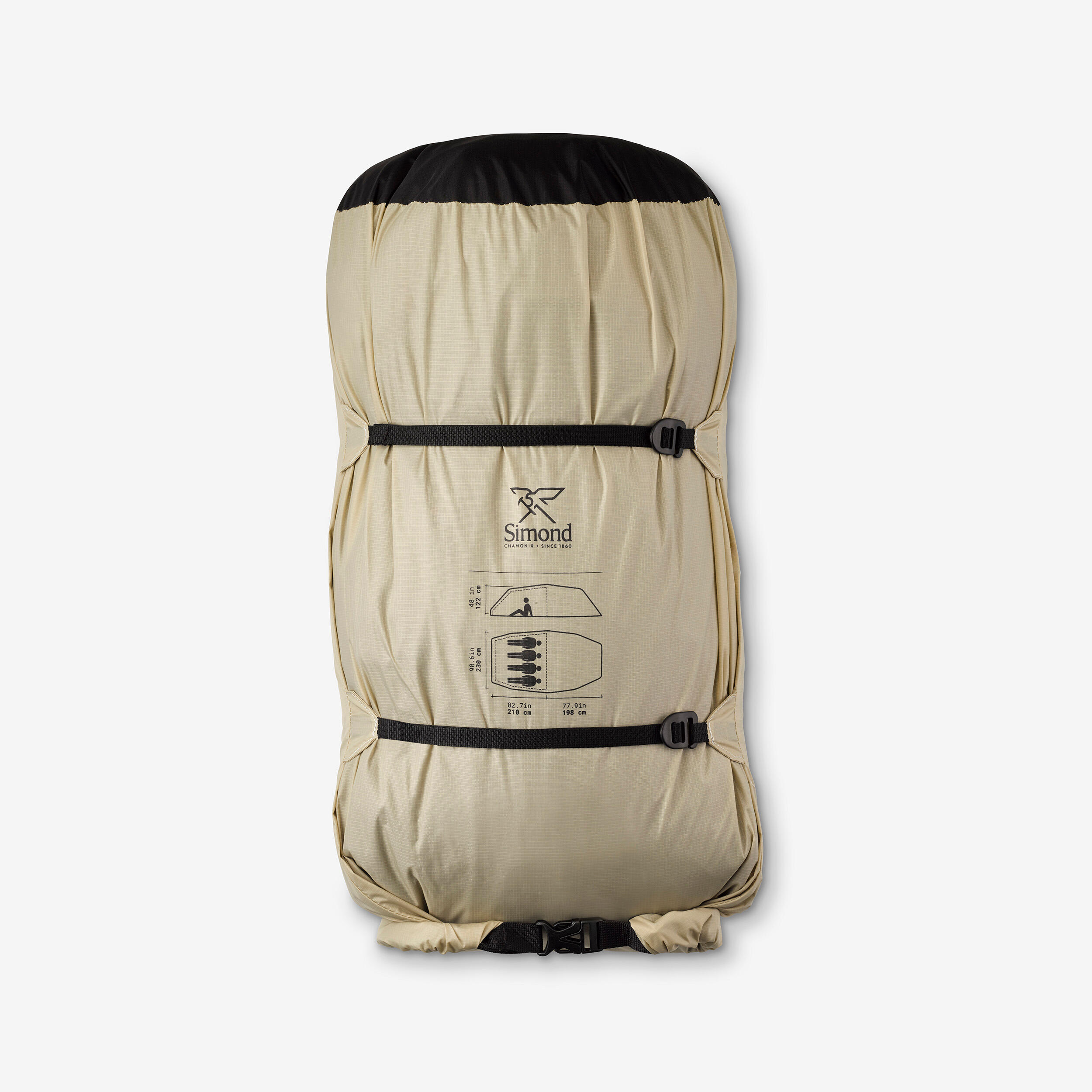
- Covers: 70g + 15g + 6g
- Repair kit (ferrule): 13 g
How do you protect your tent’s durability?
Your tent is designed for itinerant bivouacking, it is therefore not designed for static use in the sun.
We recommend that you avoid leaving it in the sun as the ultra-light fabrics can be sensitive to UV light, that damages them.
What are the dimensions of the MT900 4P tunnel tent?
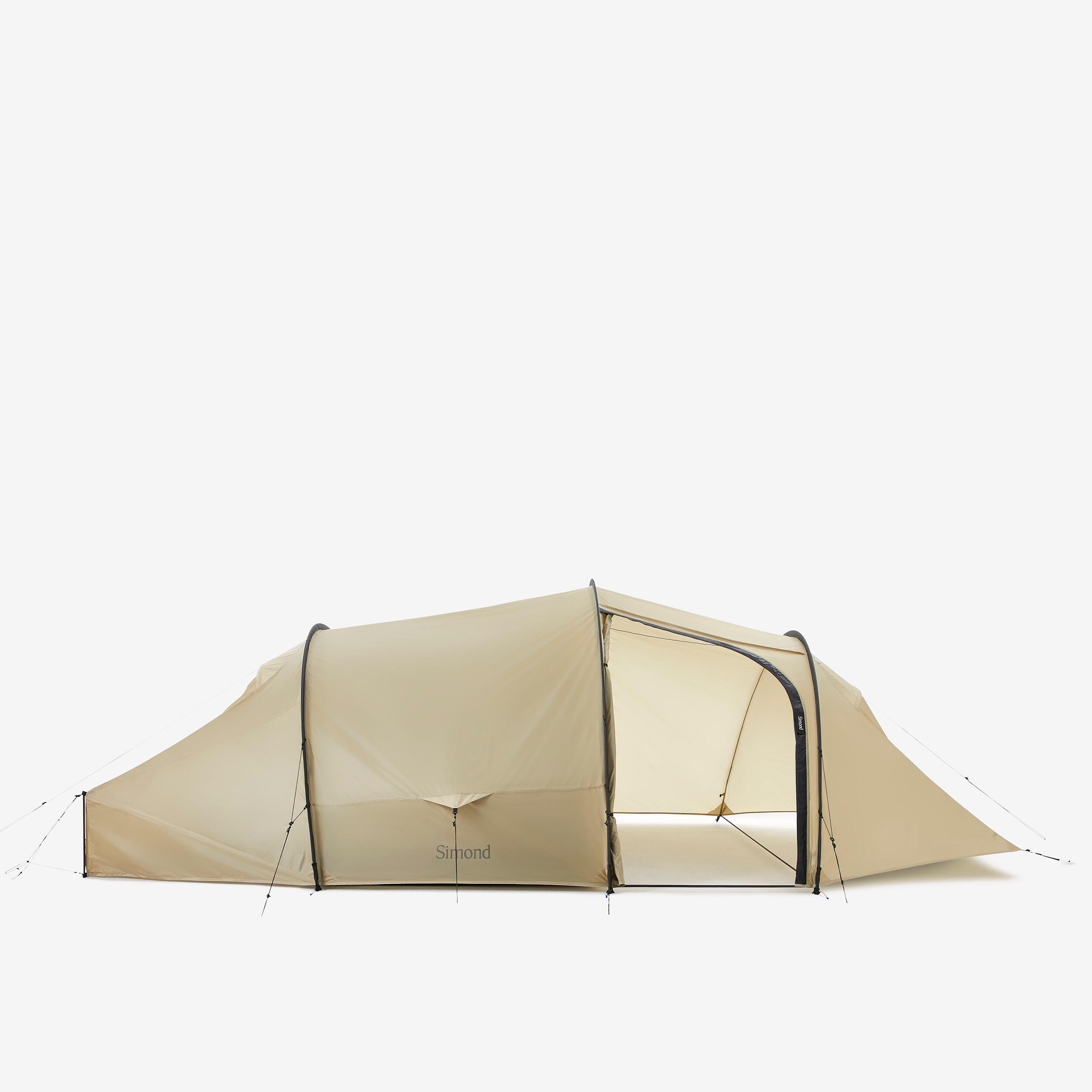
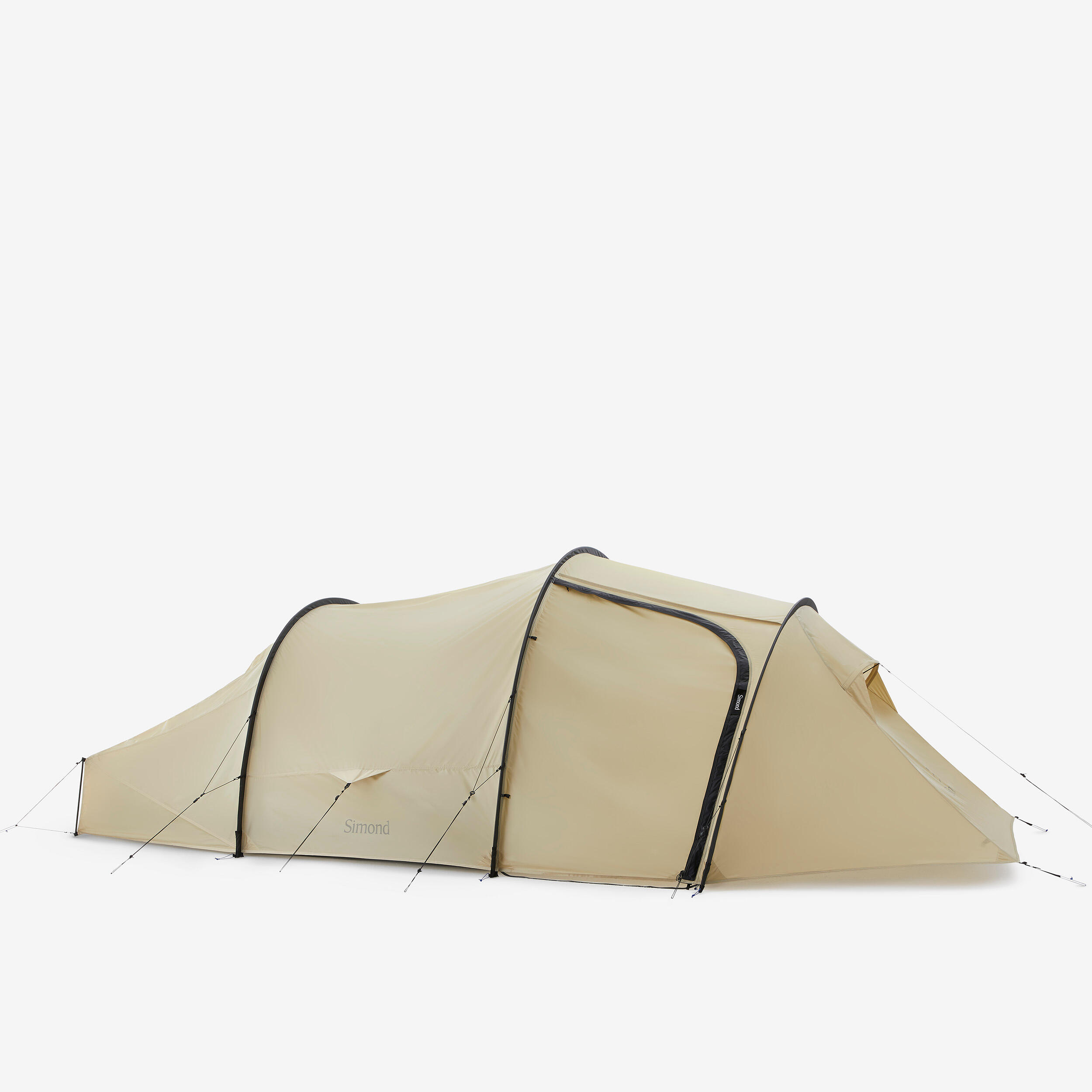
- Length of the bedroom: 210cm.
- Width of the bedroom: 230cm at the head-end.
- Height of the bedroom: 125 cm.
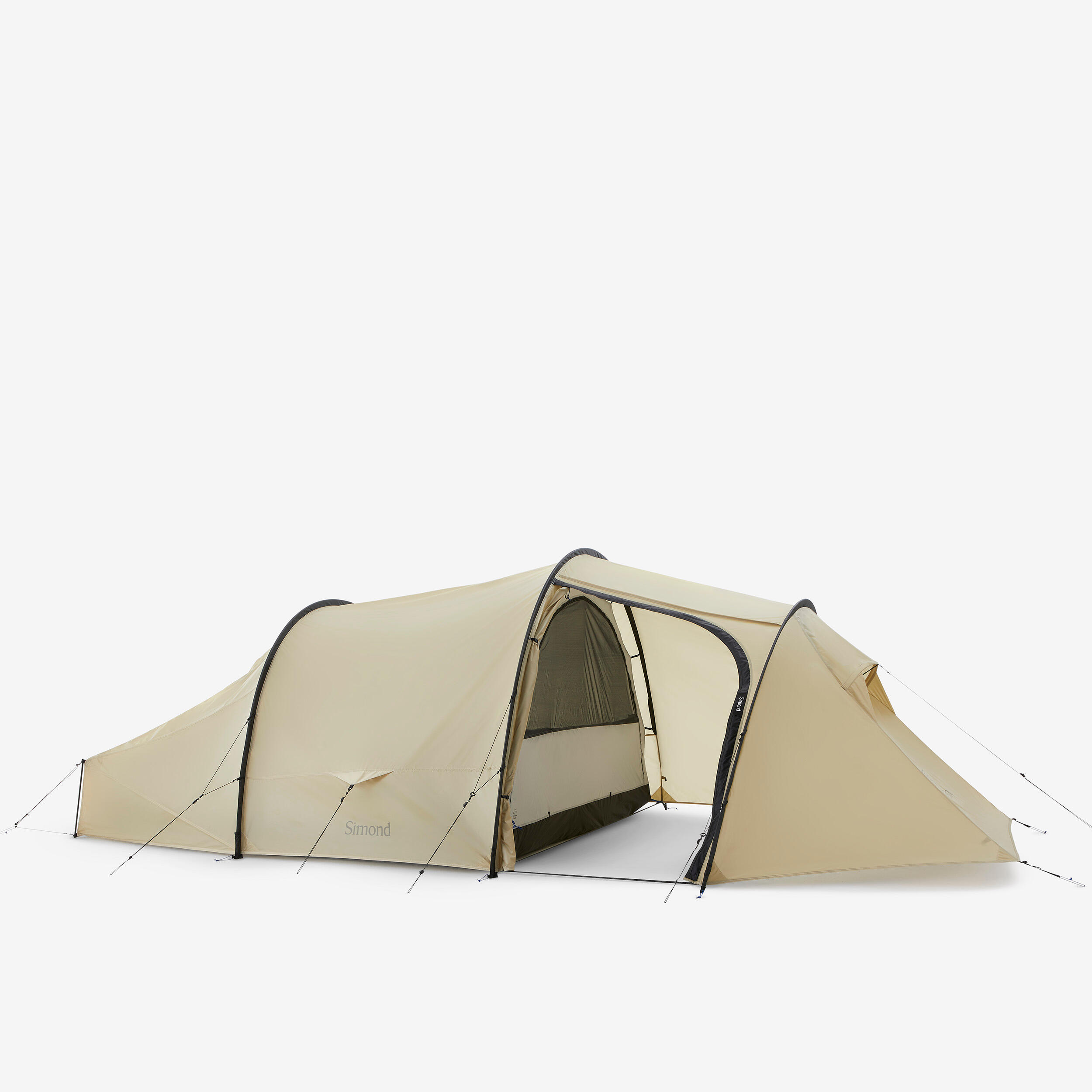
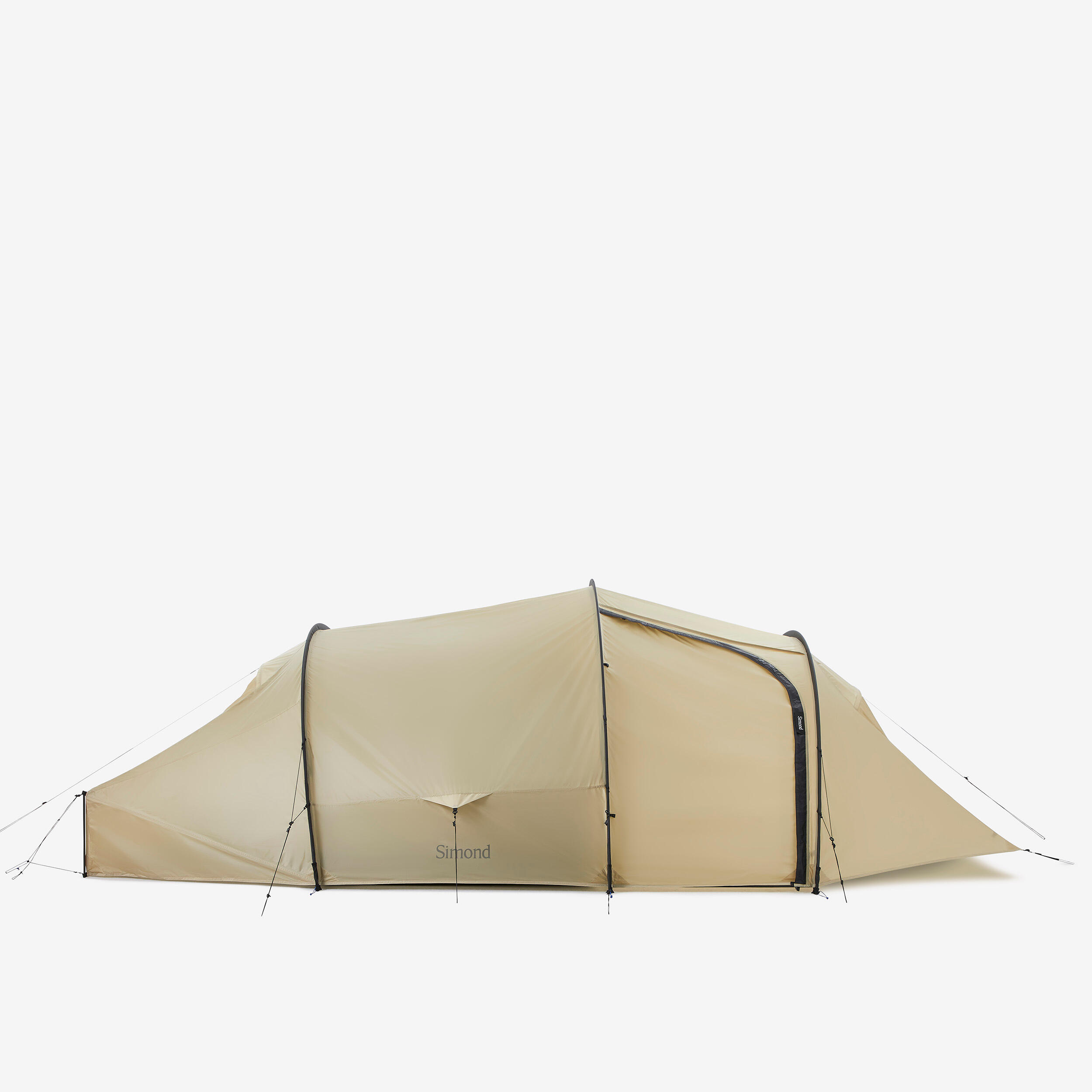
- Exterior length: 420cm
- Exterior width: 250cm
- Exterior height: 135cm
- Porch surface area: 4.6 sqm
How do you prevent the risk of condensation inside the MT900 4P tunnel tent?
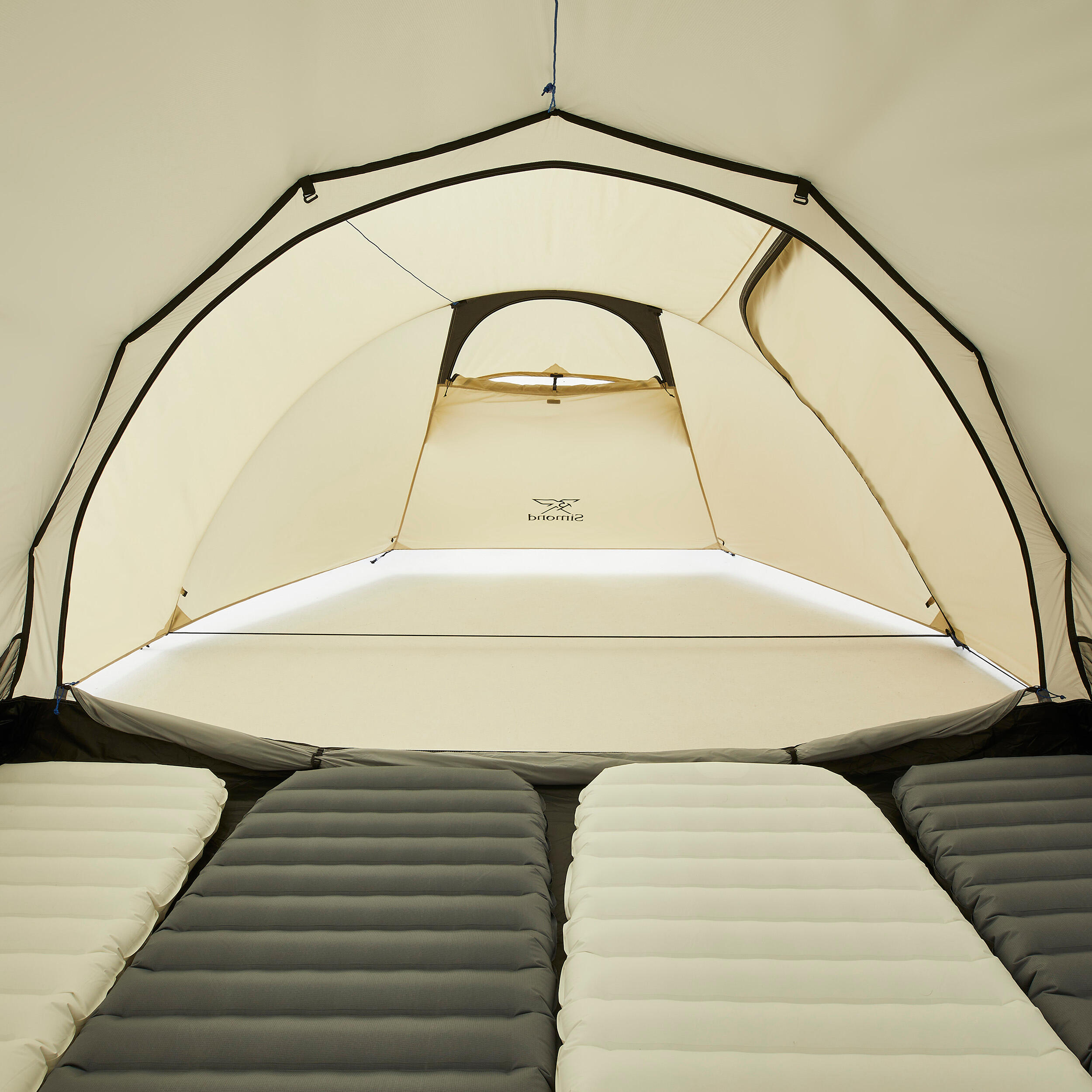
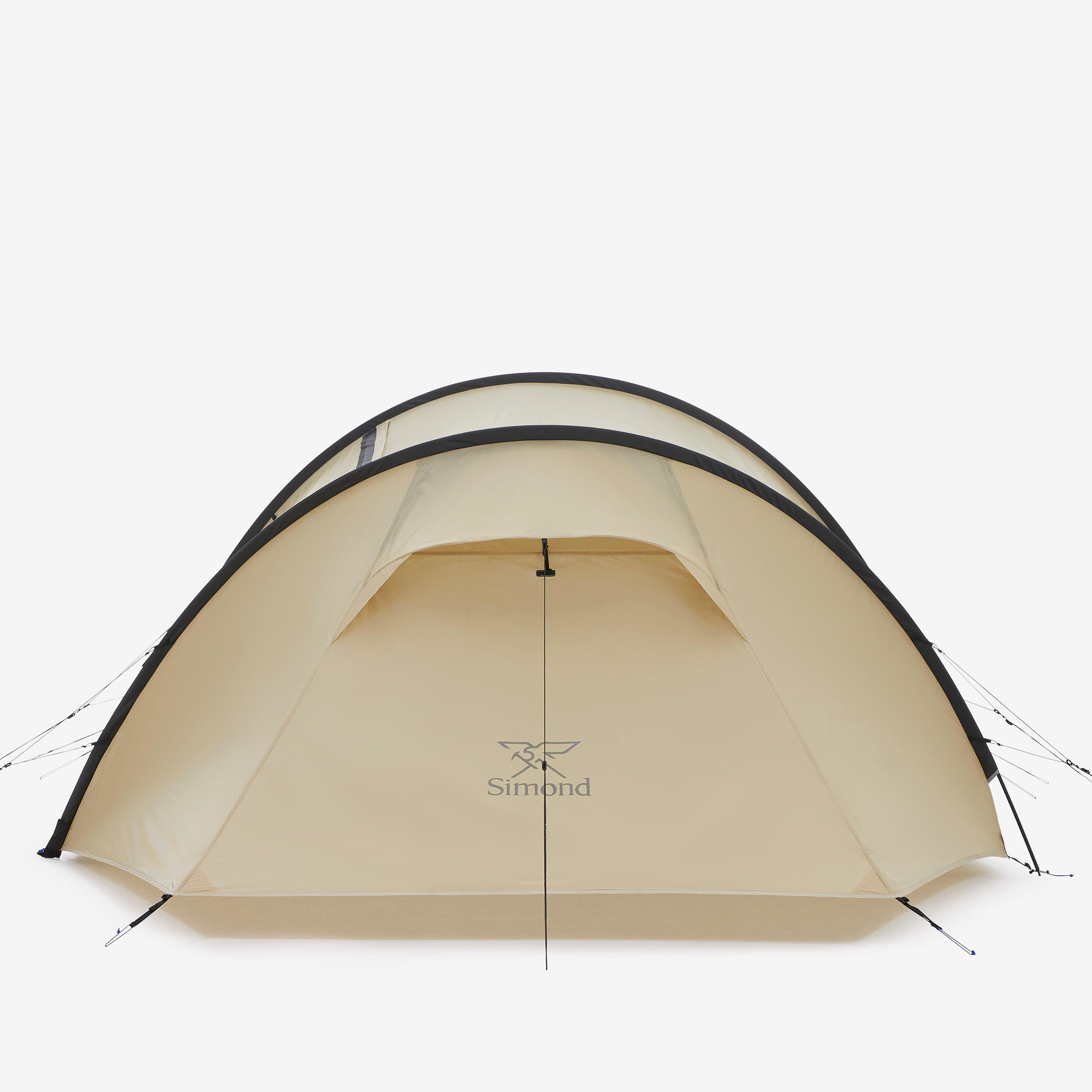
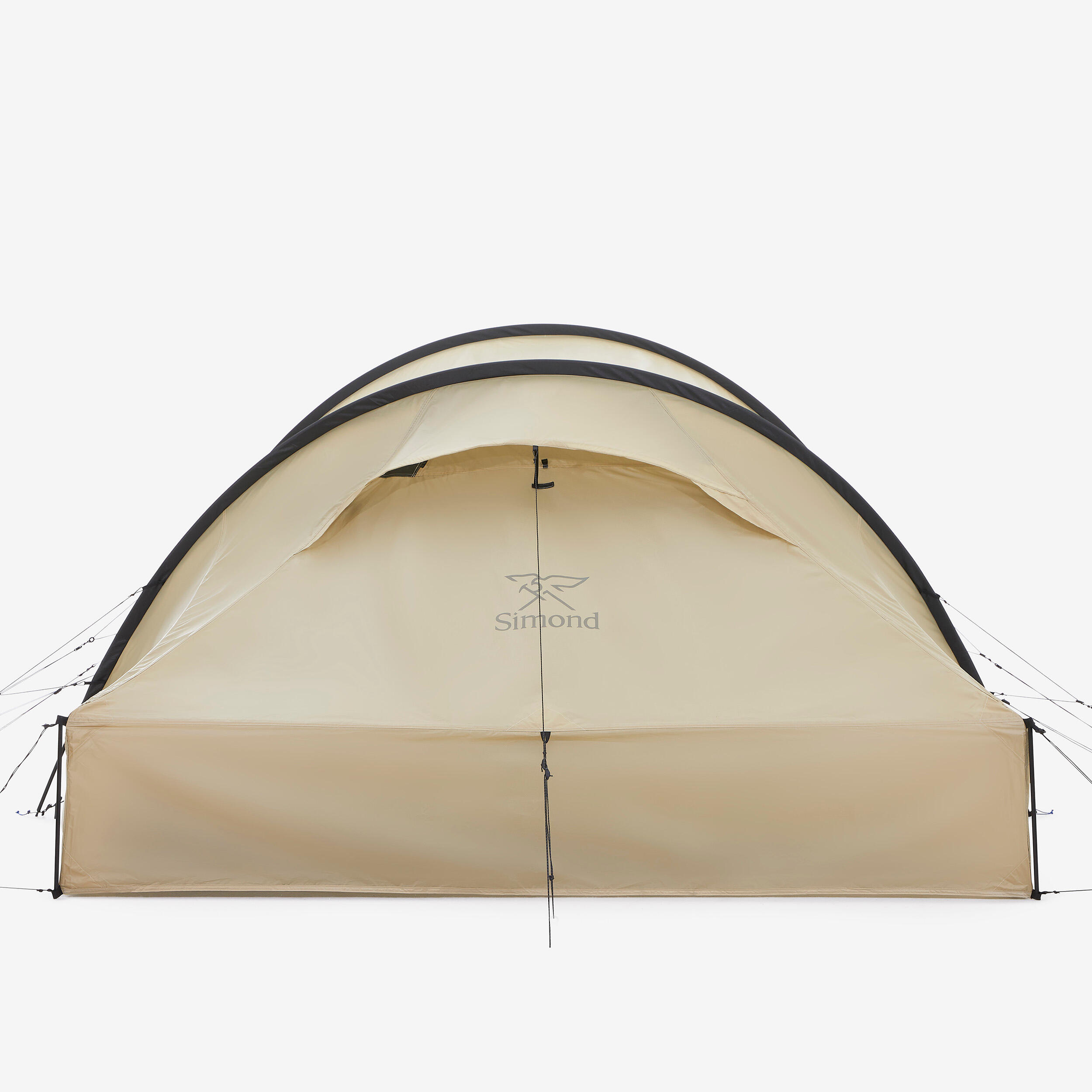
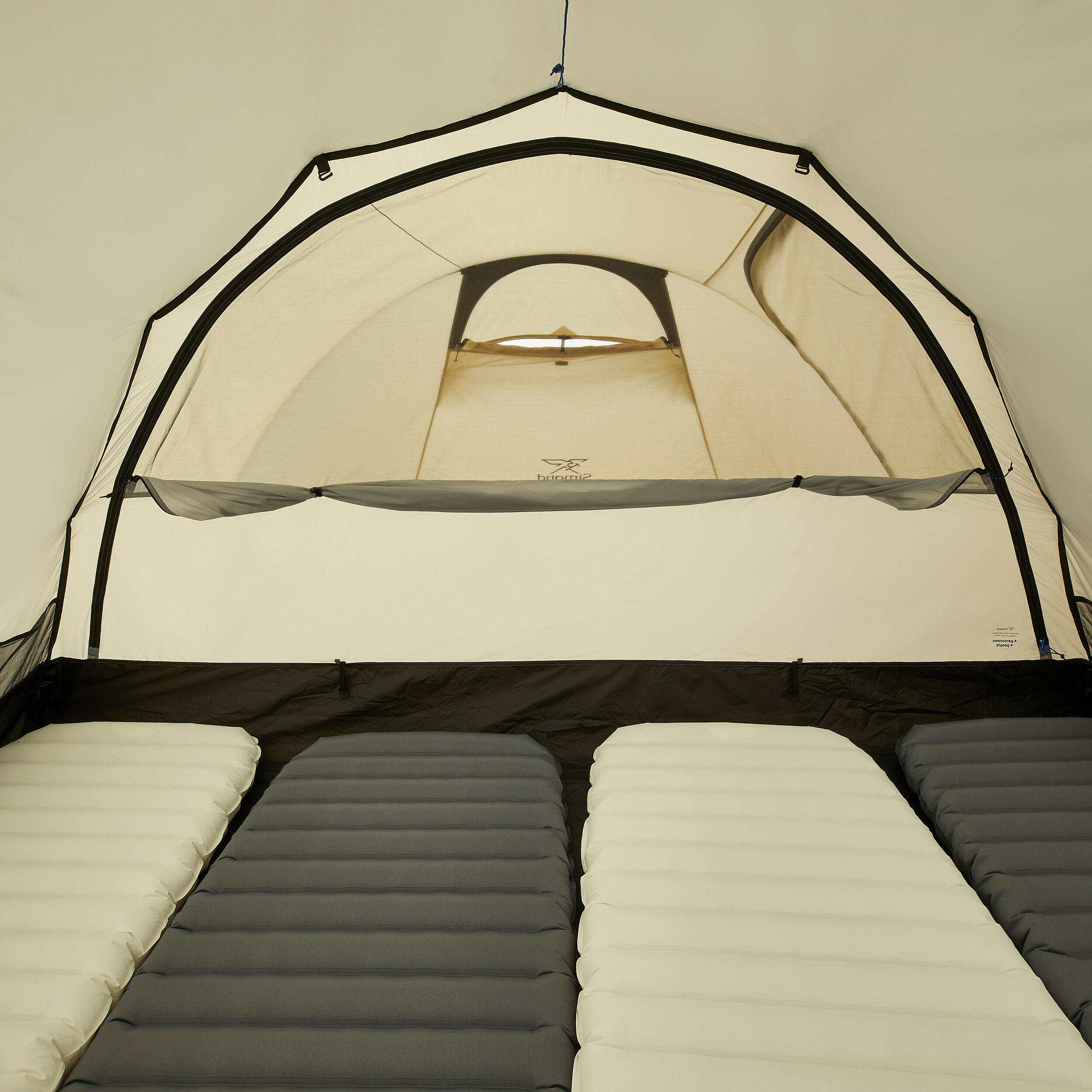
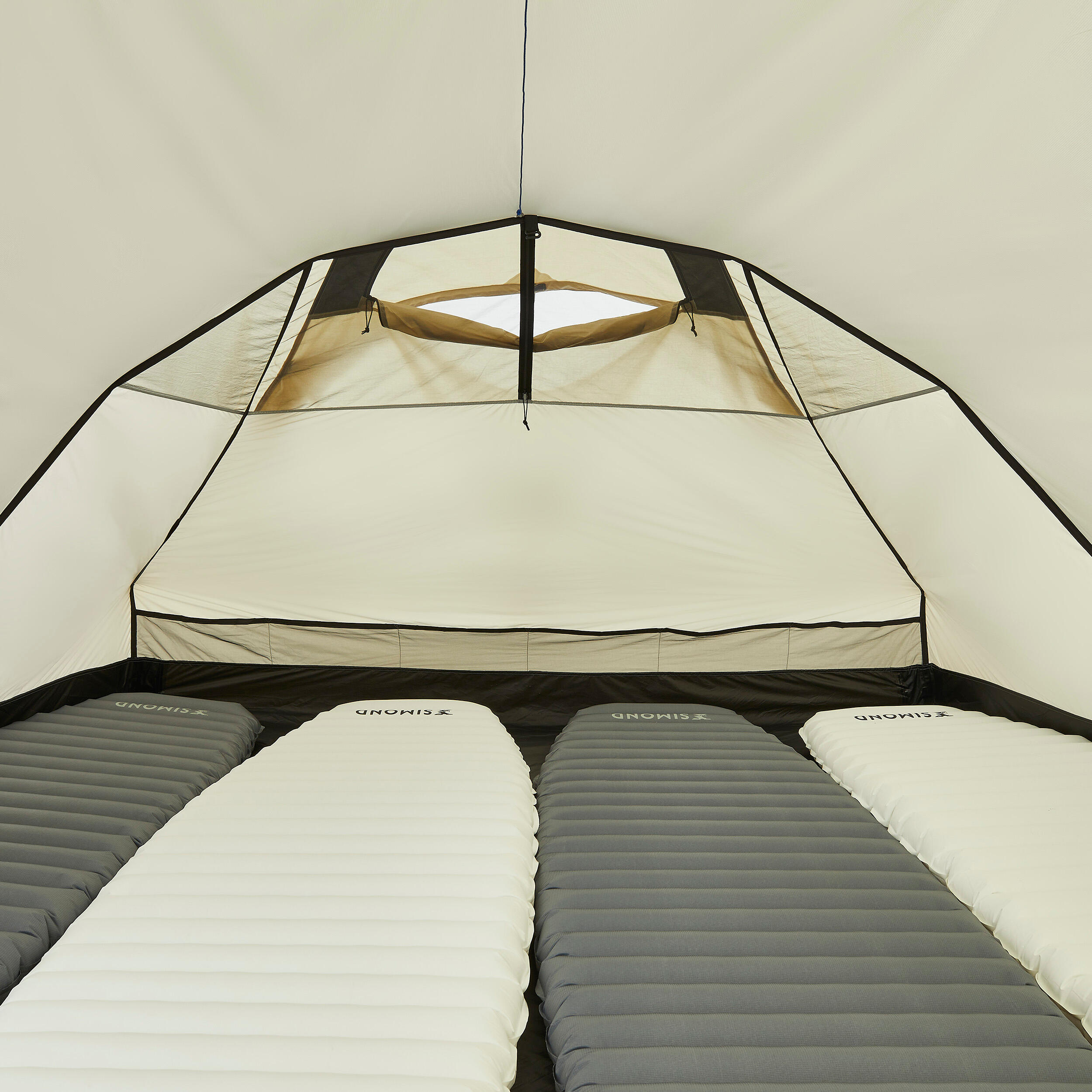
This tent has an air vent in the bedroom and an air vent in the canopy.
It can be opened or closed as desired from the inside.
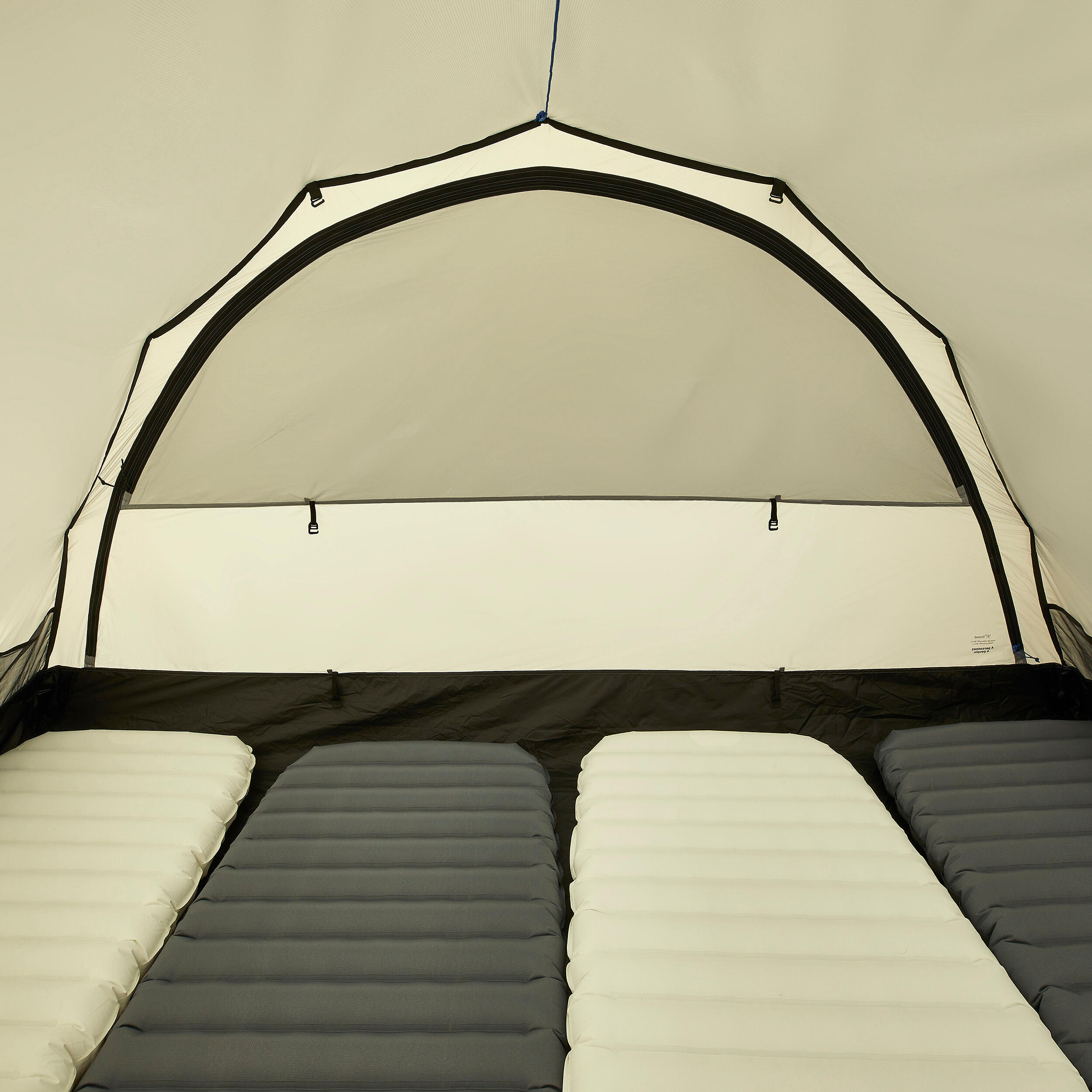
The inner door is lined so it can be used either with the mesh part alone (when it gets hot) or with a full fabric for protection when it’s cold.
It’s therefore important to let as much air circulate as possible to prevent the build-up of condensation inside.
What are the additional features of this tent?
Inside the tent, you’ll find a clothes-line and four hooks that you can dry your clothes on and use to hang headlamps on.
Three pockets on each side and a row of six pockets at the far end of the tent enable easy storage of small items.
Lastly, the porch is equipped with a second clothes-line.
Ground sheet for the MT900 tunnel tent
A ground sheet sold separately (reference: 8975375) has been designed to add an additional layer of protection to this MT900 tunnel tent. This feature helps to limit abrasion and increase the waterproofing capacity of the inner tent’s ground sheet, also allowing the tent to be pitched in tarp mode without the inner tent.
How is the waterproofing of the MT900 4P tunnel tent validated?
The waterproofing is validated in our laboratory, by placing the tent under a shower, which discharges 200 litres of water per sqm per hour, for three hours, i.e. the equivalent of a tropical rain shower.