RESTRICTIONS OF USE
Please note: for reasons of safety and bike handling, this rack cannot be used in HIGH WIND conditions, no more than 20 km/h (10 knots). The wind will have more power with the board attached.
We strongly advise you to remove the LEASH before installing the board on your bike rack.
Follow the Highway Code.
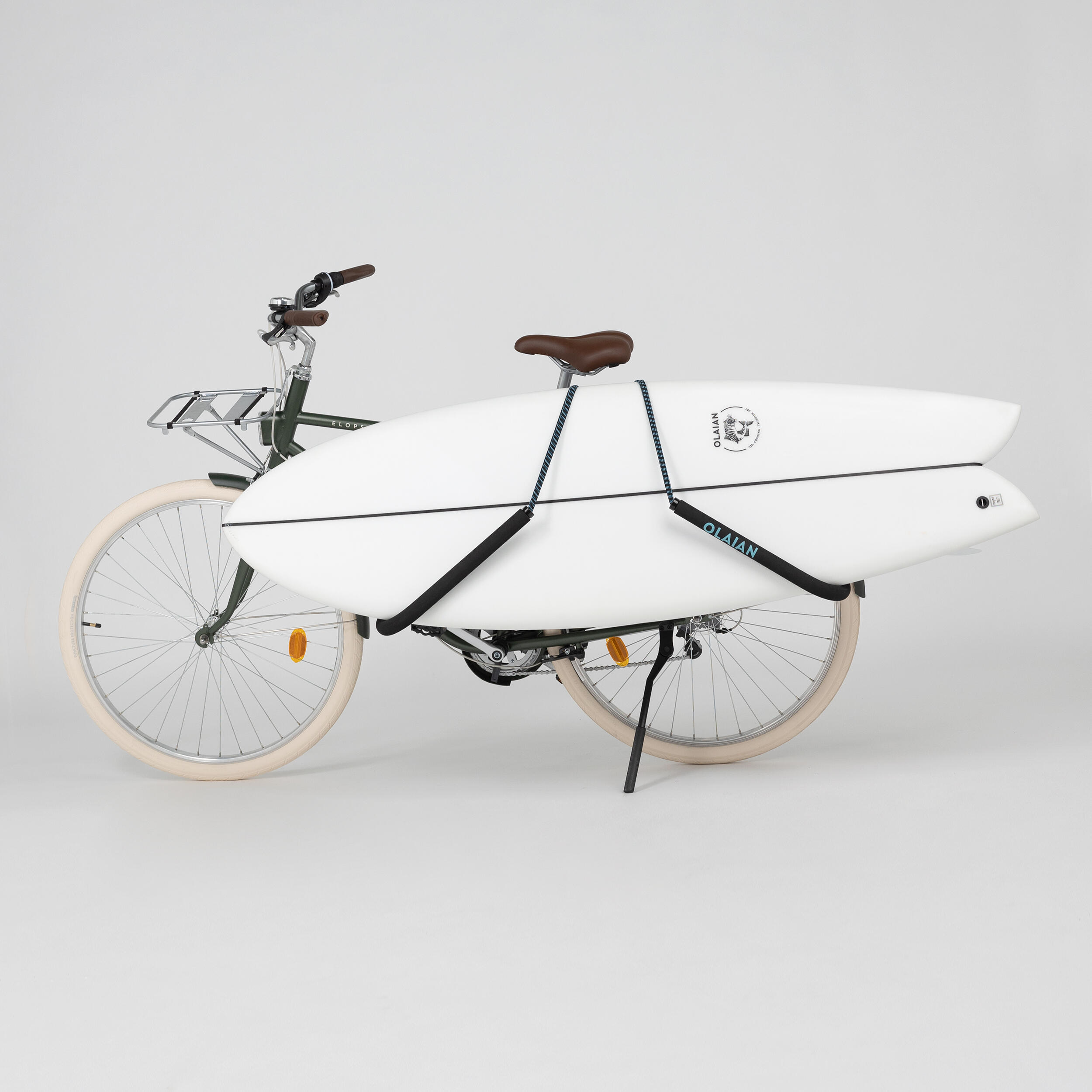
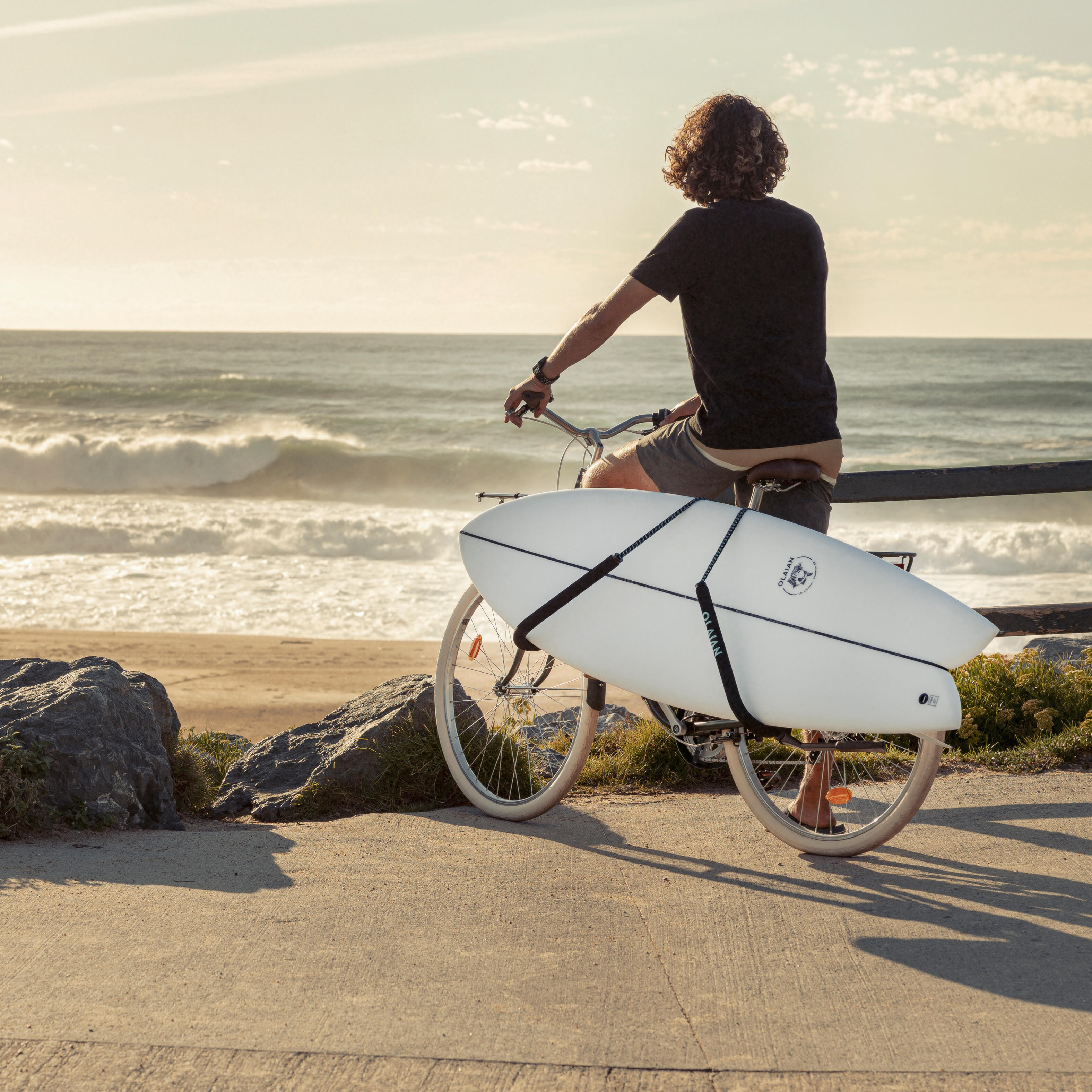
This rack has been designed to carry a single board, up to a maximum of 8 feet.
COMPATIBILITY
Designed to carry ONE board (any type of board) up to 8’ in length (equivalent to approx. 2.44 m), with a thickness of up to 4.7" (13 cm) and weighing up to 10 kg.
Dimensions and weight
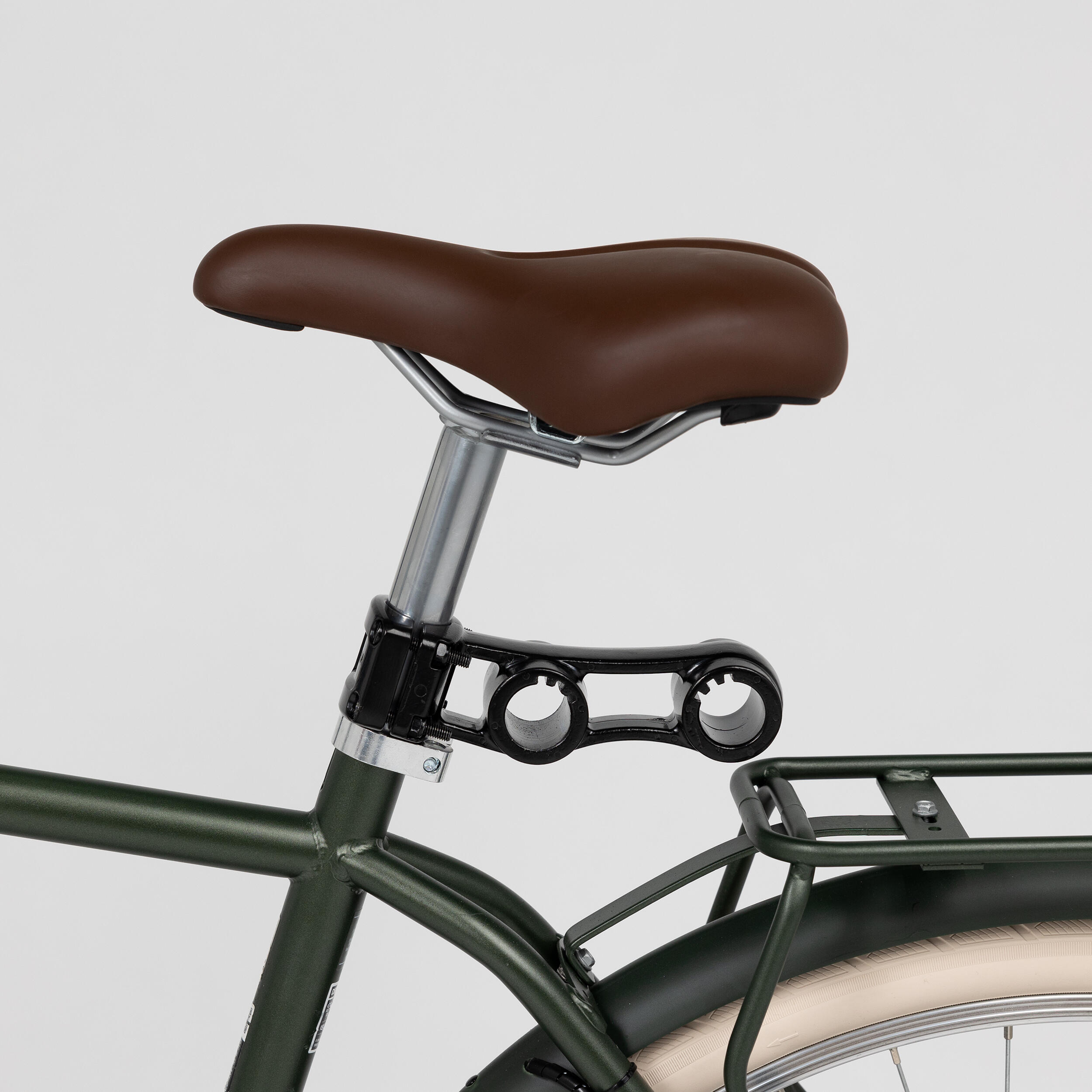
The bracket attaches easily to most seat posts: Length: 170mm / width 50mm / height: 65 mm.
Whole rack: Length: 170 mm / Width: 460mm / height: 590 mm.
Mount arm width: 130 mm.
First, measure the space available BEHIND the seat post to accommodate the dimensions of the surfboard rack base: you need 17 cm long x 6.5 cm high to fit this system to your bike.
Net weight of rack: 2.6 kg.
ASSEMBLY TIPS 1/5
To help you with installation, take a close look at the installation tutorial video and the instructions on the back of the packaging.
Scan the QR code printed on the front of the packaging and on the underside of the product to easily find the tutorial video.
1) Degrease your seat post using a cloth and a degreasing agent (e.g. ESSENCE F)
2) Place the bracket at the lowest point of your seat post, paying attention to the direction of the rack.
ASSEMBLY TIPS 2/5
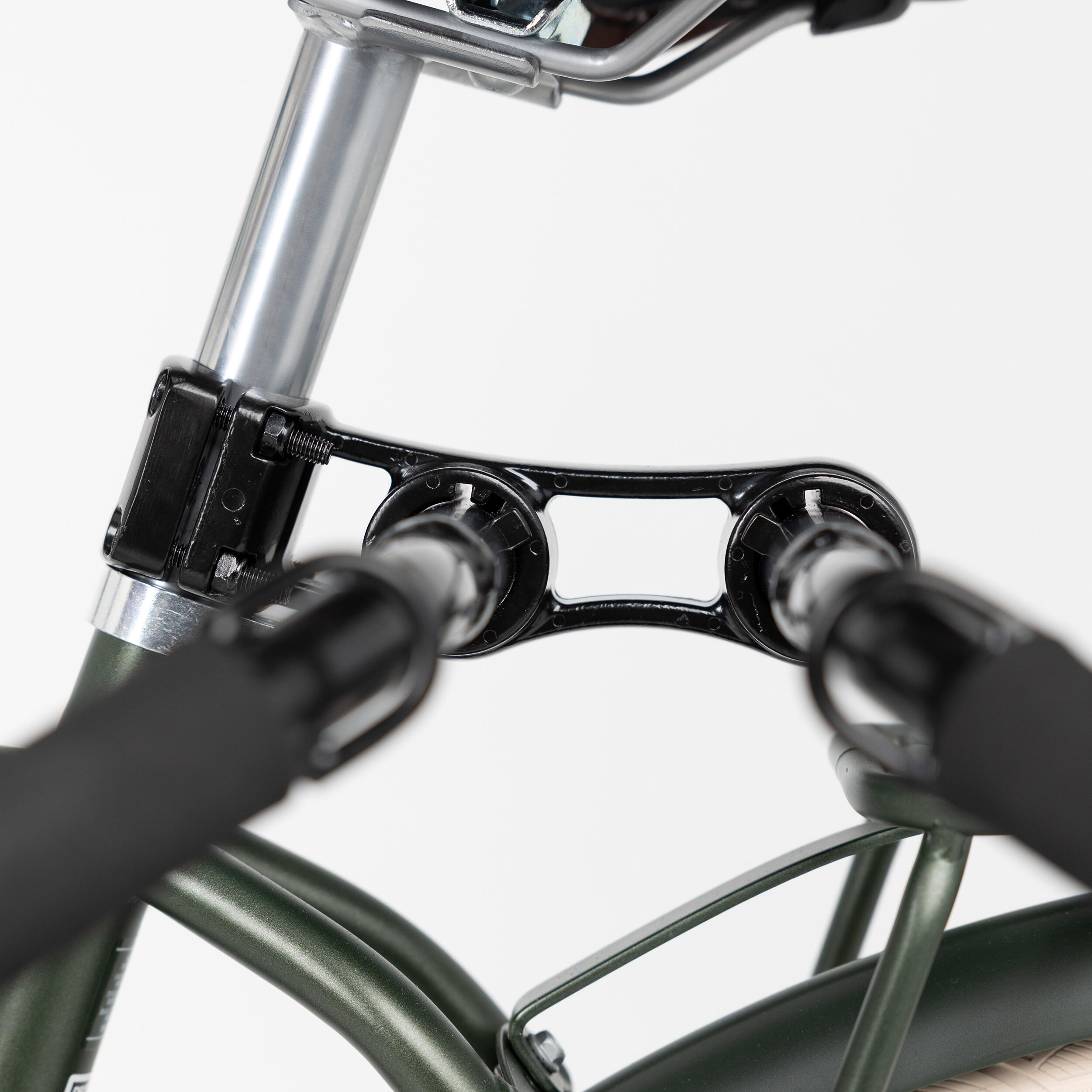
3) Screw on the bracket using the Allen key supplied and the screws/nuts.
We recommend that you screw in a cross pattern to make it easier to centre the bracket. (Start by screwing top left, then bottom right, then vice versa).
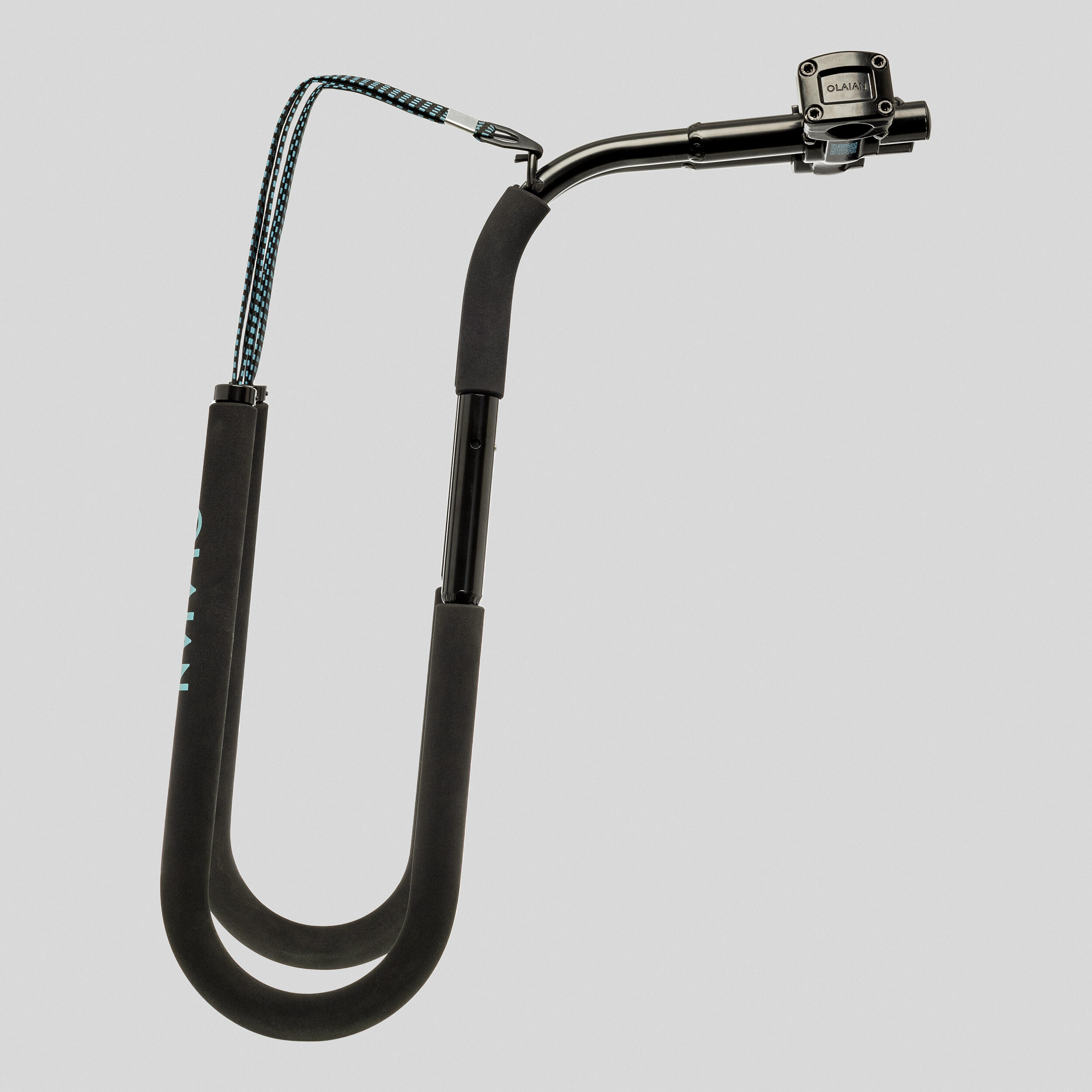
4) Assemble the transport tubes by pressing on the grey metal push pin.
5) Insert the tubes into the bracket and choose an angle that suits your bike.
/!\ Check that the tube button is properly engaged before use and loading!
ASSEMBLY TIPS 3/5
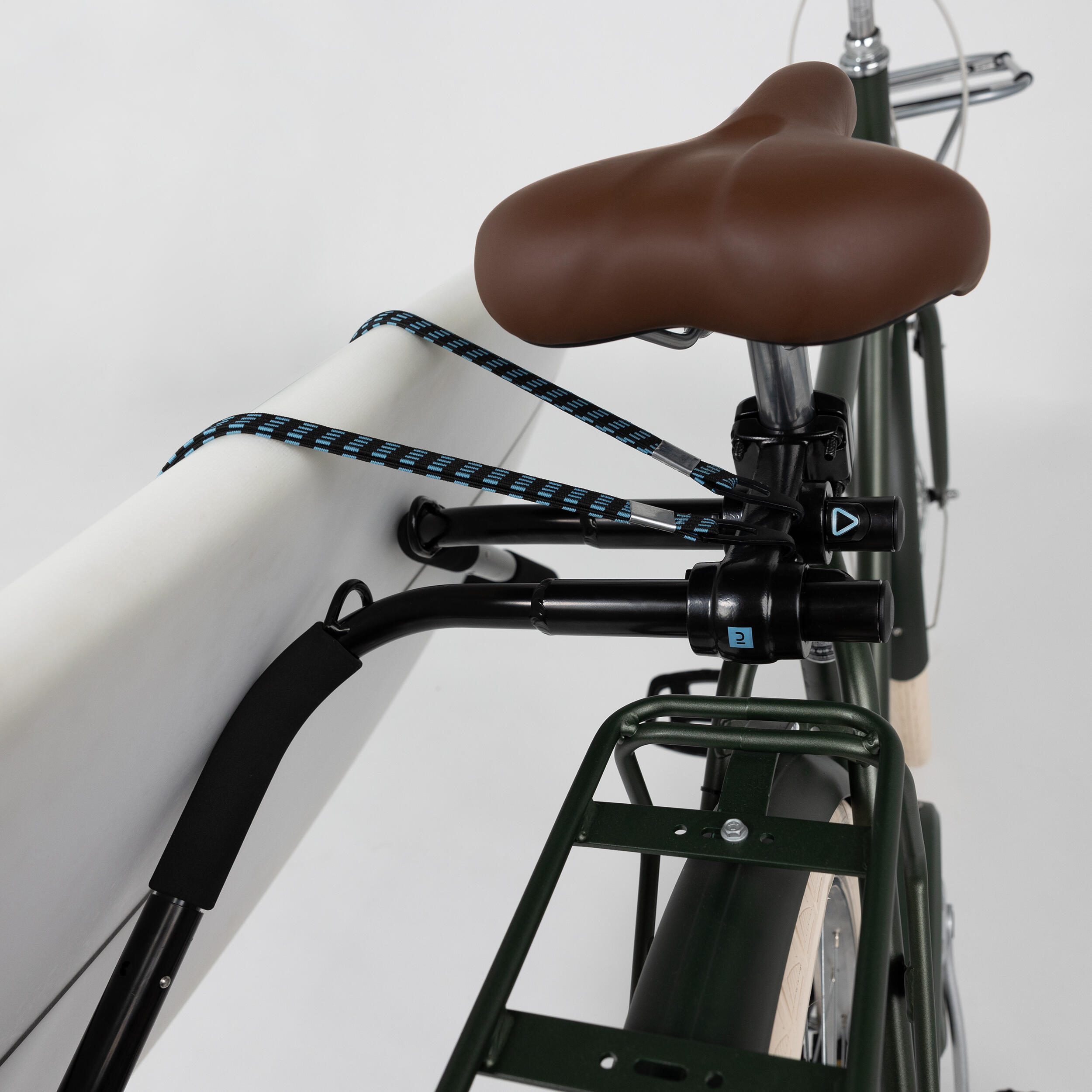
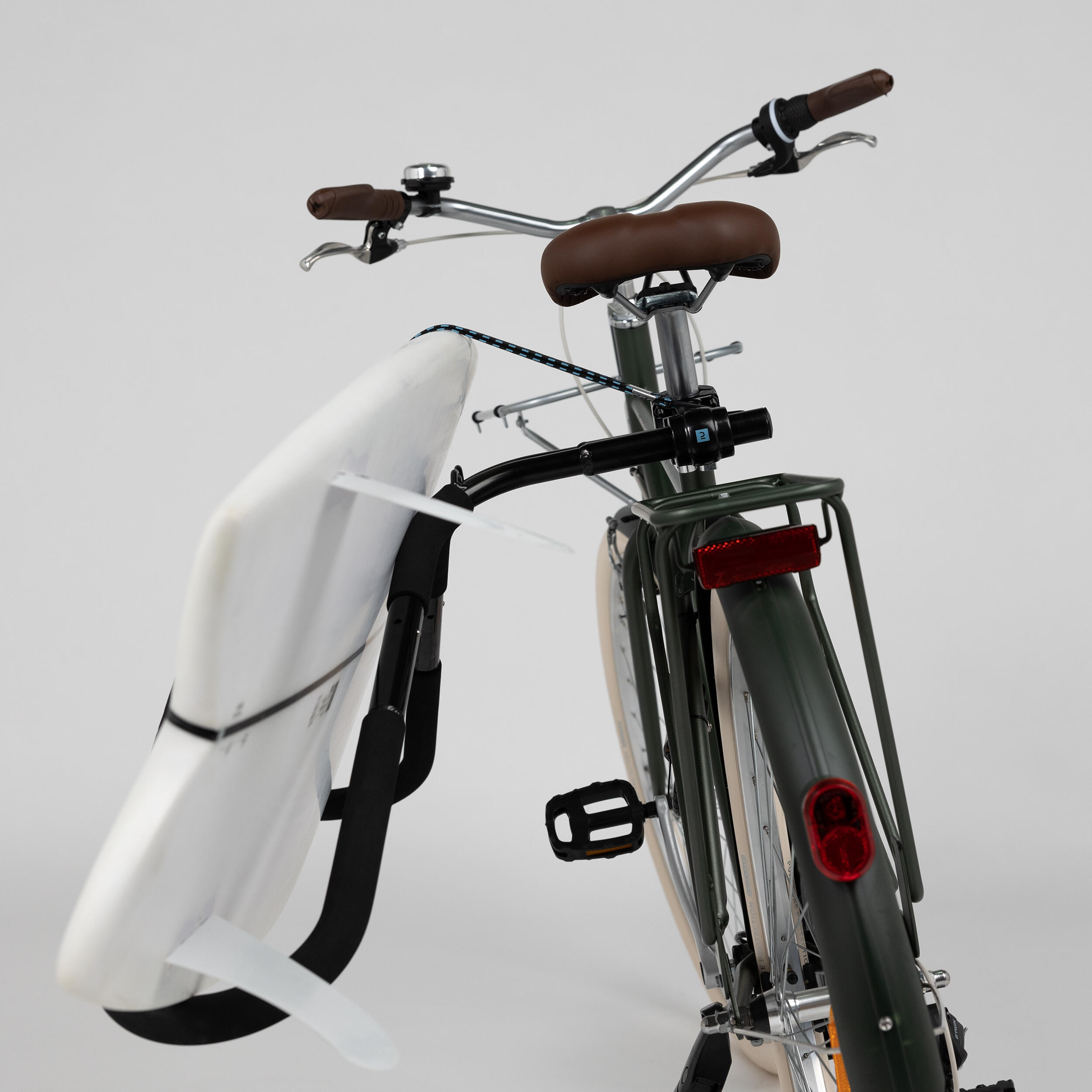
6) Position your board on the transport tubes
/!\ Be attentive to the weight of your board, which could tip your bike over!
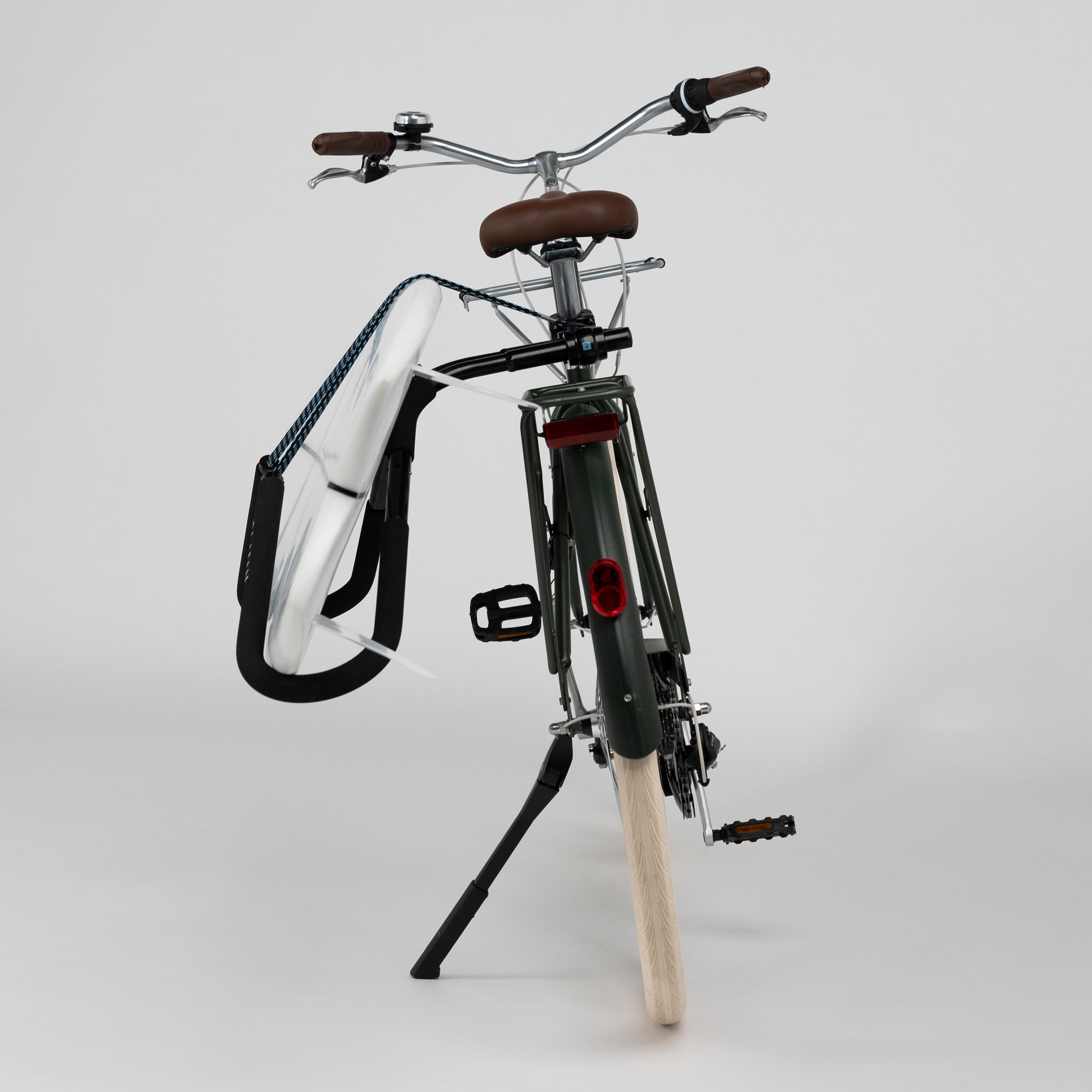
7) /!\ Get on your bike and check that the handlebars can be turned to their full extent
If this is not the case, you can try another notch. (Ideally, the front of the board should be a bit lower than the back, to allow for the handlebars to pass through, but be careful to keep a suitable distance between the front of the board and the ground).
ASSEMBLY TIPS 4/5
If you can’t find a suitable setting for your bike, or if the board is a little too long, you can offset the bracket slightly from the axis of your rear wheel.
By shifting the whole surf rack to the correct side, the back of your board will be closer to the rear wheel of your bike. The front of the board will be offset, leaving more room to turn the handlebars, so you can steer your bike safely and naturally towards the surf spot.
ASSEMBLY TIPS 5/5
8) When your board is correctly positioned, you can then attach the elastics. There are two hooks: one on the transport tube and the other on the upper part, in the centre of the rack support. Check that the elastic bands are taut to limit any slipping or vibration.
9) Before setting off, tighten the bolts on the bracket and your seat post as much as possible to ensure stability during use.
USE
The tubes have 3 different positions, for maximum adaptability to any type of board, and are ultra-easily adjustable, again thanks to our "clips" system (3 positions).
The tubes are covered with protective FOAM in the areas that come into contact with the board, to protect your board’s rails.
Lined elastics for firm binding and good board support.
Follow the Highway Code.