- Home
- All sports
- Bodybuilding & CrossTraining
- Cross-Training Equipment
- Plyometric Boxes
Plyometric Boxes
Can I find plyometric boxes available on decathlon.com.gr?
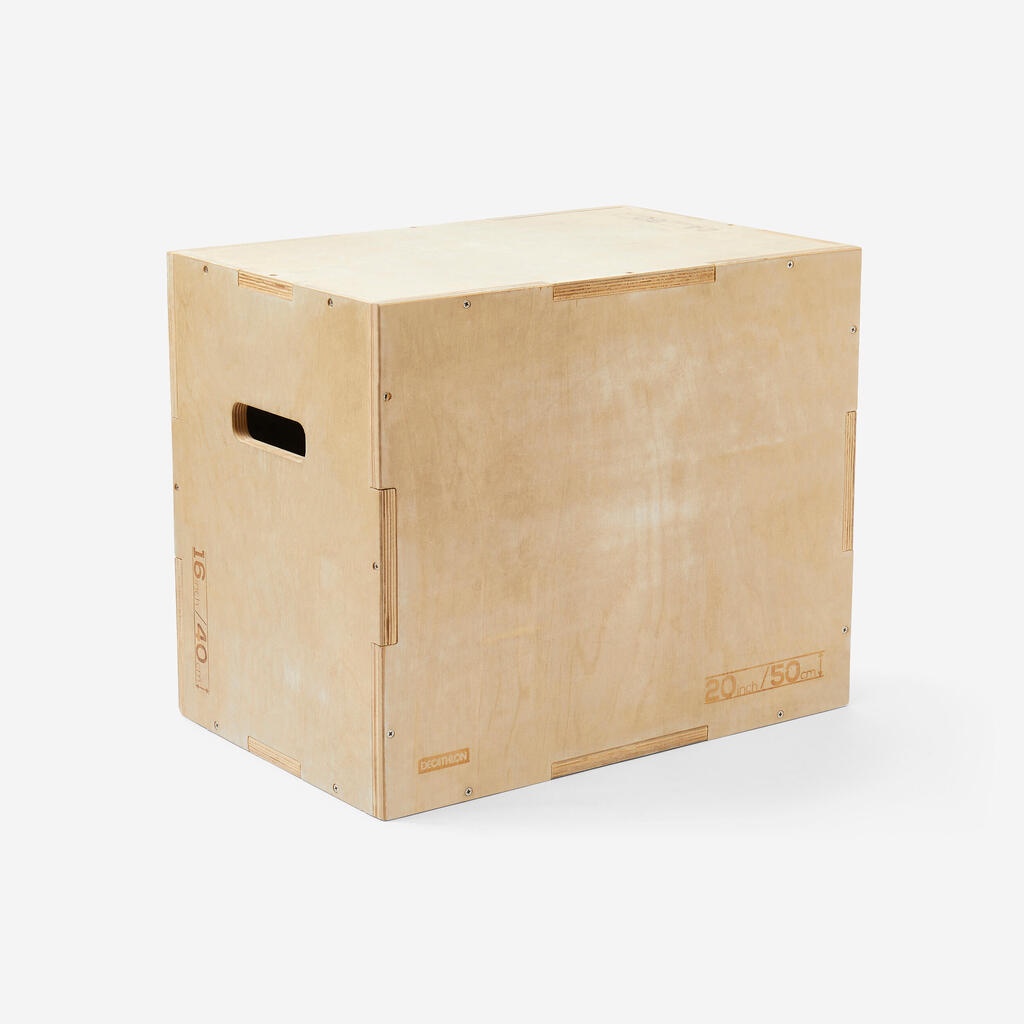
Of course! On decathlon.com.gr you will find a complete collection of plyometric boxes (plyo boxes) designed for cross-training, calisthenics, and high-intensity cardio conditioning. Our lineup includes sturdy wooden plyo boxes, high-density foam soft plyo boxes for maximum safety, and versatile 3-in-1 models that offer three different height options simply by rotating the box.
What height plyometric box should I choose?
The right height depends on your experience level and training objectives:
1. Beginners & Rehabilitation (30-40 cm / 12-16 inches): Ideal for learning proper jump mechanics, step-ups, and low-impact workouts.
2. Intermediate Level (50-60 cm / 20-24 inches): The most popular standard height for box jumps, suitable for the vast majority of athletes.
3. Advanced Athletes (75 cm / 30 inches): For athletes focusing on developing peak explosive power and vertical jump height.
Multifunctional 3-in-1 plyo boxes (e.g., 40x50x60 cm or 50x60x75 cm) are the most practical solution, allowing you to easily adjust the height depending on the exercise.
Which exercises can I perform on a plyometric box?
A plyo box is a versatile full-body conditioning tool. Popular exercises include:
1. Box Jumps: For developing explosive lower-body power.
2. Step-ups & Lateral Step-ups: For strengthening quadriceps, glutes, and improving single-leg balance.
3. Incline / Decline Push-ups: Placing hands or feet on the box to vary resistance on the chest and shoulders.
4. Box Dips: For targeting triceps and upper-body strength.
5. Depth Jumps: Stepping off the box and immediately jumping vertically upon landing for advanced plyometric conditioning.
What is the difference between a wooden and a soft plyometric box?
The main differences lie in safety, stability, and impact absorption:
Wooden Plyo Box: Offers total rigidity, zero deformation, and rock-solid landing stability. However, there is a risk of scraping your shins if you miss a jump.
Soft Plyo Box (Foam): Built with a high-density foam core enclosed in a durable vinyl cover. It absorbs joint impact, reduces landing stress, and eliminates the fear of shin scrapes, making it ideal for beginners, high-rep conditioning, and home workouts.
How much weight can a plyometric box support?
Decathlon plyo boxes are engineered to withstand high impact forces. Reinforced wooden boxes with internal cross-bracing typically support static and dynamic user loads of up to 130kg–150kg+, while high-density soft plyo boxes offer comparable weight capacities (100kg–130kg+), allowing for safe jump training even when wearing a weighted vest.
How do I perform box jumps safely to protect my knees?
To protect your joints and knees during box jumps, follow these essential safety rules:
1. Soft Landing: Land with your entire foot flat (not just your toes), bending your knees slightly to absorb impact forces softly.
2. Proper Knee Alignment: Keep knees aligned over your feet upon landing, preventing them from caving inward (valgus collapse).
3. Step Down: After landing, step down backward off the box one foot at a time rather than jumping down, sparing your knees and lower back from unnecessary impact stress.