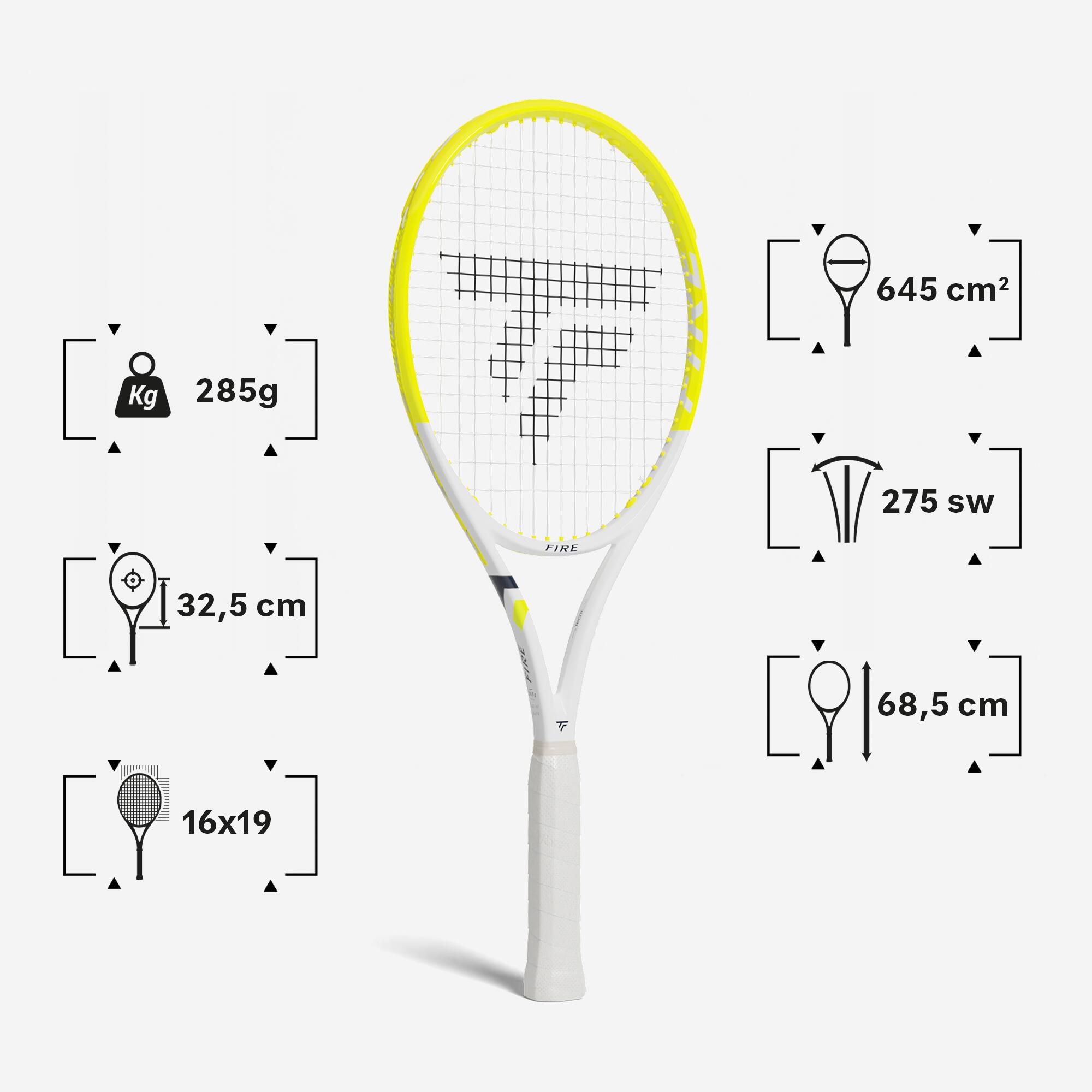
Weight (unstrung racket)
285 g.
Weight: The weight is measured in grams. Just like balance point and length, the weight impacts a racket's swing weight and therefore its manoeuvrability, stability and ability to transfer energy to the ball (power). The heavier the racket, the more power it transfers to the ball, but the harder it is to handle. The lighter the racket, the easier it is to handle, but the trade-off is less power.
Balance (unstrung racket)
32.5 cm
Balance: This is the racket balance point, measured in centimetres from the bottom of the shaft. The higher the number (head heavy), the more powerful and stable upon impact the racket will be. However, it will also be harder to manoeuvre. The smaller the number (head light or handle heavy), the easier the racket will be to handle but you'll have less power and stability.
Head size
645 cm²
Head size: This is the surface area of the racket head size measured in squared centimetres. It has an impact on the racket's forgiveness and power. The larger the head size, the more powerful and forgiving it is, but the downside is less control. The smaller the head size, the greater the feeling of control, but you sacrifice some power and forgiveness.
Stiffness (RA)
Ra: 68
Ra: This refers to the racket's stiffness, i.e. how much it bends under the impact of the ball. The stiffer the racket (the higher the Ra), the less it bends. The energy lost on impact is minimised and returned to the ball via the strings. Generally, a stiffer racket offers greater power.
Swingweight (unstrung racket)
SW = 275
Swingweight: This indicates how easy a racket is to handle and its ability to transfer energy to the ball (power). The higher the swingweight, the more powerful the racket, but also the harder it will be to handle. Conversely, the lower the swingweight, the easier the racket will be to handle, but the trade-off is less power. The swingweight results from a combination of the racket weight, balance and length.
Stringing
16 x 19
String pattern: This is the number of mains (vertical strings) x the number of crosses (horizontal strings). The more strings the pattern has, the more "closed" it is; the fewer it has, the more "open" it is. A more closed string pattern offers a greater feeling of control, but less power and spin. A more open string pattern provides more power and spin, but less control.
Length
68.5 cm
Length: This is the length of the racket from the bottom of the grip to the top of the head. It is measured in centimetres. The longer the racket, the more power you'll get, but the flip side is that it will be harder to handle. The shorter the racket, the easier it will be to manoeuvre, but you'll have to give up power.
Cross sections
Cross section (in mm): 24,5 / 25 / 24,5
Power
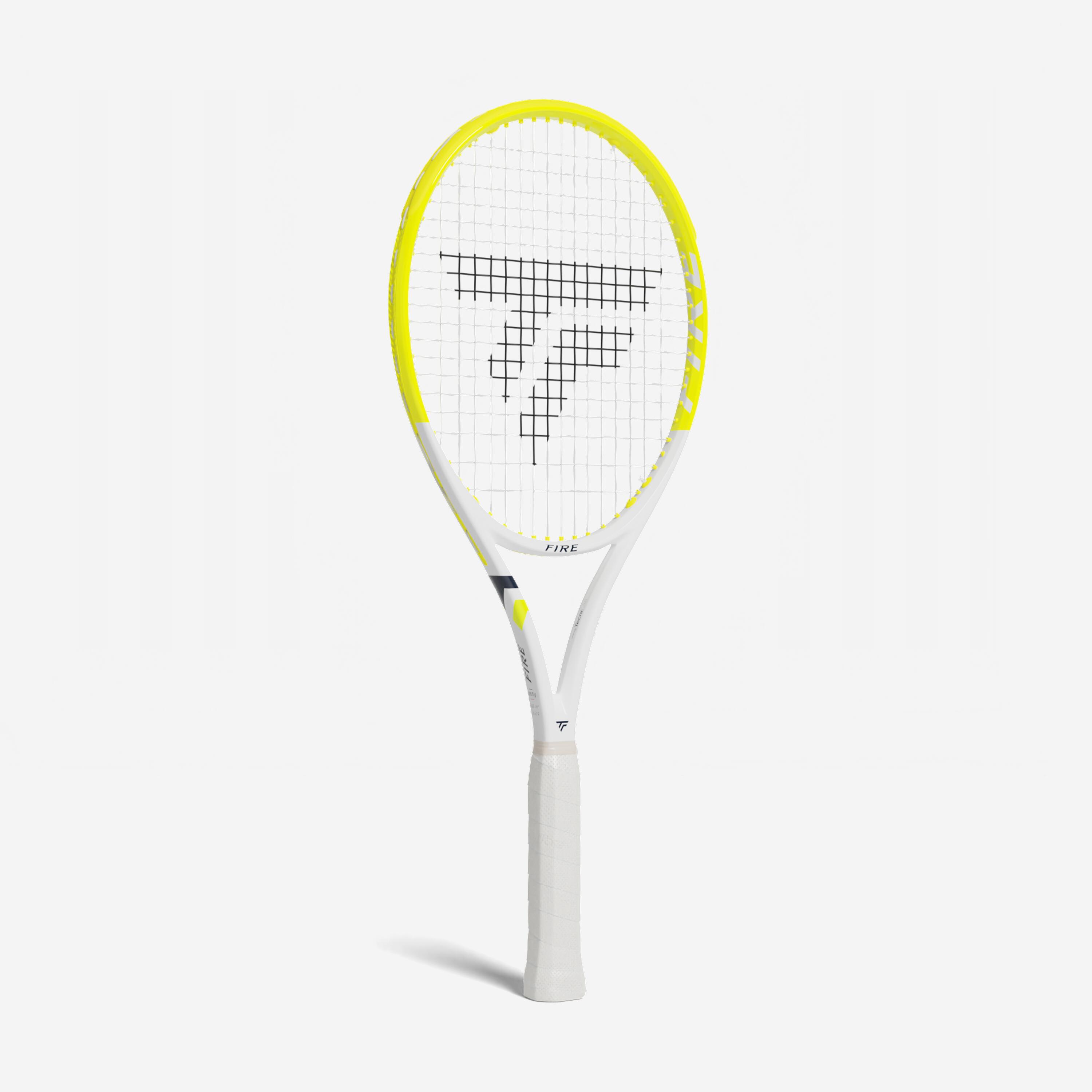
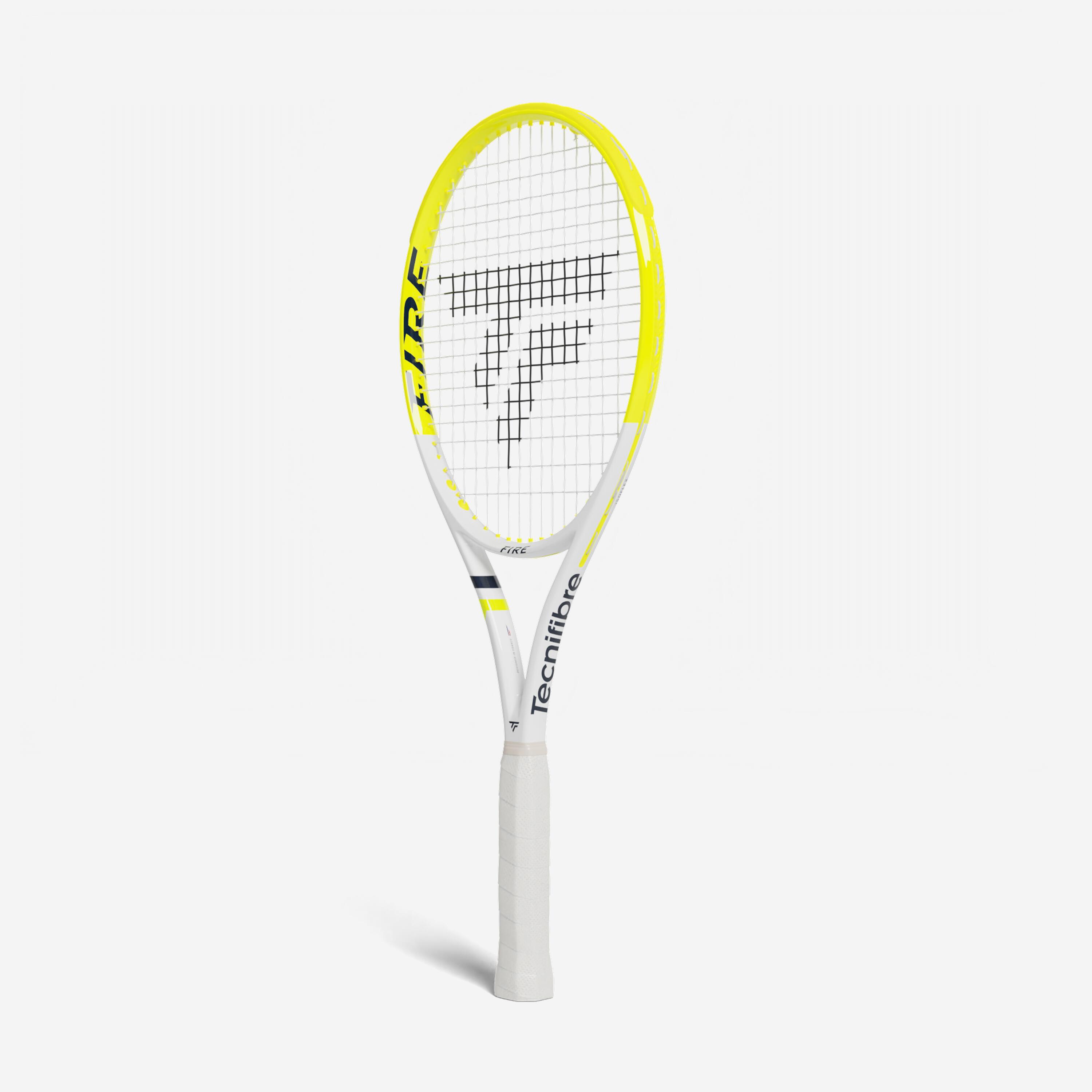
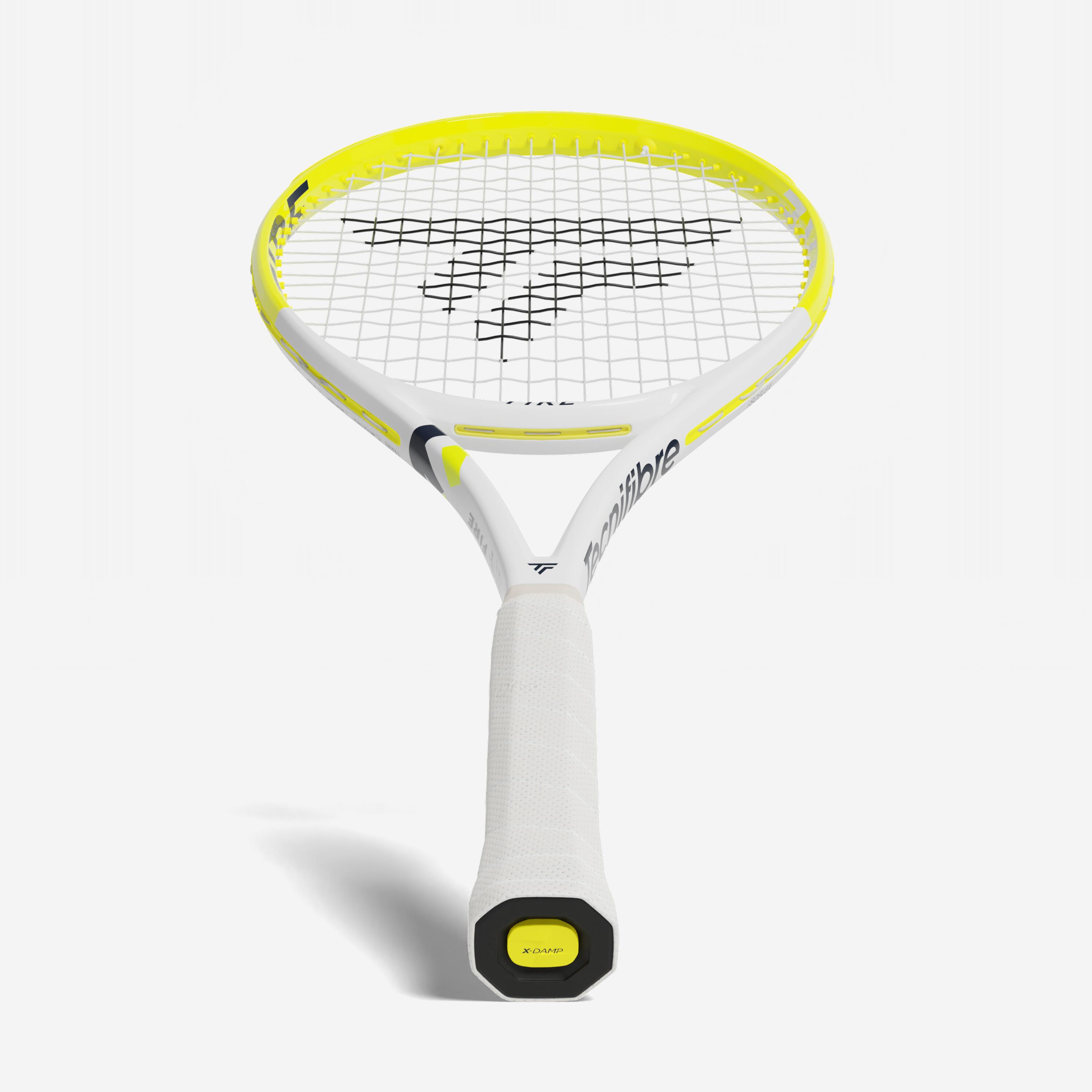
Maximum power and comfort with the Fire 285 tennis racket. To deliver power, this racket features higher-than-average stiffness, the aim being that the frame doesn't move on impact for maximum energy restitution.
X-Damp
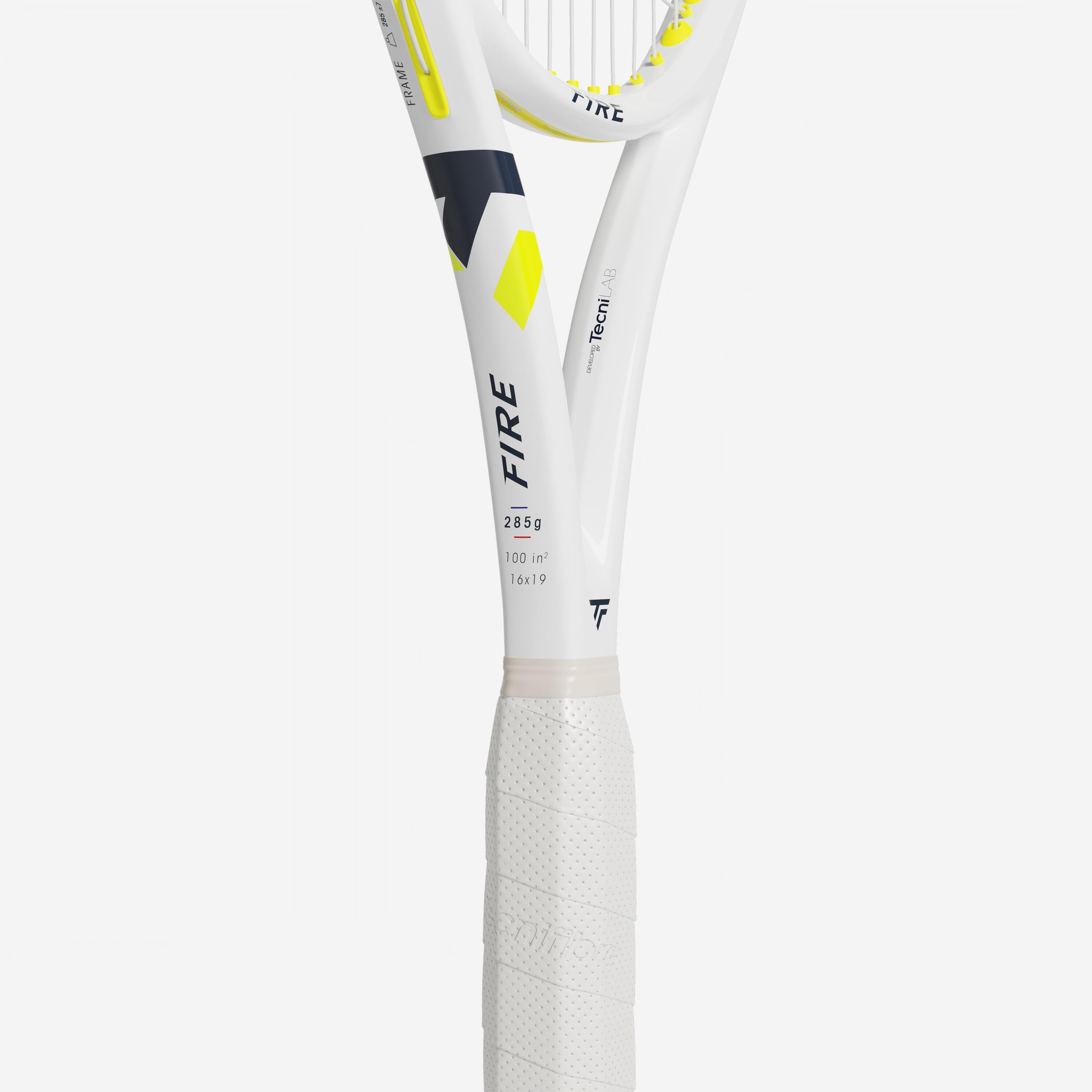
The rigidity of the frame generates more vibrations, which can be harmful to the arms. Tecnifibre's unique solution: X-Damp, the technology developed with the TecniLab, to solve the problem of vibrations and provide maximum comfort. The X-Damp is placed in an elastomer pocket in the shaft so that it moves in opposition to the force of each ball impact. The result: 36% less harmful vibrations for the arm and less fatigue.
Frame shape
The shape of the frame has been optimized with a rounded screen and reinforced sections for greater power and stability.
ISOFLEX
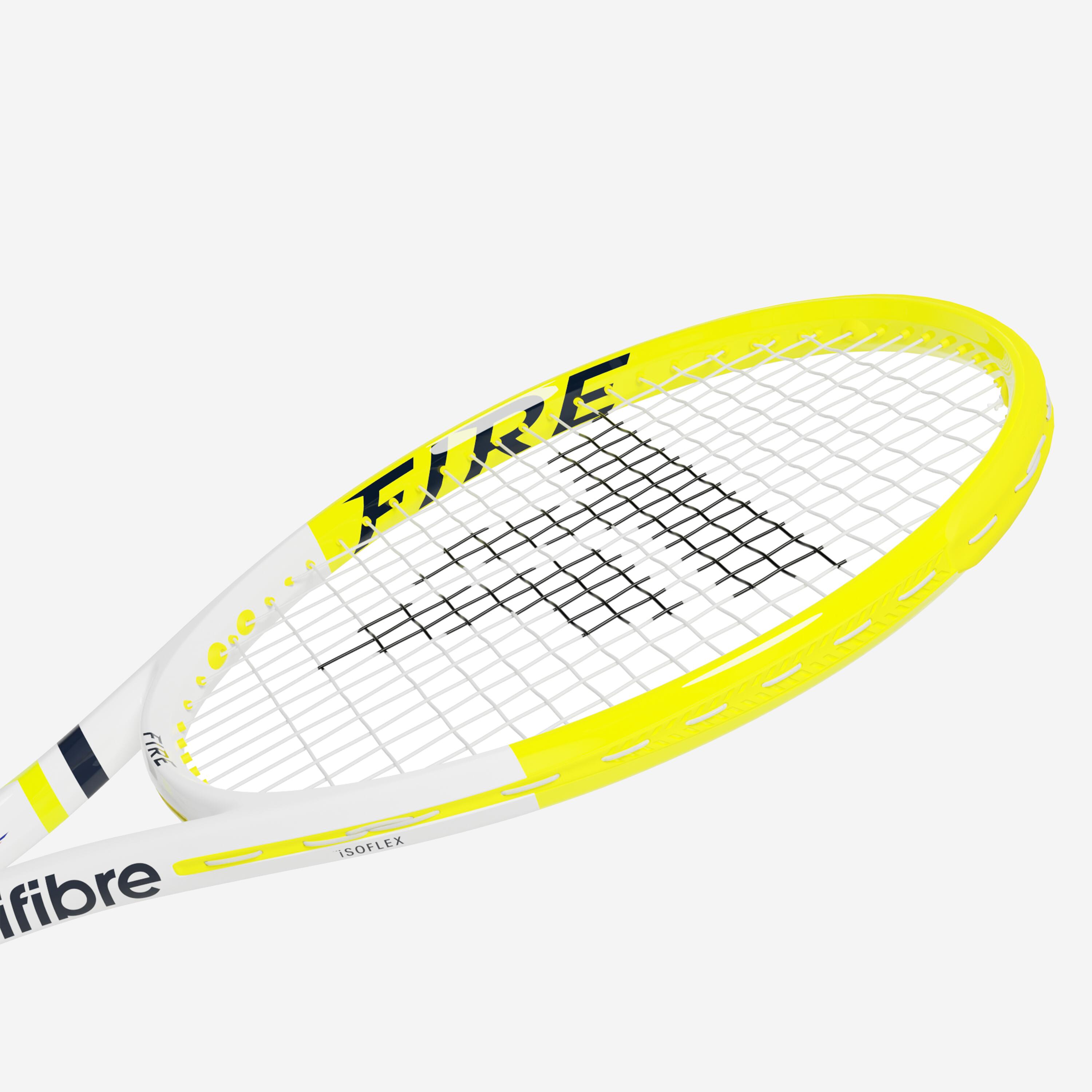
Isoflex technology, a variable rigidity all around the head size, widens the sweetspot for greater forgiveness on off-centre shots. The Fire 285 racket has a lower weight (285 g) to give competitive and regular players more manoeuvrability. With its 645 cm² head size and 16x19 string pattern, its strikes a good balance of power, comfort and manoeuvrability.