HOW IS THIS PONCHO DESIGNED FOR RIDING A BIKE?
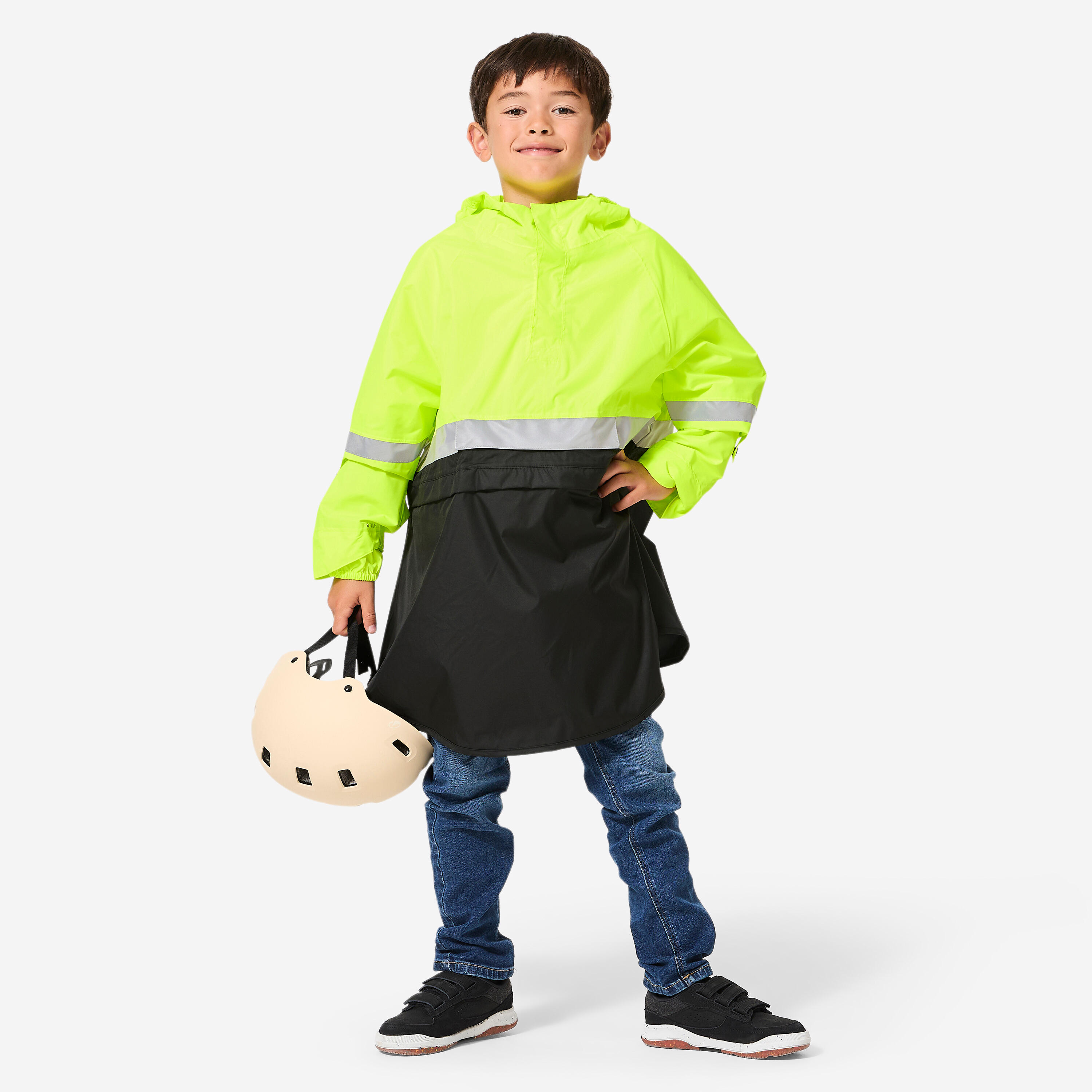
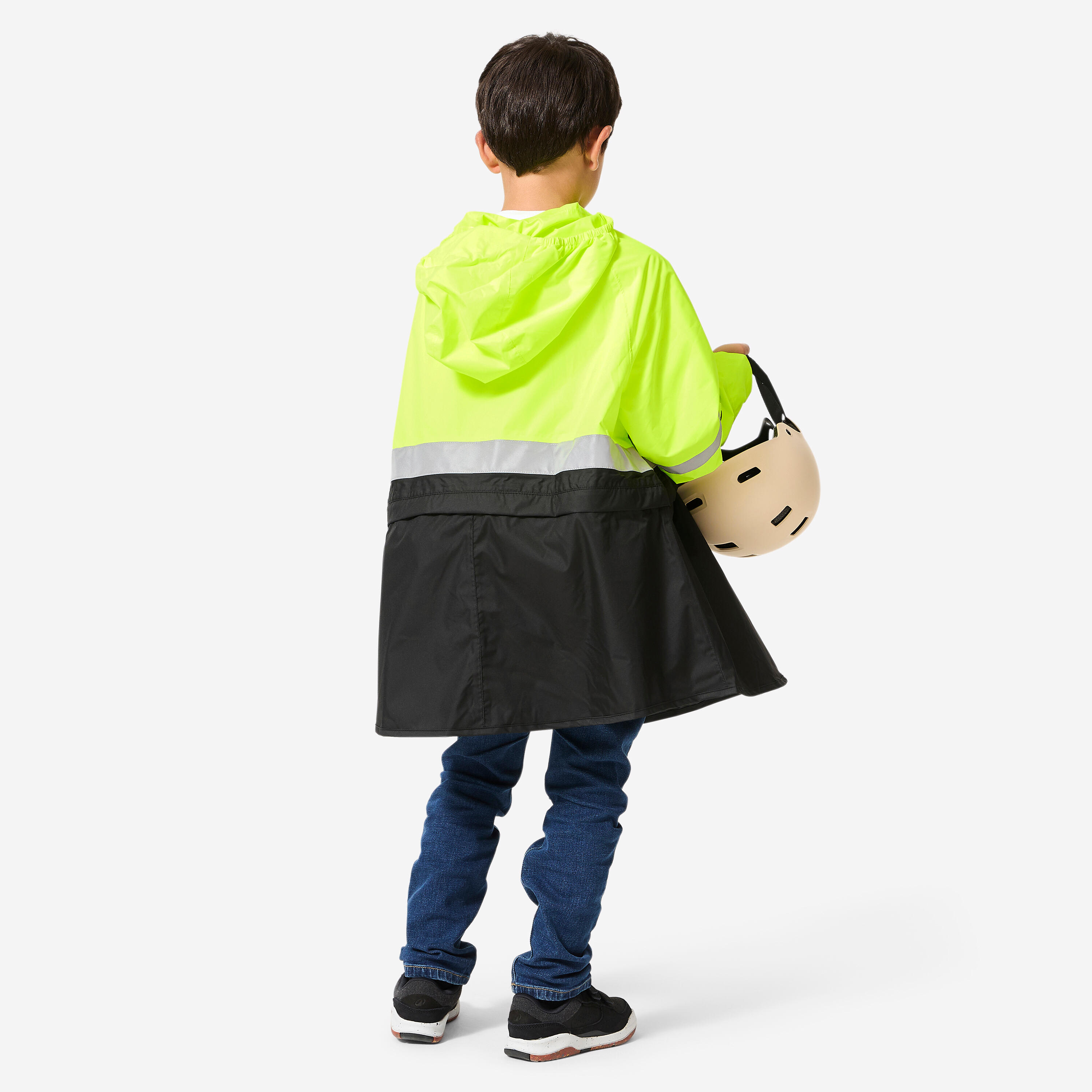
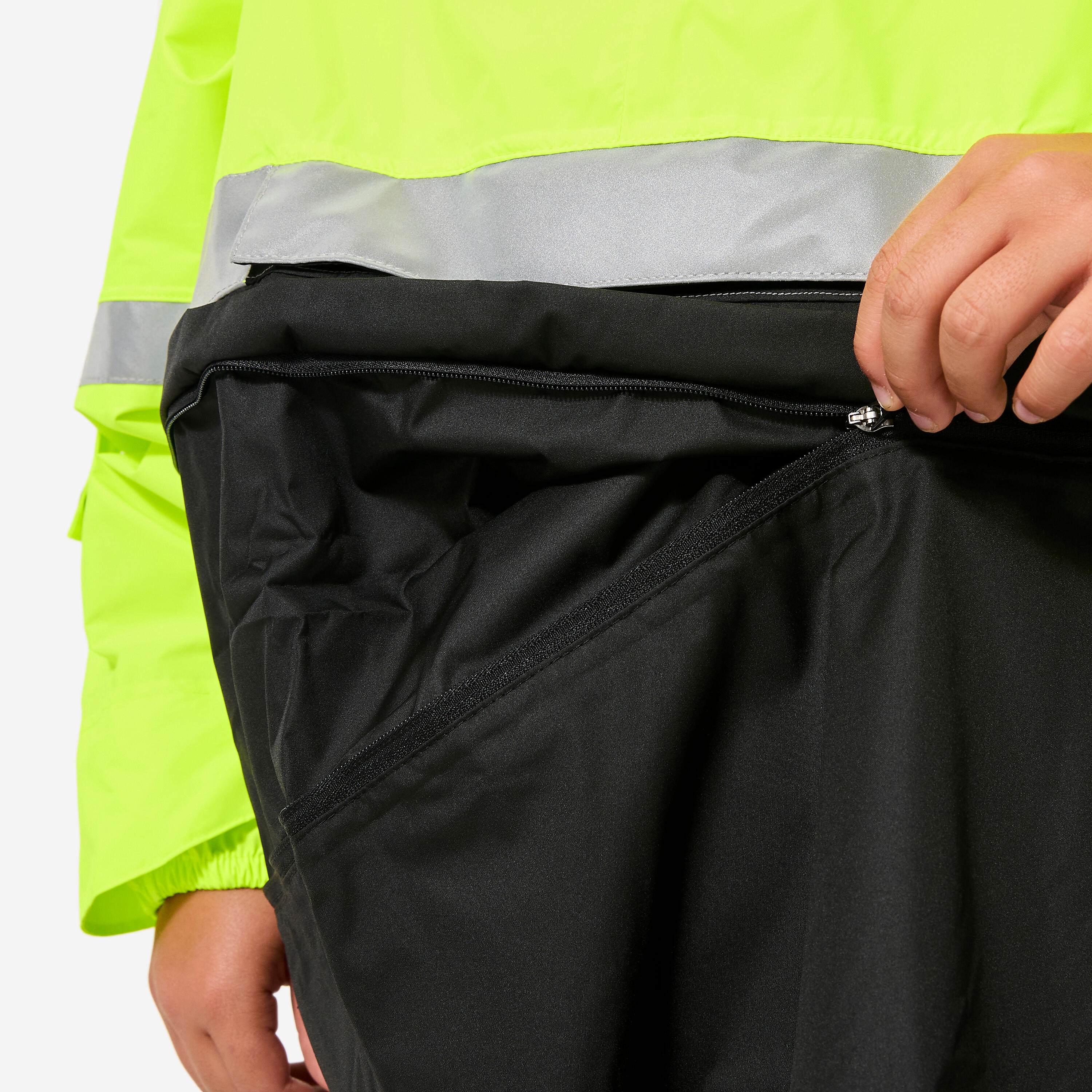
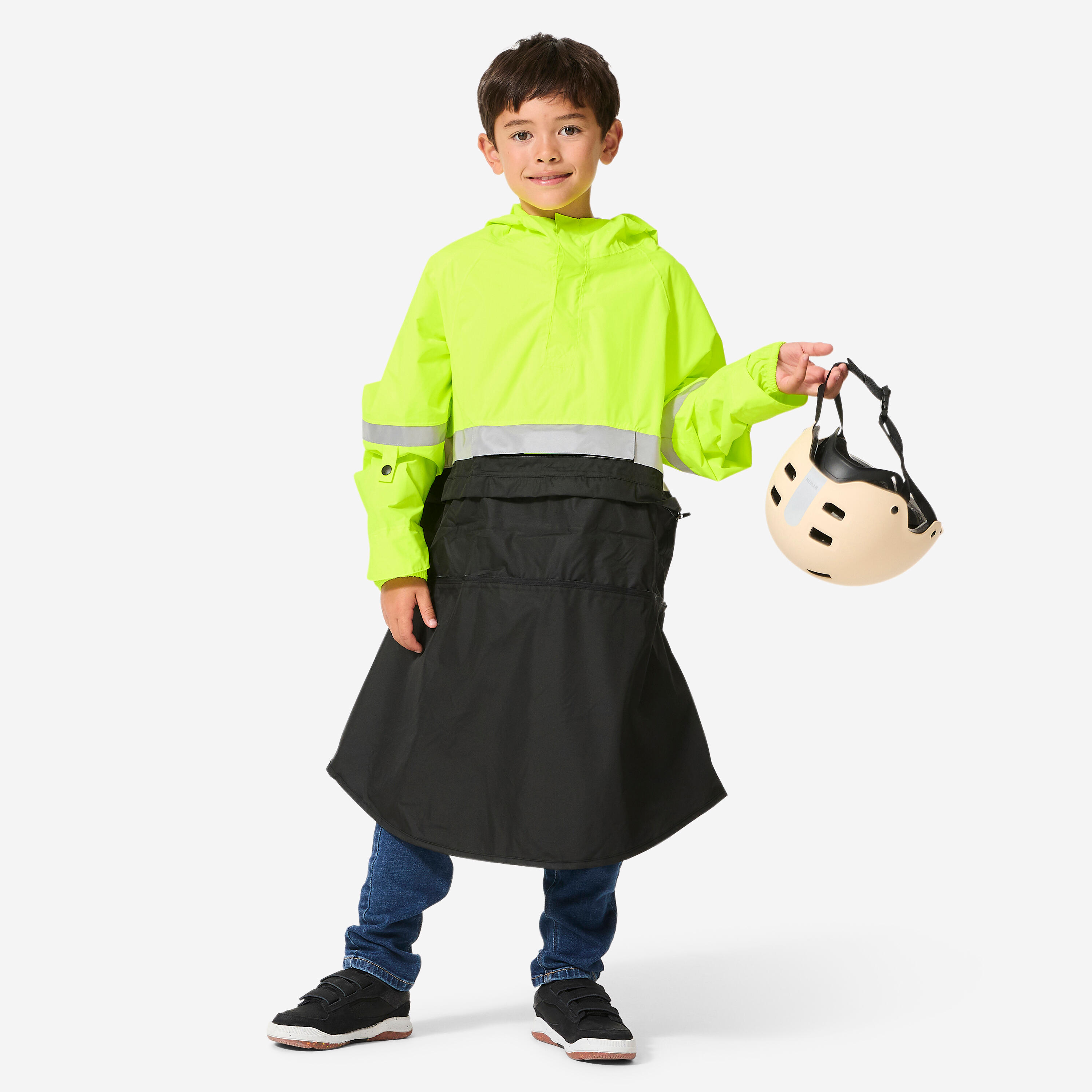
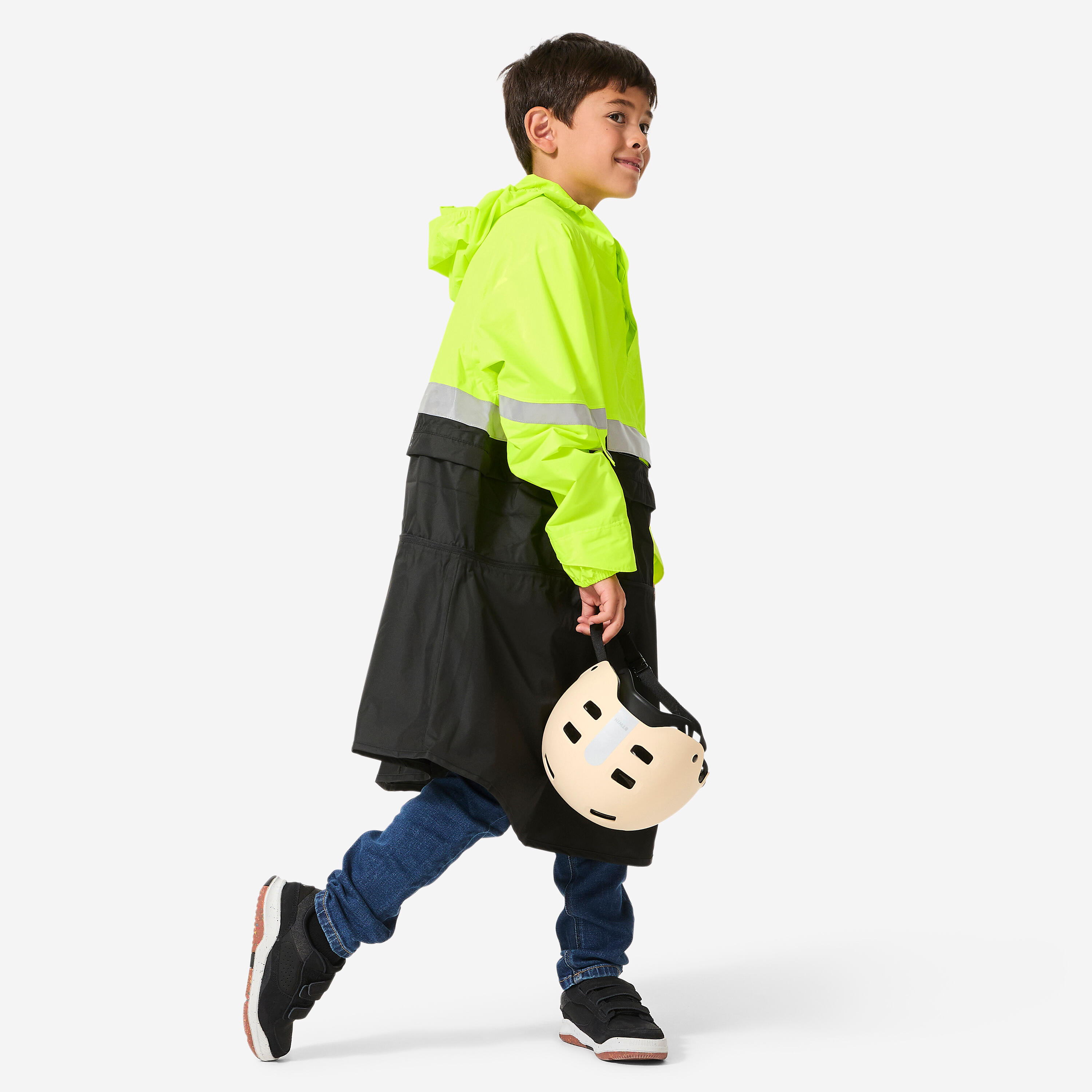
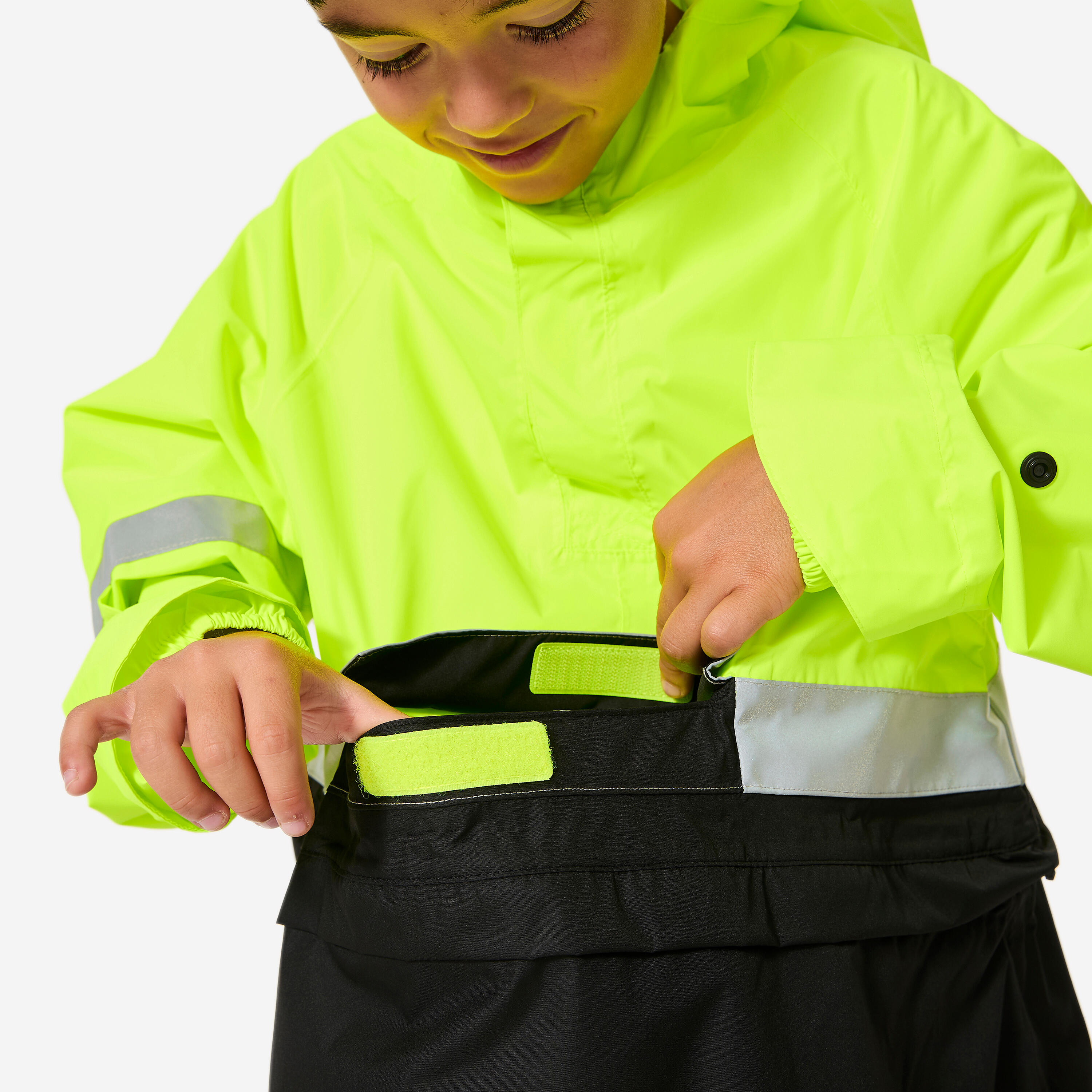
Poncho designed for travelling around by bike on a day-to-day basis, with a loose fit so it can be worn over a normal jacket.
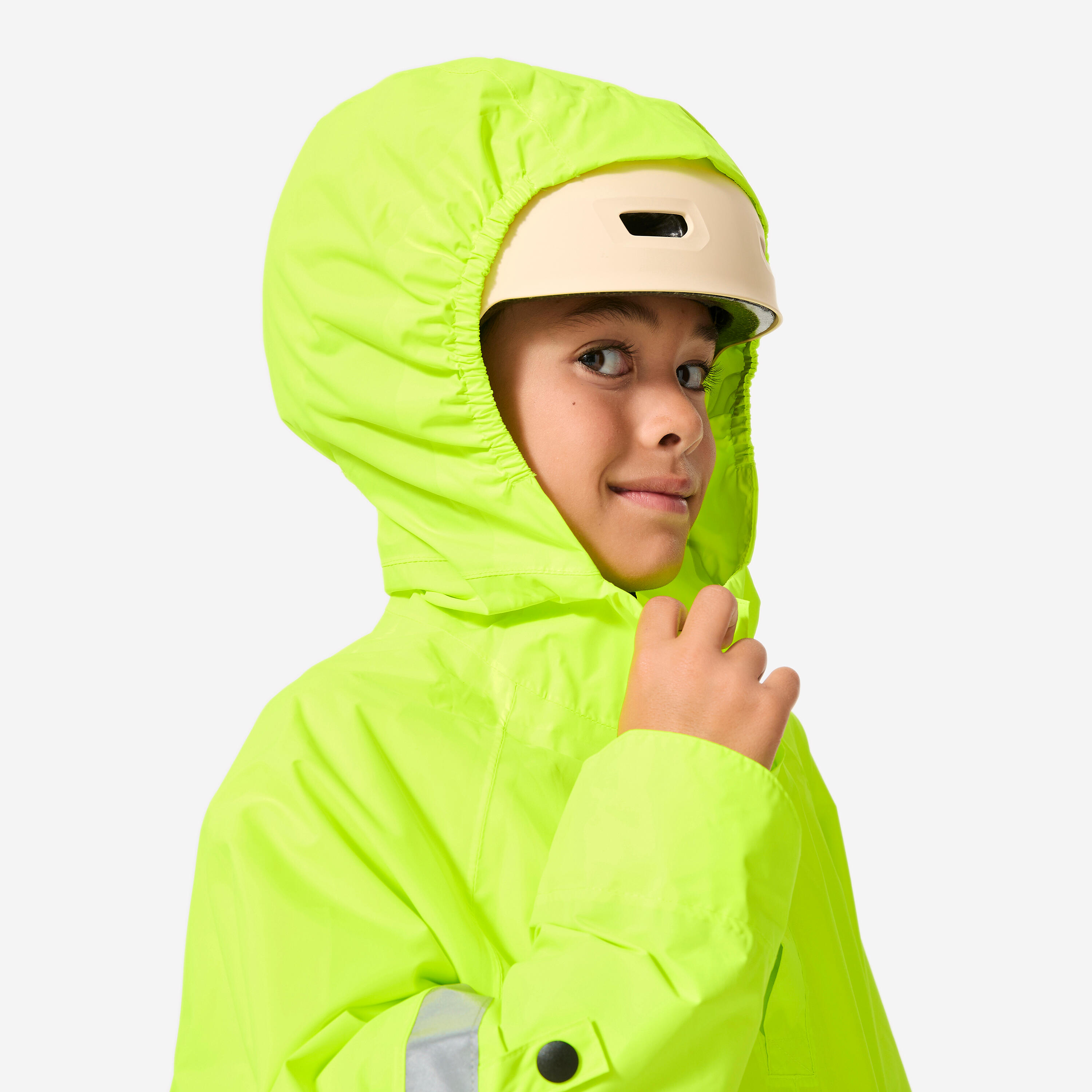
Unisex cut, providing full coverage from head to thighs.You can wear your helmet over the hood or under it, except for bulky helmets such as bowl-type helmets.Elasticated hood that follows your head movements.
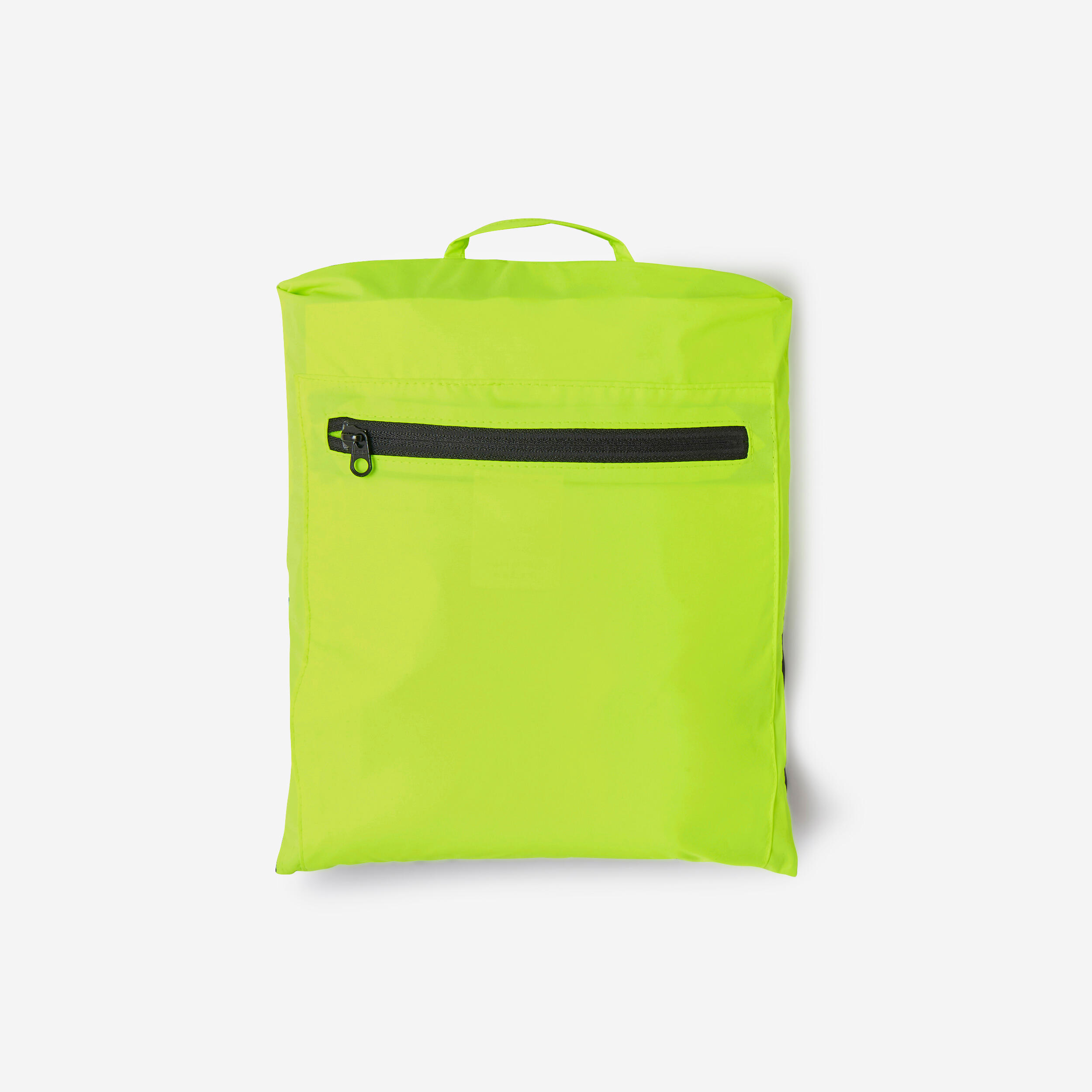
Packs away into its pouch: L21 x H24 x P5.5 cm.
How to stay dry
Even though this poncho protects your upper body really well (from your head to your knees), it's vital to pair it with overtrousers to protect your legs from the rain. Unfortunately, the poncho doesn't protect your shoes and so, in heavy downpours, it might not give you enough protection. The poncho's advantage lies in how easy it is to put on and to pack away into your pannier bags. Transform yourself in seconds!
WATERPROOFING IS:
- A WATER-REPELLENT TREATMENT
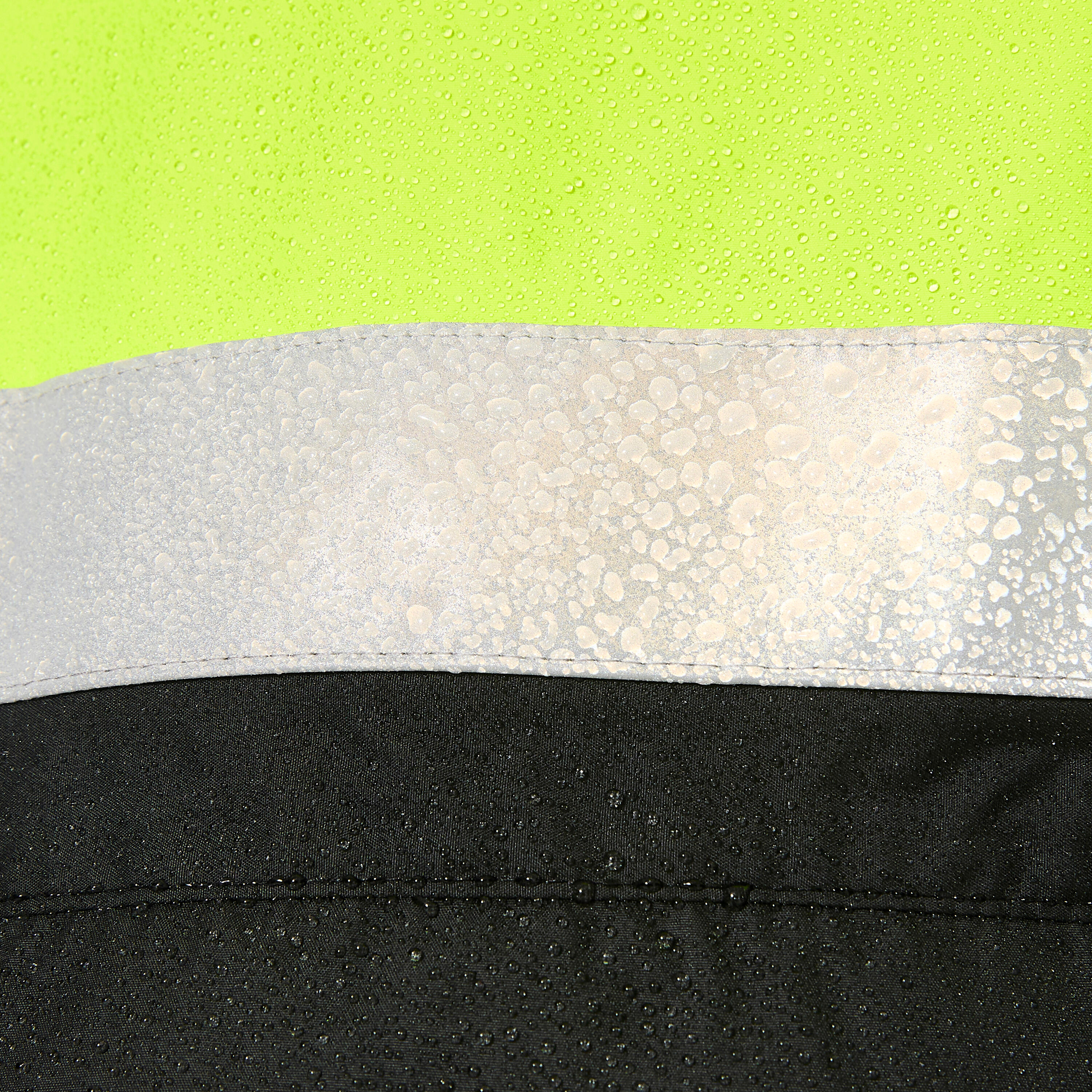
A fluorine-free chemical recipe placed on the fabric's surface to make water slide off it. This treatment can be reactivated by heat (10 minutes in the tumble drier on a gentle cycle).
- A WATERPROOF CONSTRUCTION
The aim is to avoid water getting in through the holes in the seams by placing a waterproof strip under the seams.
- A WATERPROOF COMPONENT
A fabric's capacity to prevent water from penetrating it
MEASURING WATERPROOFING
Waterproofing is measured in Schmerbers or mmH2O (the pressure exerted by a water column).
A material with a rating of 10,000 mmH2O can resist 10 metres of water.
The bigger the number, the more waterproof the fabric.
WHAT DOES CERTIFIED VISIBILITY MEAN?
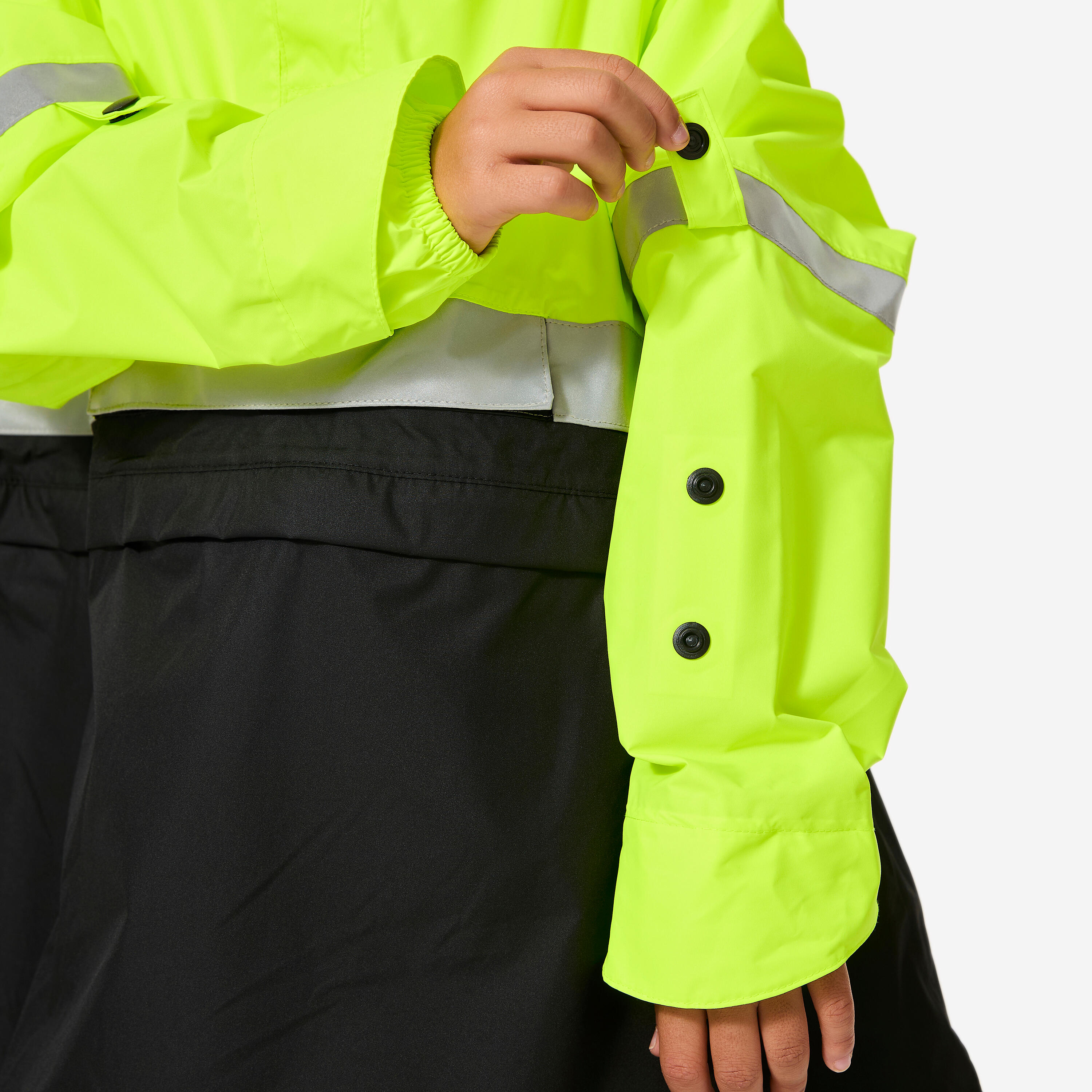
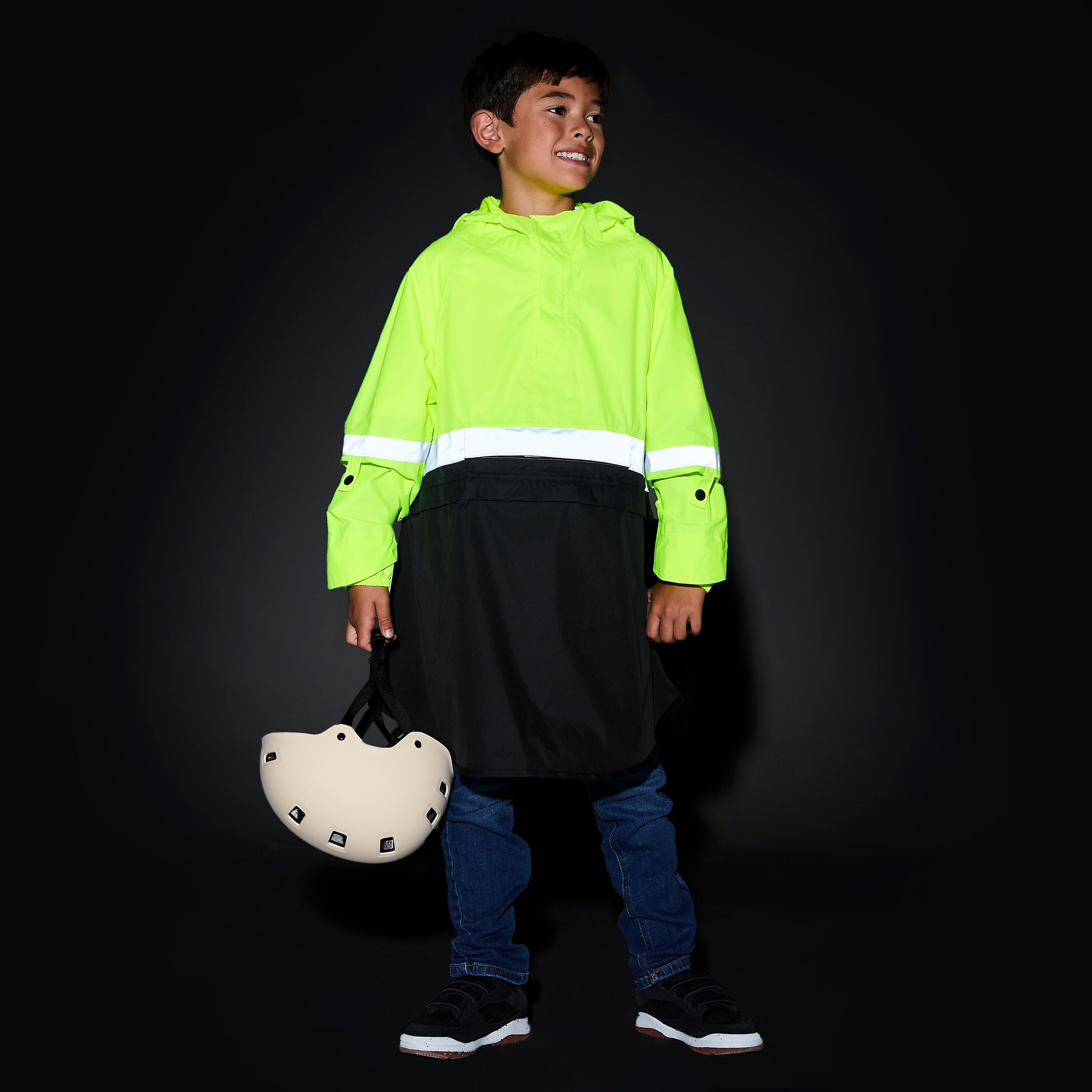
This poncho is certified for DAY and NIGHT VISIBILITY (EN17353 standard), with reflective strips to make cyclists visible even at night.
The reflective elements have been carefully positioned to account for the constraints of cycling so that they guarantee visibility at 50 m at night when car headlights are shone on them.
WATERPROOF AND BREATHABLE?
Hydrophilic coating (RET =< 12): limits condensation inside the garment. To see if a fabric is breathable, we test its evaporative resistance or RET (based on the ISO 11092 standard). The lower its resistance, the more the fabric lets water vapour produced by the body escape, and the more breathable it is.
For example: RET < 9 = extremely breathable fabric. 9 < RET < 12 = highly breathable fabric. 12 < RET < 20 = breathable fabric. RET > 20 = slightly or not breathable fabric.