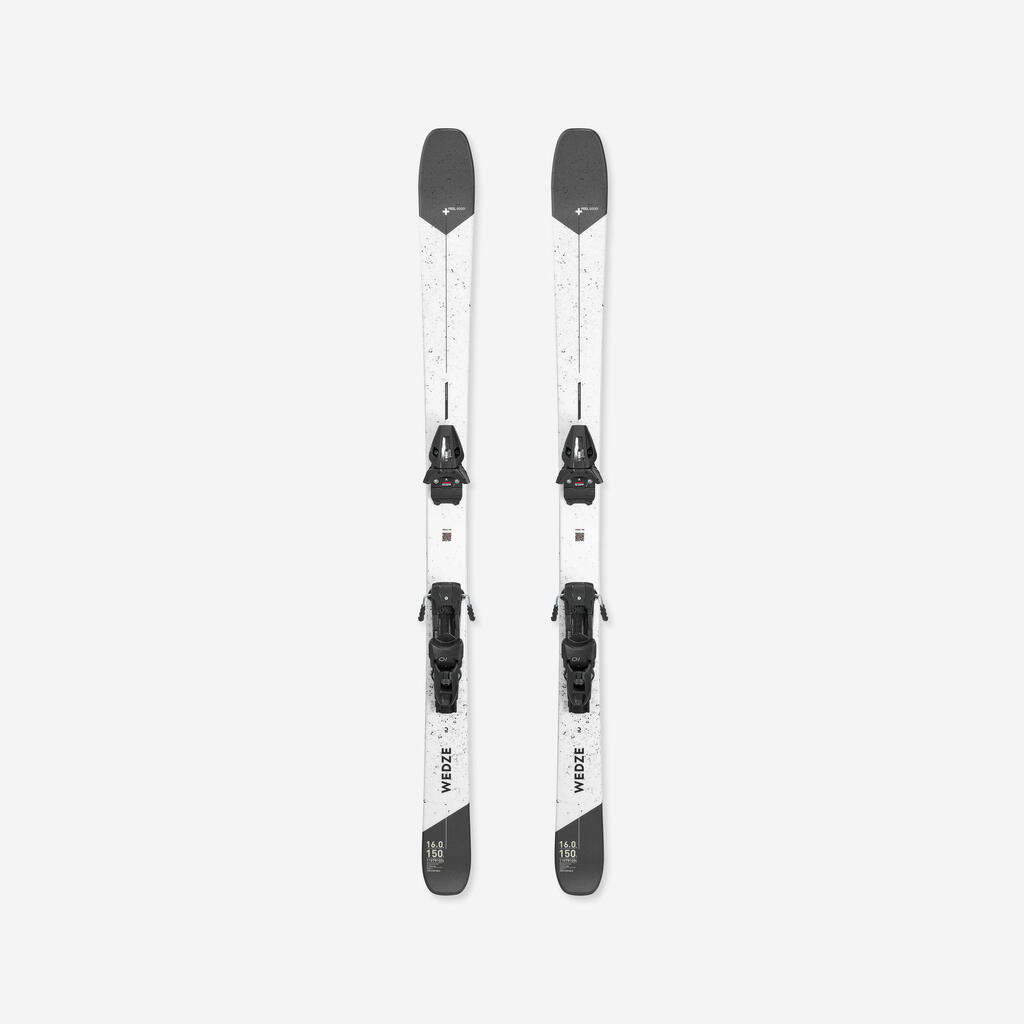
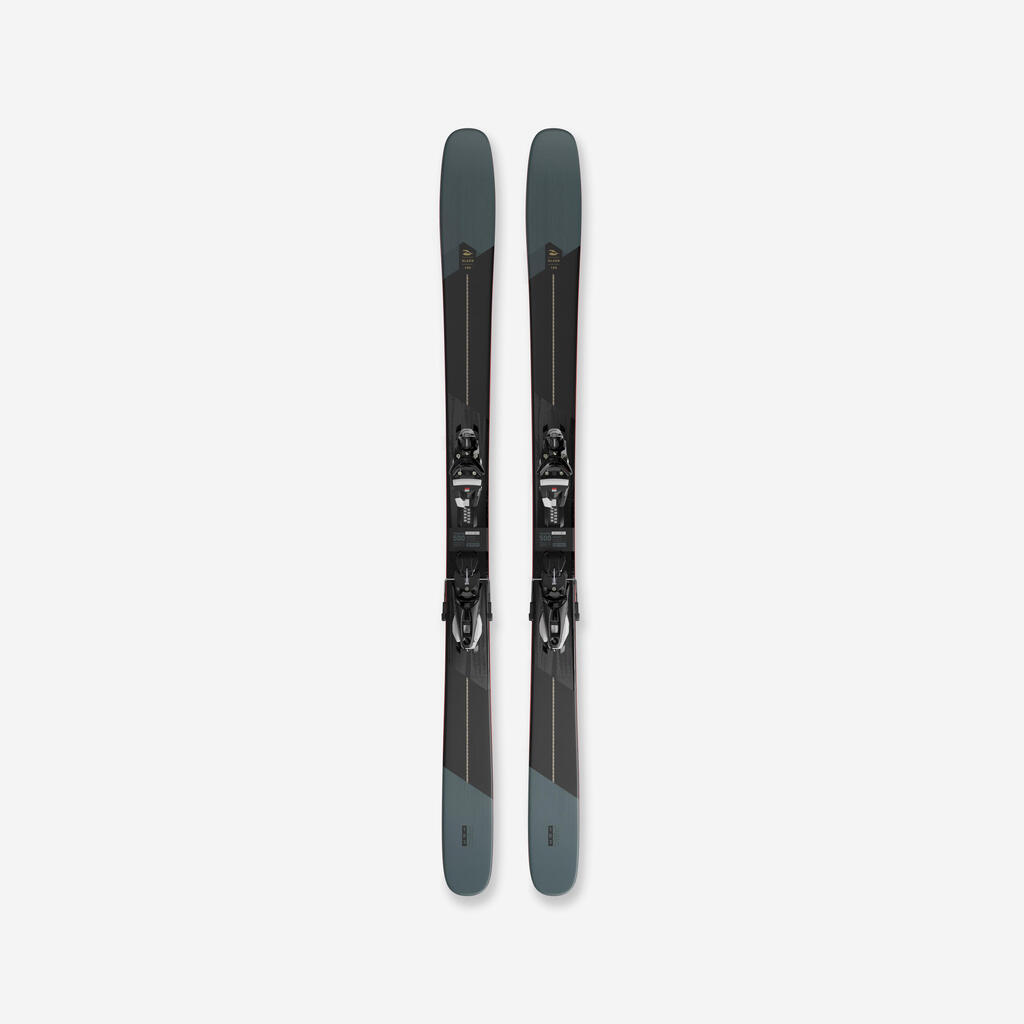
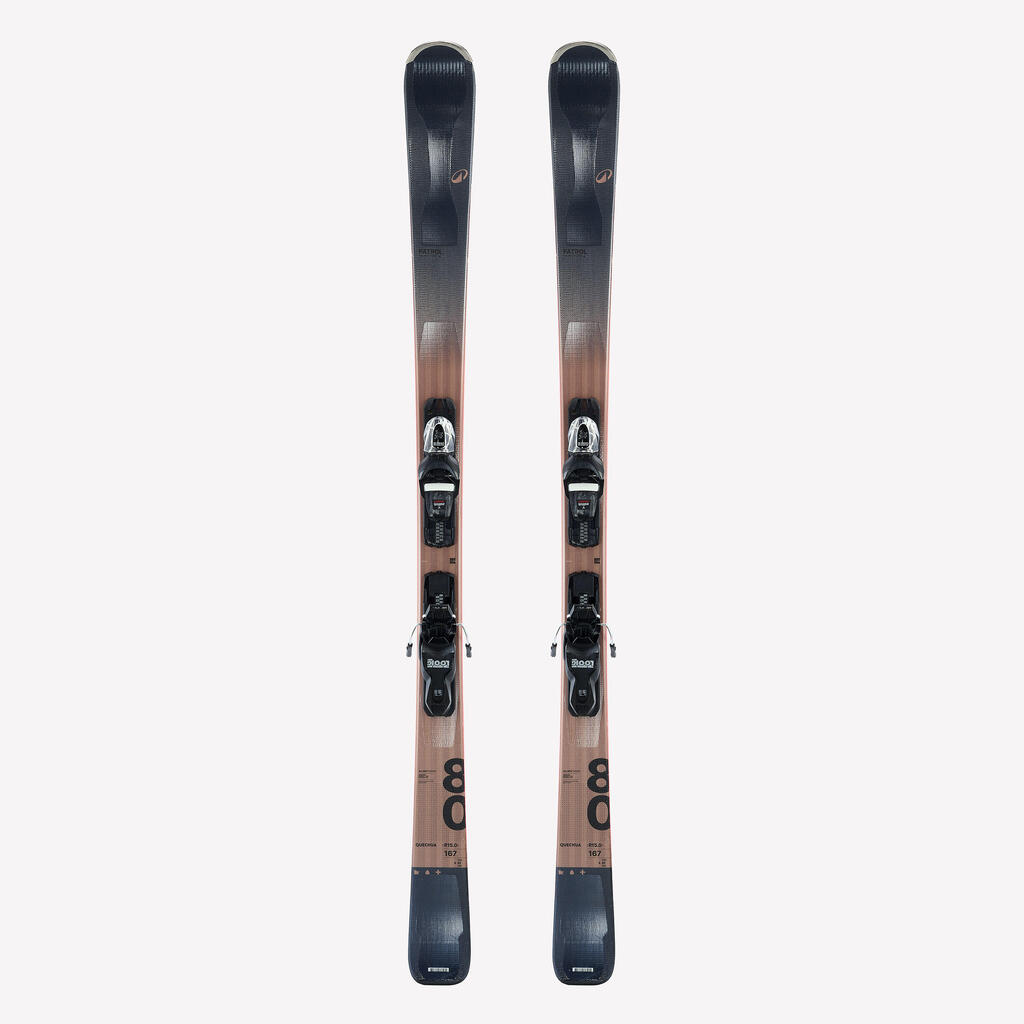
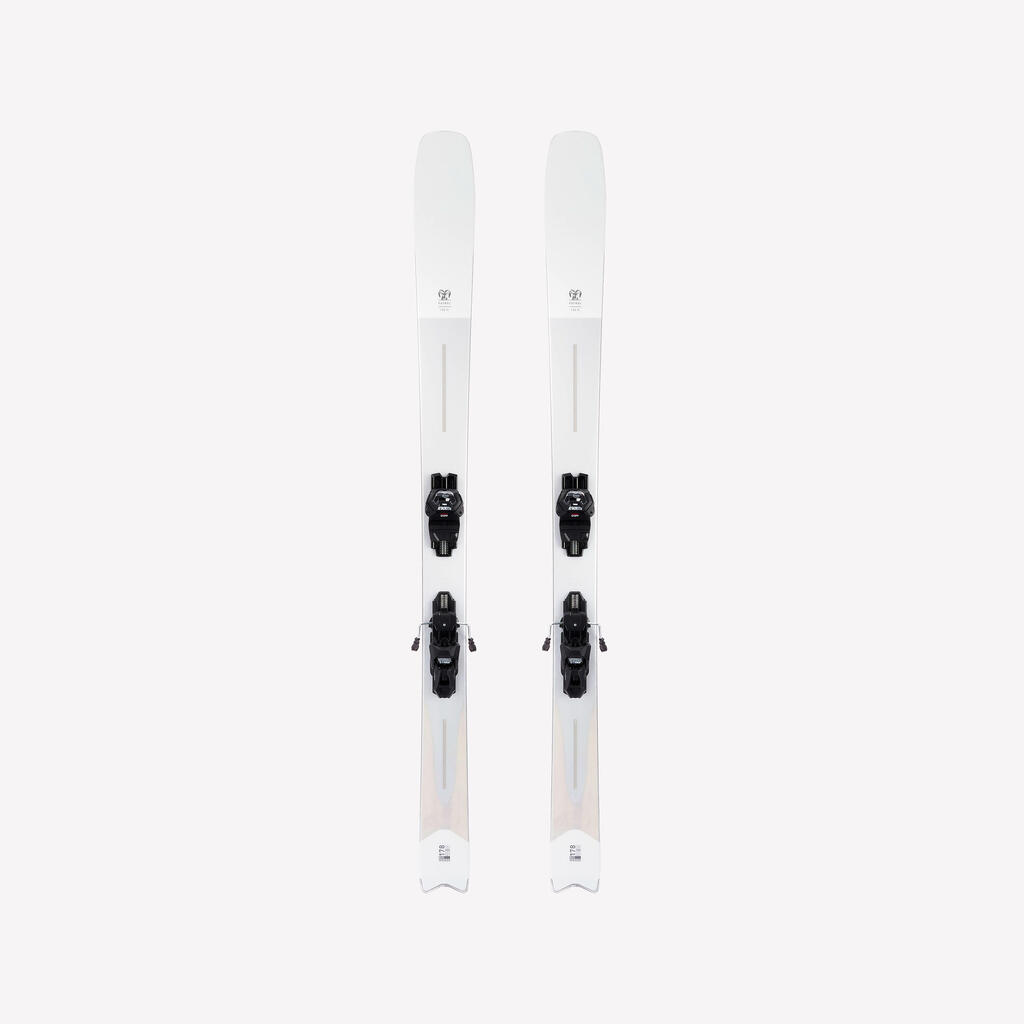
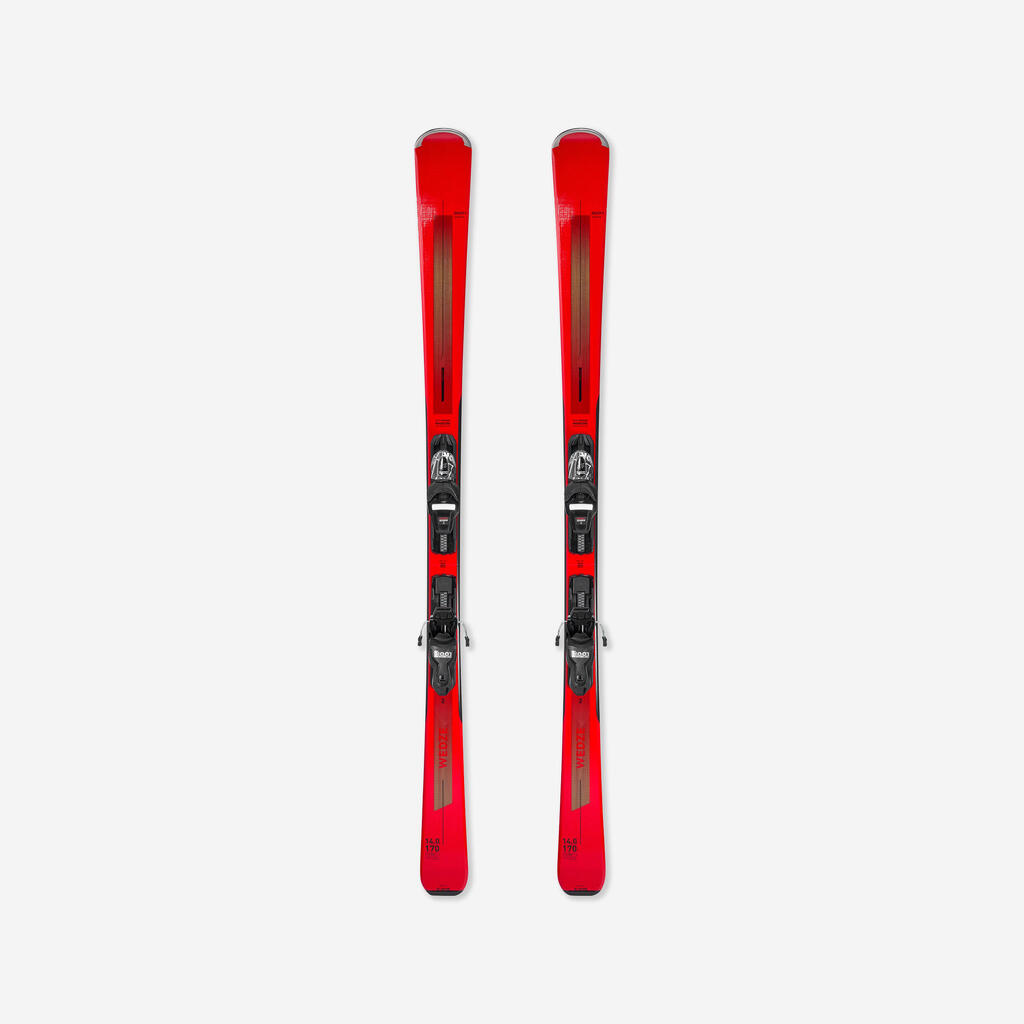
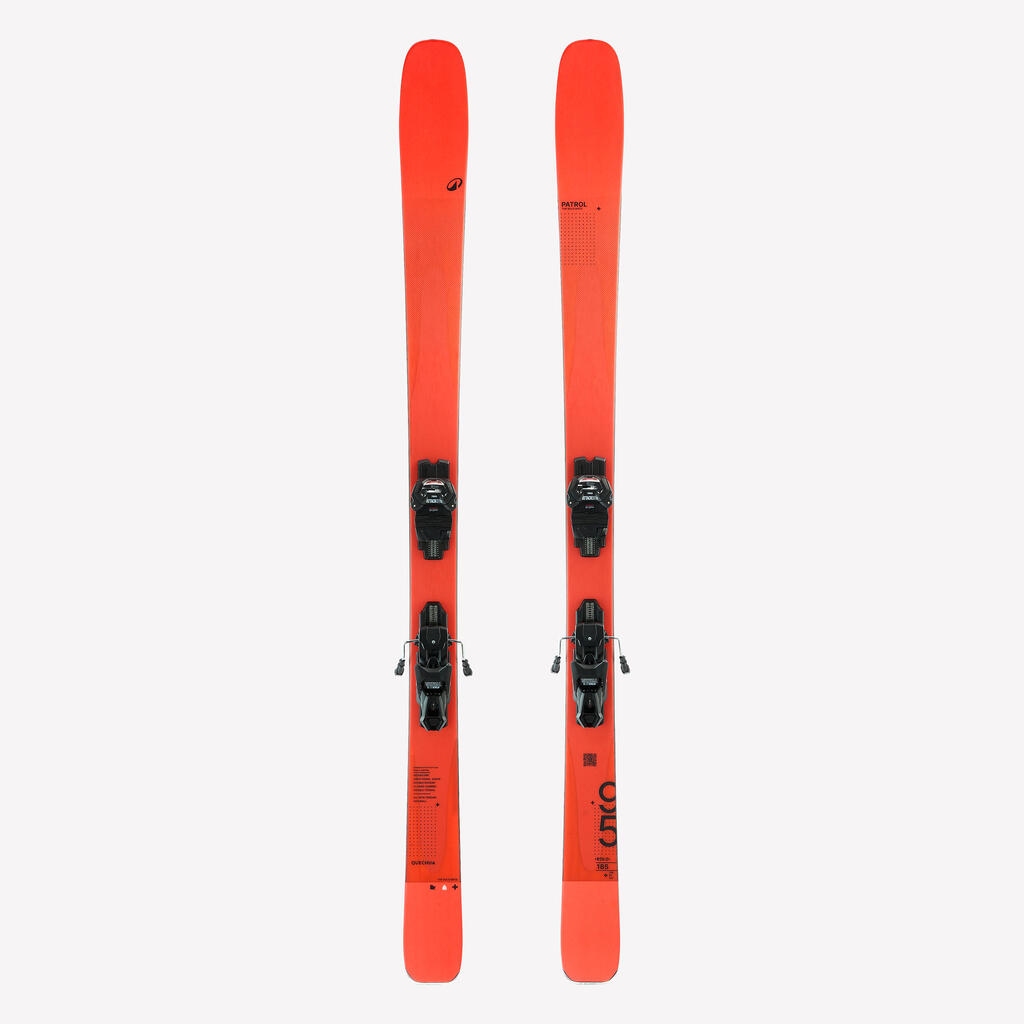
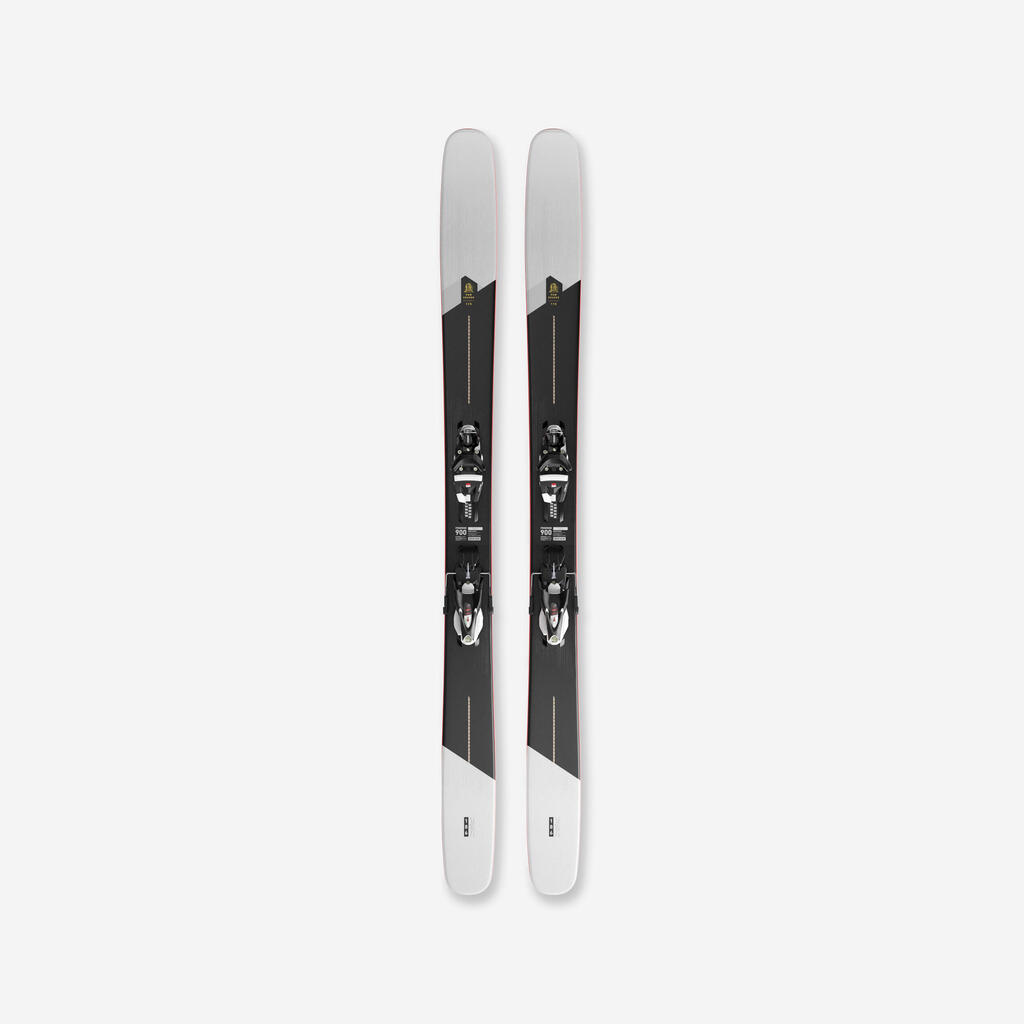
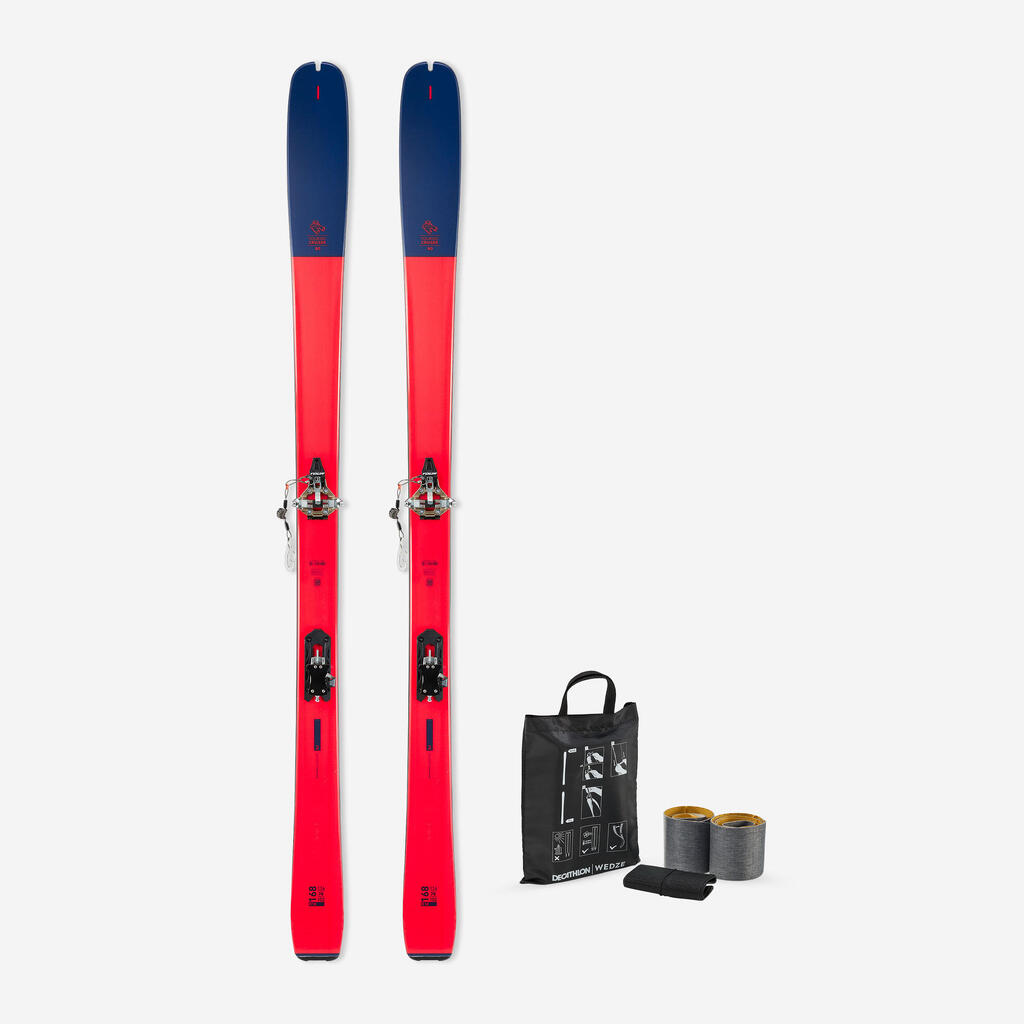
Binding adjustment
ski length = 154 cm and 161 cm
Boot shell length 252 => 310 mm
ski length = 168 cm
Boot shell length 262 => 320 mm
ski length = 176 cm
Boot shell length 282 => 340 mm
Adjustment requires a cross-head screwdriver. We recommend opting for adjustments made in the shop to ensure the correct distance between the back of your boot and the binding
Assembly: Heel binding support
If you want to optimise the power transmission between the boot and the binding, you can place a plastic part (Tyrolia Performance Spacer) on the rear of the binding.This ensures that the heel of your boot is in contact with the binding.Tyrolia offers three levels of thickness (1.5, 2.5 and 3.5mm), choose the one that best fits the thickness of your boot.You can use a spacer with or without a ski brake
Skins
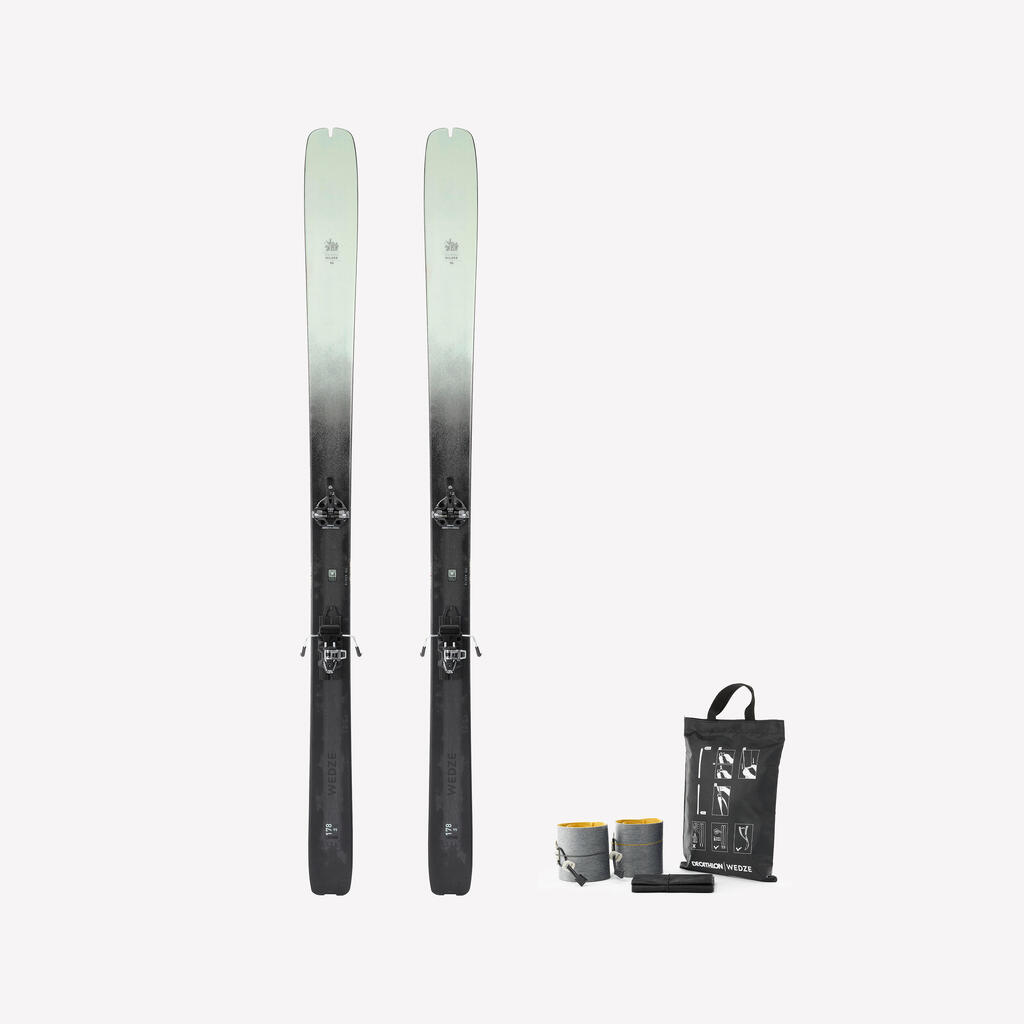
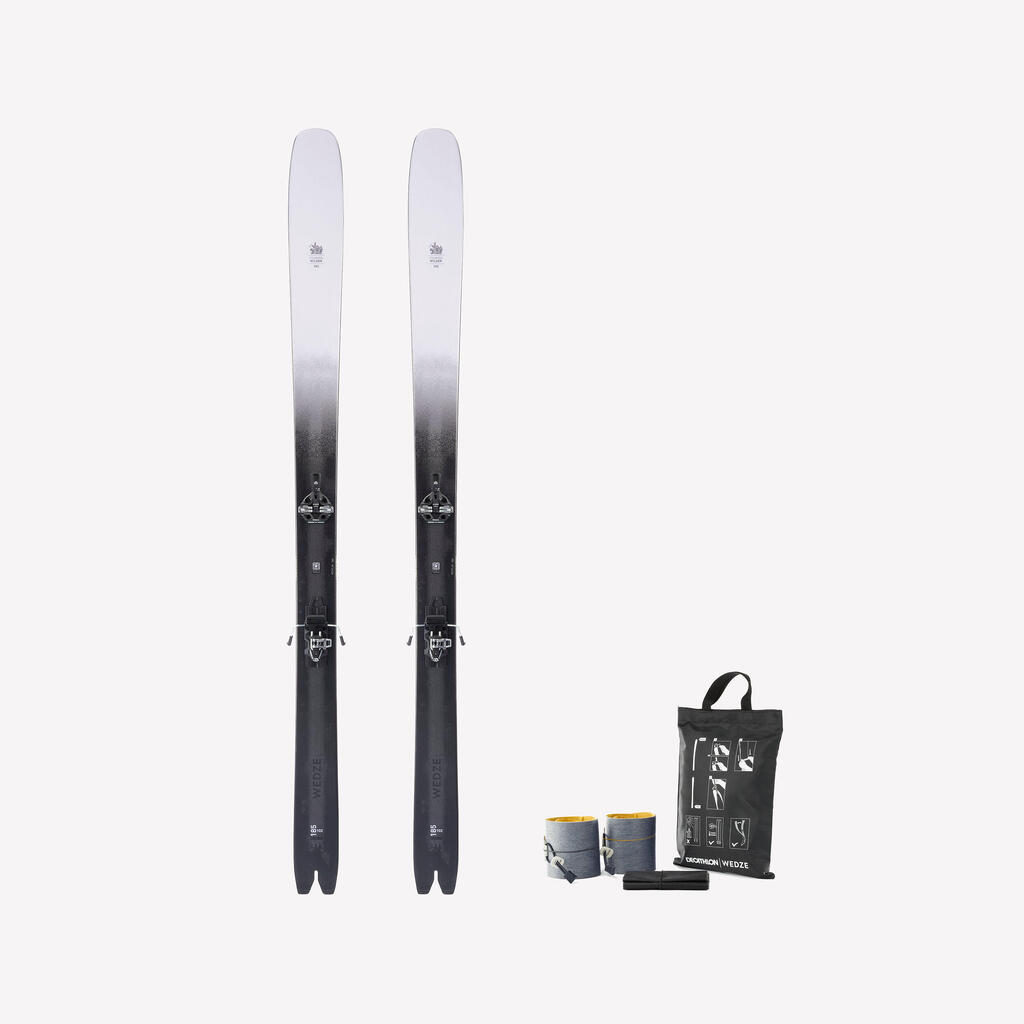
The skins that come with the Wilder 85 skis are trimmed and cut to the length and width of the ski.
They are made of 70% mohair and 30% synthetic materials – the ideal compromise in terms of gliding performance (when climbing in order to save energy) and grip (when climbing to avoid backsliding).
The skins are fitted with elastic at the front for quick fastening on the tip and an adjustable camlock on the back to fasten the skin to the tail of the ski.
Structure
Sandwich construction with straight sidewalls at the waist,
Lightweight Paulownia wooden core with fibreglass reinforcement.
Ski features:
Naked ski:
154 cm = 1,100 g/pack = 1,425 g
161 cm = 1,200 g/pack = 1,525 g
168 cm = 1,300 g/pack = 1,625 g
176 cm = 1,400 g/pack = 1,725g
Weight of the Tyrolia Almonte binding with ski brake = 325 g
Our WILDER saga
Our Wilder range has 3 skis with different widths: 85/95/102 in order to provide a skate width for every type of skier.
The 85, which remains the most versatile width for skiing on all terrains, is the ideal ski for learning cross-country skiing off the beaten track.
The 95 with its straight lines for maximum grip on sloping or steep slopes.
102 For free-hikers looking for the valleys.
How do I choose my ski size?
The shorter the skis, the more manoeuvrable they are, especially during conversions.
That's why beginners would be better off choosing shorter skis.
For ski touring, we generally recommend you choose skis:
between 5 cm and 10 cm less than your height.
The length can also change depending on where you're skiing:
On marked routes: from -5 cm to -15 cm compared to the skier’s height,
In the mountains, from 0 to -10 cm compared to the skier’s height
Preparation
Ready-to-use waxed and sharpened skis. Edges sharpened to 89°
Almonte 10 bindings: adjustment range
The binding is fitted on a plate that lets you adjust the length of the binding by 60 mm. It is therefore suitable for a wide range of foot sizes.
The baseplate is mounted according to an assembly plan for each size in order to suit everyone's needs.
Thanks to this fitting, you can lend your skis, change boot size, etc.
It’s a huge advantage for easily introducing people to ski touring
Cross-country skiing:
Go for it, create your climbing route far away from the ski resorts.
Go back down to where the snow looks better and the slope is less exposed to avalanche risks.
For authentic cross-country skiing.
Given the natural aspects of the mountainous surroundings, you must have good technique, prepare your outings and have a good understanding of your avalanche safety equipment.
Do not go out by yourself
Use of bindings: Ascent/descent (continued)
Descent:
Return to the initial position of the rear stop, by making a reverse quarter turn.
Sidecuts:
154 cm = 122/85/108 Radius: = 14m
161 cm = 122/85/108 Radius: = 16m
168 cm = 122/85/108 Radius: = 17m
176 cm = 122/85/108 Radius: = 19m
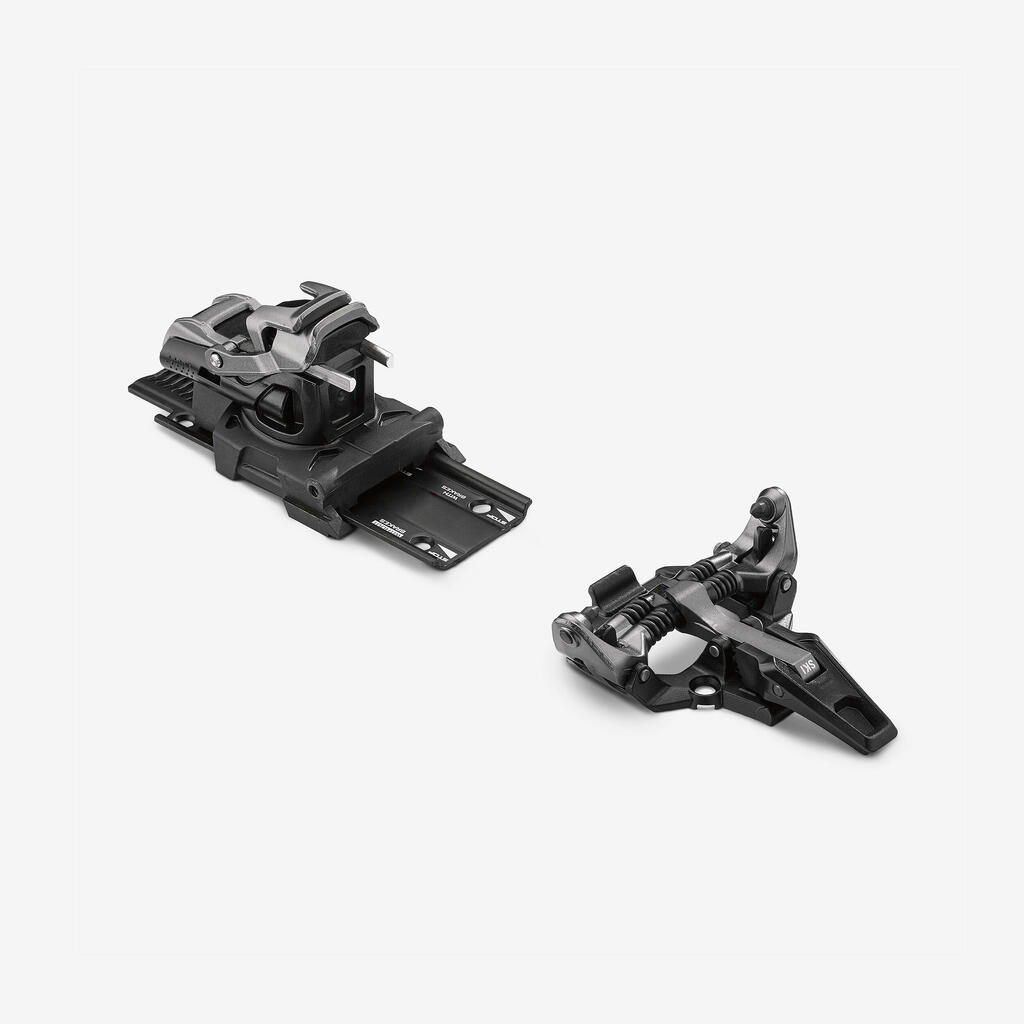
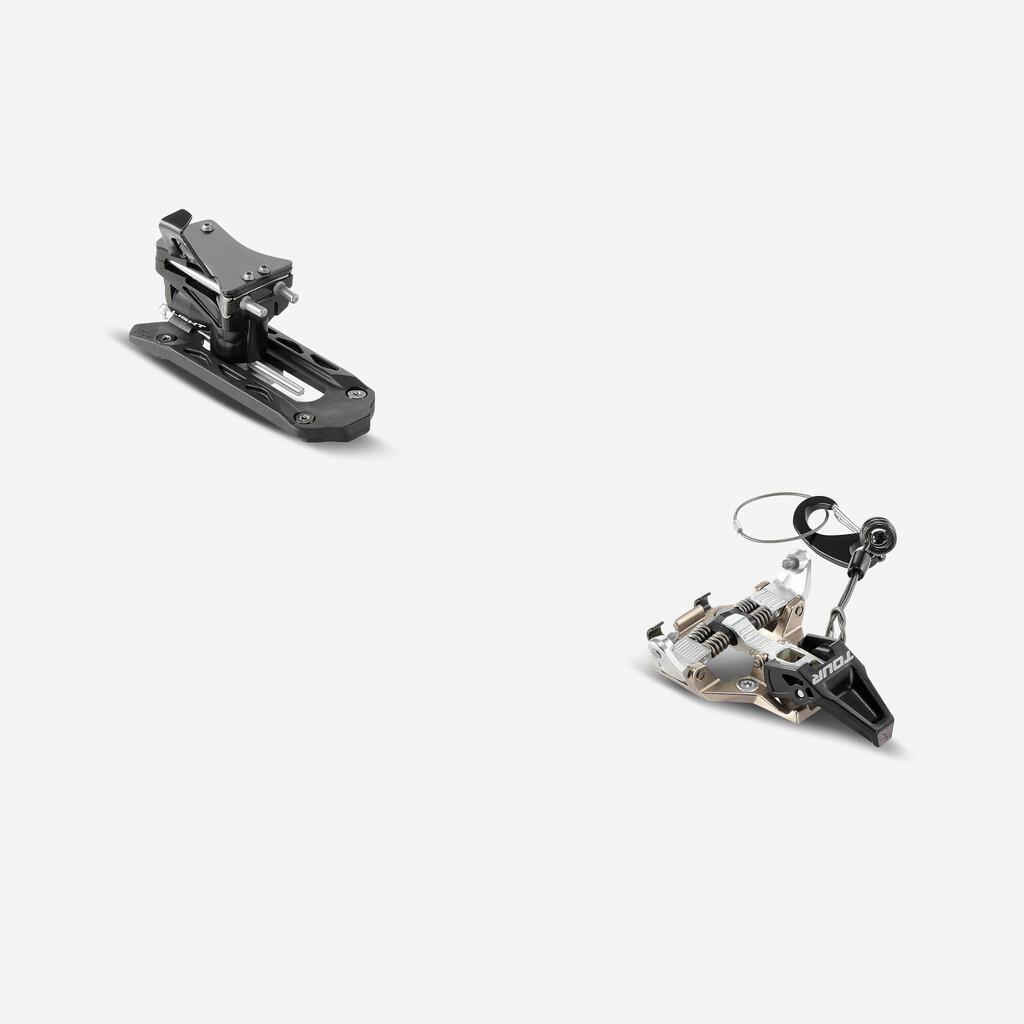
Bindings:Almonte 10 Tyrolia
Cross-country ski bindings with insert - Tyrolia Almonte 10.
Weight:
325g (with ski brakes)
60mm adjustment range.
DIN adjustment on the rear stop: from 4 to 10.
Use of bindings: Ascent / Descent
Ascent:
To lock the ski brake, turn towards the right and a quarter turn of the rear stop, then press with the boot on the plastic part of the ski brake to lock it.
You can easily switch between the three riser positions (one flat and two climbing positions) using a ski pole and without taking the boots out of the bindings. The stiffer the slope, the higher the cleats.
Ski brakes:
If you wish, you can remove the ski brake by detaching the rear part of the binding using a Phillips screwdriver.Unscrew towards the tail of the ski.Once the binding is released from the rail, unclip the ski brake from the rear of the binding.You can add a plastic part to protect the binding system that is visible without the ski brake.Fit the rear part back onto the rail and screw on.